
Data

BoK holds as energy prices drive up inflation
Governor expects ‘considerable’ wait before supply chains return to pre-war levels

Regulators having to abandon silos in age of AI, says tech exec
Central Banking Meetings hear how technological revolution is shaping supervisors’ responses

Poland and Serbia hold rates
Both central banks cite effects of Middle East conflict in explaining policy decisions
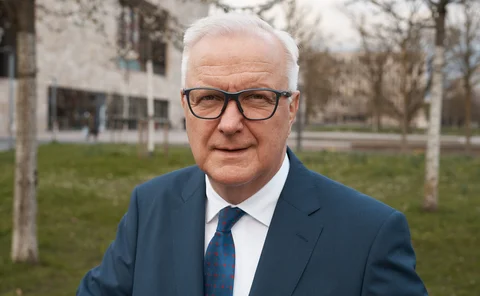
Olli Rehn on demographics, geopolitics and ECB policy
The Bank of Finland governor speaks about immigration and productivity, private credit and stablecoin risks, the mood on the governing council and the impact of conflict in the Middle East

Governor says RBNZ will tighten policy if inflation rises
Central bank holds and offers ‘uncertain’ estimate of inflation being well above target

Algorithmic pricing not yet a ‘menace’ to inflation – BoE study
Dynamic and personalised pricing may upend CPI measurements and expectations, research says

Central bankers test AI’s ability to detect systemic risk
Innovation leaders tell Central Banking Meetings that information silos still pose challenges
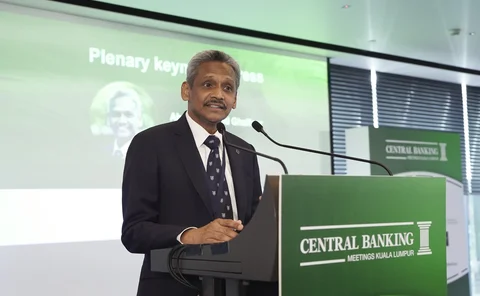
The evolution of central banks
Bank Negara Malaysia governor Abdul Rasheed Ghaffour writes that the roles and responsibilities of central banks are evolving in a changing landscape

Sabine Mauderer on the past, present and future of the NGFS
Bundesbank official discusses green policy, the Fed, data blind spots and future prospects
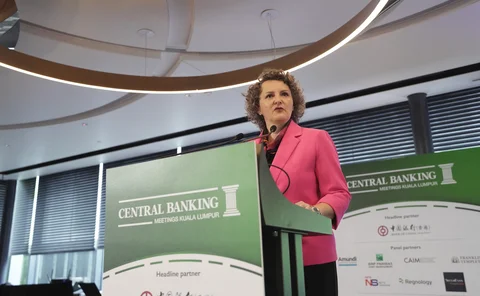
Use AI for ‘deeper insights’, not to make decisions – CBBH head
Selimović also discusses payments and reserves at Central Banking’s Kuala Lumpur meetings

Pensions and staff morale least likely to constitute staffing challenge
Degree of concern varies by size of central bank

Norges Bank holds and signals future rate hikes
Job of tackling inflation ‘has not been fully completed’, says governor

As new gauge puts CPI above 2%, is BoJ prepping for a hike?
Revised data shows price growth at a level the bank said would trigger tightening
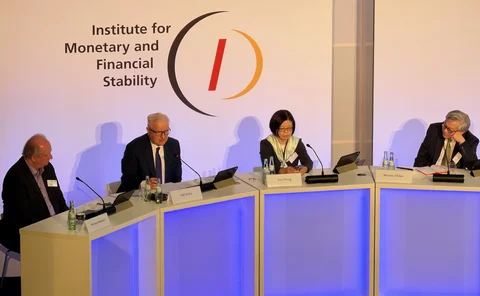
Geopolitics becoming ‘key risk’ for central banks – panel
Experts at ECB conference say political upheaval now a greater concern than price growth
Half of central banks prohibit senior officials’ shareholdings
Minority of respondents working to adopt other internal policies

BoE faces its toughest test in four years
Path to contain inflation from supply-side shocks is different compared with 2022–23
Non-executive directors earn five times less than governors
NEDs work an average of 14 hours weekly, Governance Benchmarks 2026 find
Boards with salary-setting duties have largest membership
Greatest number of non-execs appointed by government

‘Rolling windows’ method may help evaluate big data forecasts
Barbara Rossi presents new approach at ECB’s AI conference
Roughly 40% of central banks lack a monetary policy committee
Governing boards remain widely responsible for setting overall strategy

Central Banking Awards 2026: the winners in full
Awards recognise extraordinary achievements in another challenging year for central banks
Governors of smaller central banks earn slightly below global average
But governors’ salaries remain above $200,000 a year

Digital transformation award: Bank of Mexico
Banxico has replaced critical systems with ‘living’, adaptive, decentralised architecture
European governors serve longest average term length
Central bank governors rarely appointed for one term or 3+ terms