
Feature

Driving China’s international investment activities
Li Keping, vice-chairman of China Investment Corporation, explains why working together to achieve shared goals must play a key role in China’s overseas investment strategy

Meeting global infrastructure needs with MDB backing
KV Kamath, president of New Development Bank, discusses the pivotal role that multilateral development banks can play in meeting the infrastructure investment requirements of developing countries

Case study: The China-Pakistan Economic Corridor
Countries such as Pakistan stand to benefit enormously from Chinese infrastructure investment as part of the One Belt, One Road policy, writes Habib Bank president and CEO Nauman K Dar

China’s role in globalisation post-financial crisis
Huang Mengfu, honorary chairman of the All-China Federation of Industry and Commerce, examines what China’s role will be in an increasingly interconnected world

The role of infrastructure in spurring Chinese growth
Wendy Dobson, IFF Academic Committee member and former Canadian associate deputy minister of finance, highlights three lessons that can be applied to the Silk Road initiative

The renminbi and the international monetary system
Zhou Yueqiu, director of the Urban Finance Research Institute of the Industrial and Commercial Bank of China, offers some perspectives on the future role for the renminbi post-SDR inclusion

Co-ordinating China’s domestic and international efforts
As China becomes an increasingly significant player on the international stage it can no longer be insular in its policies, writes deputy governor of the People's Bank of China, Yi Gang

The growing role of China in an interconnected world
With global economic health ever more reliant on Chinese growth, Wang Yan, deputy director of the IFF Institute, looks at how structural reforms can help China take a leading role in the future

Reform facilitated by the renminbi’s inclusion in the SDR basket
Ba Shusong, IFF Academic Committee member and chief China economist of The Stock Exchange of Hong Kong examines the significance of the renminbi’s SDR inclusion

Searching for excellence in central bank communication
First-class performance of modern central banks requires first-class communication

Divergent monetary policies are top concern for reserve managers in 2016
Reserve managers view divergent monetary policies among the world’s top central banks as the most pressing challenge they face in 2016; asset and currency diversification continues

Tiberius’s experiences with zero interest rates in 33 AD
Can the European Central Bank learn lessons from the use of zero interest rates by the Romans in 33 AD as they grappled with their own fiscal and monetary crisis?

Threats and opportunities for money and payments in the digital age
Supervisors will need to adapt their frameworks to protect trust in new protocols associated with cryptocurrencies and distributed ledgers, not merely guard against new risks

Secrecy over MNB funds sparks constitutional dispute
Unanswered questions over the use of Hungarian central bank funds have led to a series of legal and constitutional battles

To play the counterfeiter
The Reproduction Research Centre in Copenhagen helps central banks to counterfeit colour-shifting technology and machine-readable codes on banknotes in a bid to reduce fraud

The People’s Bank of China’s internet finance dilemma
China’s central bank faces a challenge encouraging the development of market-based internet financial services while regulating a business where a $7.6 billion Ponzi scheme recently blew up

Towards a more stable monetary world order
A global network of independent central banks could act as a manager of expectations for asset and foreign exchange prices to reduce the burden of future crises, argues David Harrison

Central banks struggle to manage price expectations
Large central banks have responded aggressively to falling levels of inflation and inflation expectations, but with divided and limited success. What can policy-makers do to restore confidence?

Central Bank of the Year: Central Bank of Ireland
Well-capitalised banks, new supervision measures and timely macro-prudential policy action to cool an overheated property sector have gone far to restoring the Central Bank of Ireland's credibility
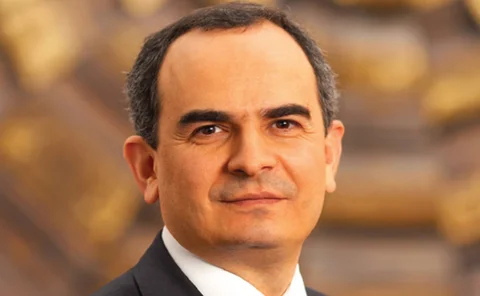
Governor of the Year: Erdem Başçı
Erdem Başçı has guided the Turkish central bank through a turbulent period marked by policy spillovers from advanced economies, political interference at home and conflict in the Middle East

Reserve manager of the year: National Bank of Denmark
The National Bank of Denmark's new risk budget-based investment strategy stood up well to the unprecedented flows of funds into and out of the country in 2015.

Initiative of the year: Reserve Bank of New Zealand
The Reserve Bank of New Zealand’s enterprise risk management system offers a best-practice example of how to build a framework from the ground up, with a small team and limited resources

Consultancy and advisory services provider of the year: BlackRock Solutions
A key partner to major central banks engaging in complex asset purchases, asset quality reviews, resolution mechanisms and strategic asset allocations

Risk management services provider of the year: Wall Street Systems
A powerful real-time risk-calculation engine, consistent high-quality support and broad central-banking experience make this treasury management offering the best in class