
Feature
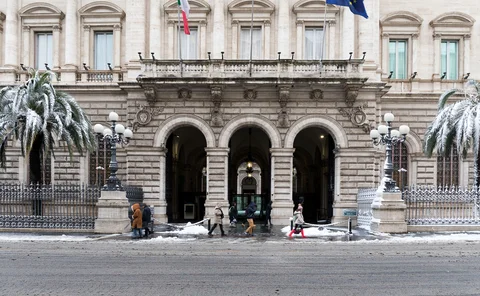
The Bank of Italy’s approach to risk-based budgeting
The financial crisis blurred the lines between Anglo-Saxon and continental European central bank models, presenting challenges when treating both the sources of risk and risk-bearing capacity using financial and accounting budgeting techniques
The IFF China Report 2018
Insight and opinion from China’s top leaders, policymakers and financiers

Central banks: the economy’s emergency responders
When economic infrastructure is destroyed during natural disasters, central banks spring into action, engaging contingency plans to ensure the economy continues to run

After the Congress – Interpreting China’s new development concept
As Xi Jinping Thought is enshrined in the Constitution, Justin Lin, IFF member and former chief economist at the World Bank, calls for far-reaching innovation in all sectors of industry and finance to attain the goal of national rejuvenation

The IFF China Report 2018: The Belt and Road Initiative
China’s signature Belt and Road Initiative (BRI) now includes 71 countries, with trillions of dollars of investment allocated. Leading Chinese and international policymakers explain how BRI efforts are progressing. This section includes an inaugural…

The IFF China Report 2018: China’s opening-up and reform policy
The experiences of China’s opening-up and reform during the past 40 years, which includes a transition from an agricultural economy to one seeking to offer high-end manufacturing and services, offer valuable lessons to other nations seeking to pursue…

A route to economic growth – The Belt and Road Initiative 2018 survey
To mark the fifth anniversary of the Belt and Road Initiative (BRI), the IFF – in collaboration with Central Banking – conducted its inaugural Belt and Road Survey of central banks from more than 25 countries and regions. The survey examines BRI…

Asian Infrastructure Investment Bank – Raising expectations
The Asian Infrastructure Investment Bank embodies international co-operation and innovation – the spirit of modern China. Strict management, openness and transparency have won the bank wide recognition and acceptance, says Jin Liqun, the bank’s president

The IFF China Report 2018: Post-financial crisis – A decade on
The Global Financial Crisis sparked Group of 20 countries to introduce tough new regulations on financial institutions and instruments. Yet the architecture of the global monetary, economic and financial system has many flaws. What lessons can China…

Canada’s polymer versus paper substrate cycle
Empirical evidence indicates the switch to a polymer substrate has improved the lifespan of Canadian banknotes, write Ramesh Paskarathas, Lynne Graaskamp, Erik Balodis and Theodoros Garanzotis

Reserve manager of the year: Bank of Korea
The South Korean central bank has revamped its reserve operations, and adopted a proactive approach to managing risks and returns that is matched by few of its peers

Implementing a holistic and dynamic risk budget
The National Bank of Denmark has implemented a dynamic risk budget that takes the bank’s unavoidable policy risks as the point of departure. The new approach has led to a reassessment of investment exposures and how they are rebalanced over time and…

A dangerous unknown: interest rate risk in the financial system
Urgent action is needed to tackle the little-understood build-up of interest rate risk in the global financial system; macro-pru tools still inadequate to tackle the issue

Governor of the year: Lesetja Kganyago
Kganyago has defended and enhanced the Sarb’s reputation as an independent and well-governed institution against all threats – despite a turbulent political and economic backdrop

Global custodian of the year: BNY Mellon
The US asset specialist has made strong progress in its effort to offer a seamless overlay of its disparate legacy systems, while also providing improved training to official institutions

Securities lending services provider of the year: Northern Trust
Official institutions praise the Chicago-based firm’s excellent coverage, operational smoothness and good returns

Website of the year: Bank of Lithuania
Bank of Lithuania has built a website around the principle of making the most relevant information as accessible as possible for all of its audience

Asset manager of the year: BlackRock
BlackRock delivered some innovative new products and a highly regarded training scheme to build on its already strong foundation in reserve management services

Central bank of the year: Bank of Canada
The Canadian central bank has stood out for its ever-improving levels of transparency, forward-looking management and best-practice review of its policy mandate

Economics in central banking: Alberto Cavallo and Roberto Rigobon – Billion Prices Project/PriceStats
Through a vast and ongoing data-collecting exercise, PriceStats has helped central banks overcome many of the drawbacks inherent in traditional inflation series

Consultancy and advisory provider of the year (currency management): De La Rue
The UK-based company is helping central banks monitor the lifespan of banknotes in a bid to improve stock management and cost-effectiveness of currency operations

Payments and market infrastructure provider of the year: Perago
The software company is helping central banks around the world implement reliable and highly adaptable RTGS and retail payments systems

Technology consultant of the year: Vizor Software
The Dublin-based company continued to grow its client base in 2017, proving its mettle in emerging markets, with the addition of Brunei’s central bank and the Zambian pensions and insurance regulator

Risk management services provider of the year: Openlink
Openlink’s central bank and state agency client base continues to grow, with the addition of a number of new clients, including Queensland Treasury Corporation