
Feature

Greek lessons for central banks acting as lenders of last resort
Is it appropriate for a central bank that also acts as lead financial supervisor to act as a lender of last resort at a time when its actions are becoming quasi-fiscal in nature? By Ludek Niedermayer

BIS annual report launches new line of attack on old fears
Analysis of financial cycles creates a new opportunity to drive home fears about rates being too low for too long – but are central banks listening?

Eurozone central bank policy challenges and risks
ECB governing council member Ignazio Visco explains why Europe needed an expanded asset purchase programme despite potential issues associated with moral hazard and financial instability

The IFF China Report 2015: The Chinese economy at a crossroads
Policy-makers offer insights into the structural transformation of the Chinese economy, financial deepening, trade and development, and the role of the renminbi in the international monetary system

The rising international role of the renminbi
The global reach of Chinese investment and the renminbi have expanded rapidly over the past few years. The currency’s journey is seen by some as a reflection of China’s global ambition and expansion

Former PBoC chief explains why RMB evolution brings benefits to China and rest of the world
Dai Xianglong, former chairman of China’s National Social Security Fund (NSSF) and former president of IFF, backs the idea of the internationalisation of the renminbi and the benefits it could bring

Bank of China chairman on RMB internationalisation moving from strength to strength
The renminbi now ranks second in the world’s most-used currencies in trade finance, and its internationalisation has gone from strength to strength, says Tian Guoli, chairman of the Bank of China

Justin Lin on fixing the fault lines of the international monetary system
Former chief economist at the World Bank, Justin Lin, explains why US, not Asian, policies caused the financial crisis and recommends how to fix endemic global imbalances

ICBC chairman on the overseas expansion of China’s banking industry
ICBC chairman and president of IFF, Jiang Jianqing, details the challenges Chinese financial institutions need avoid as they continue to expand their global operations
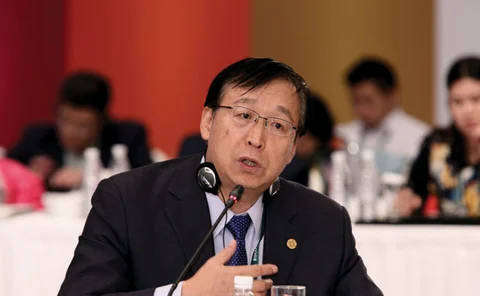
CIC's Li Keping on fine-tuning the new era of Chinese outbound investment
Li Keping, vice-chairman of China Investment Corporation (CIC), pinpoints how to overcome challenges to create co-operative foreign investments mutually beneficial to China and host countries

China's ‘One belt, one road’ vision to strengthen co-operation
The ‘One belt, one road' vision reflects both the demand from countries to release infrastructure bottlenecks and improve connectivity, as well as a need for China's own development and security

South-South development co-operation in transformation
China's approach in South-South development co-operation focuses on using ‘what China owns and knows best' by combining trade, investment and development co-operation

Chinese outward direct investment: overtaking other EMEs
With China’s labour costs rising rapidly, enterprises are facing pressure to seek out low-cost locations – they either have to move westwards seek new opportunities in the global economy

Trade structure: from raw materials to machinery and services
China’s export structure has changed radically over the past three decades, moving from being dominated by raw materials in the 1980s to machinery and services in the 2000s.

Future-proofing risk in the Chinese economy
Zhang Shenfeng, chairman of the China Financial Futures Exchange (CFFEX), argues that a multi-layered capital market must include an active financial futures to facilitate real-world risk management

Creating an effective equity market in China
Wang Jianxi, chairman of Shenyin and Wanguo Securities, sees the delicate balancing act of supervising the financial markets as key to developing a multi-layered capital market

Improving China's OTC business is a vital for the creation of a multi-layered capital market
Zhu Congjiu, vice-governor of Zhejiang province and former assistant to the chairman of the China Securities Regulatory Commission, explains how the country can effect a multi-layered capital market
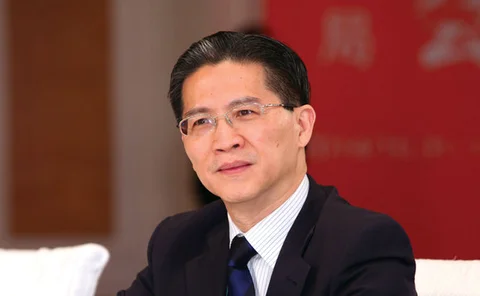
Reform and the Shanghai Free-Trade Zone
Zhou Hanmin, vice-chairman of the Shanghai People’s Political Consultative Committee, describes how the creation of the Shanghai Free-Trade Zone represents China’s fourth phase of opening up

Coping with risks associated with financial liberalisation in China
Financial reforms in China pose the risk of increased volatility in interest rates, financial fragility and loss of output

Factor price reforms and their macroeconomic policy impact
The need for financial reforms to achieve sustainable growth is widely accepted. But the move towards interest rate liberalisation amid weak growth and low global rates remains a challenge

Developing China's capital market is central to 'new normal' reform
China is adopting an approval-based rather than disclosure-based IPO system as well as developing an OTC equity market as part of its effort to deepen the role of financial markets

China’s path to financial deepening
Despite China’s quick progress in the sphere of manufactured goods, the country’s financial system has been a few steps behind, but that is steadily changing

Five foundations for the reform of China
Cheng Siwei, chairman of IFF and former vice-chairman of the Standing Committee of the Ninth and Tenth National People’s Congresses, presents five foundations for aiding the country’s overall reform

Driving the ‘new normal’: stability, urbanisation and innovation
Gu Shengzu, vice-chairman of the Financial and Economic Affairs Committee of the Twelfth National People’s Congress, writes about the major elements that will drive China's economy