The challenges facing Fed chair Kevin Warsh
New chair has pledged sweeping change, but can he keep Trump – and the FOMC – onside?
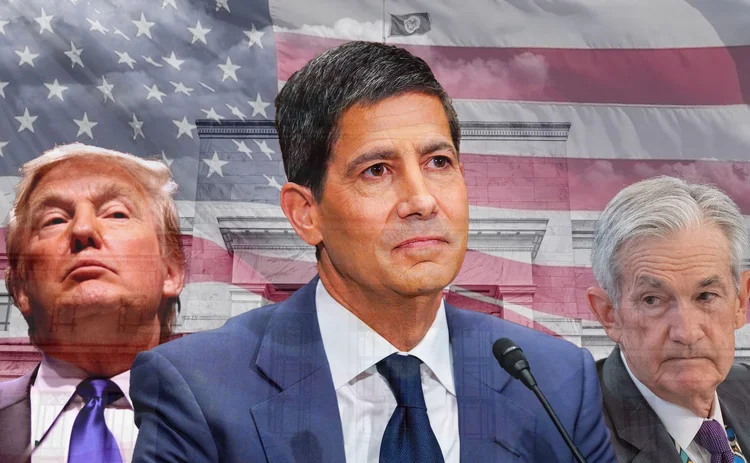
Following one of the most protracted nomination processes in its history, the US central bank is about to usher in a new era as Kevin Warsh takes office as chair of the Federal Reserve. The Senate on May 14 confirmed Warsh by 54 votes to 45, with Jon Fetterman the only Democrat to cross the aisle in support of president Donald Trump’s nominee.
Warsh will take over following a period of unusual turbulence for the world’s most influential central bank, its continued independence repeatedly thrown into doubt by an administration that appears willing to go to extraordinary lengths to secure low interest rates regardless of whether the economic conditions would merit them.
Yet the months and years ahead have the potential to be even more turbulent. The incoming chair has signalled his wish to cut rates, shrink the Fed’s balance sheet, change its communication and operational structure, and prevent it from becoming involved in issues such as climate change and diversity, equity and inclusion (DEI).
Warsh also has to contend with an economy at a potential crossroads, with tariffs and the conflict in the Middle East causing inflation to run high. On May 13, the Bureau of Labor Statistics reported year-on-year personal price index inflation of 6% for April – the highest 12-month increase since December 2022 – which could stymie both Warsh’s, and the president’s, stated wish for the Federal Open Market Committee (FOMC) to lower rates.
Donald Kohn, senior fellow at the Brookings Institution and a former vice-chair of the Fed, says that in the run-up to his nomination, and during the confirmation process, Warsh came up with various reasons to justify a loosening of policy.
“The first was that shrinking the balance sheet would tighten financial conditions, and that could be offset by lowering short-term rates,” he tells Central Banking. “The second one was this expectation that a surge in productivity related to AI would reduce costs, and therefore inflation, and that lower rates would be needed to keep the economy humming along. The third argument, which the Fed agrees with, is that a lot of the current inflation is a result of one-off supply shocks.”
If Trump wants 1% interest rates, Kevin’s not going to deliver that. I think he’ll work with his colleagues to figure out the best path forward and see what new ideas can be brought to the process
Donald Kohn
Kohn says Warsh’s message has been that underlying inflation is on its way down. “But I think he would have a lot of work persuading his colleagues on the FOMC of the merits of those arguments.”
The former vice-chair, who worked closely with Warsh when he was a Fed governor during the global financial crisis, rejects the accusation put forward by senator Elizabeth Warren that as Fed chair Warsh would be a ‘sock puppet’ for the president. “I don’t think he can be,” he says. “If Trump wants 1% interest rates, Kevin’s not going to deliver that. I think he’ll work with his colleagues to figure out the best path forward and see what new ideas can be brought to the process.”
But Lawrence J White, professor of economics at New York University’s Stern School of Business, says Warsh has “shown a tendency to be more dovish when the Republicans are in power”. “Kevin Warsh certainly wanted the job as Fed chair, and he no doubt leaned towards rate cuts during the ‘interview stage’ because such a stance would be received more favourably by the administration,” says White. “But he also made those comments in a more benign environment than we’re in today.
“He’s a smart guy, and my guess is he’s going to see what the situation looks like… But I think he’s going to be cautious, rather than rushing to persuade his fellow FOMC members to cut rates under any circumstances.”
James Knightley, chief international economist at ING Financial Markets, agrees. “Although people will say certain things in order to get a job, personal credibility eventually kicks in,” he says. “I think Warsh will work with [Treasury secretary Scott] Bessent and say, ‘look, this is not the right time for big rates cuts. In time, we will get them lower’.”
He says ING’s view is that the current heightened level of inflation in the US is transitory, but he does not expect the economy to undergo the kind of change that would justify rate cuts over the coming months. “We don’t see the demand impetus to keep inflation broad and persistent, but we also feel there is no real prospect of imminent rate cuts from the Fed,” Knightley says
James Bullard, professor of economics at Purdue University and a former president of the Federal Reserve Bank of St Louis, believes that with “pretty hot inflation data”, a loosening of policy is not currently called for: “Warsh could argue that the current inflation will dissipate and that this would set up the committee for possible rate cuts in the future,” he says. “But the alternative view – that rates might have to go up – is also gaining traction in the financial markets. He could make a basic argument not to do anything right now, but say, ‘later on, we may be able to lower rates’. That seems like a reasonable middle ground right now.”
Kevin Warsh certainly wanted the job as Fed chair, and he no doubt leaned towards rate cuts during the ‘interview stage’ because such a stance would be received more favourably by the administration. But he also made those comments in a more benign environment
Lawrence J White, New York University’s Stern School of Business
Bullard, who spent 15 years on the FOMC as head of the St Louis Fed, also believes the current bout of inflation is likely to be transitory, and thinks the new Fed chair may look at alternative ways of measuring price growth.
“Warsh has emphasised that it may be time to think about more sophisticated underlying inflation measures – such as the Dallas Fed’s trimmed mean, which probably does a better job of assessing the underlying level of inflation without being overly influenced by whether prices have gone up or down a lot for a particular reason,” he says.
“It’s not energy price shocks that cause a broader increase in inflation – it’s the way central banks respond to these shocks. It was really the reaction of the monetary authority to the oil price shock that caused persistently high inflation in the 1970s, and I don’t think we’re in a similar situation right now. Hopefully, the FOMC will be able to look through the current oil price shock, without wearing everybody’s patience too thin, and get to a good policy.”
Kohn does not believe Warsh will try to make the case for a rates cut on June 16–17, when the FOMC convenes for the first time under his chairmanship. “But if I were in his shoes, I would try to start a process of saying to the other FOMC members, ‘we need to think about maybe cutting rates a bit later’. I think he would want to establish the chain of reasoning that might eventually result in cuts.”
But that process could be conflicted if shipping flows via the Strait of Hormuz remain restricted. Jai Kedia, a research fellow at the Cato Institute’s Center for Monetary and Financial Alternatives, believes a “pretty drastic supply shock” triggered by the Iran war could make the Fed’s job “very difficult” over the coming months.
“Supply shocks make inflation and employment go in opposite directions,” he says. “So, on the one hand, the Fed will want to raise rates to fight inflation, but lower them to boost employment. Now usually the Fed does more to fight inflation than it does to fix employment, so if we see inflationary price pressures rise, there will be a case for rate hikes. But all of this is assuming that anyone can predict what’s going to happen in Iran. And the uncertainty that is a hallmark of the current US administration makes it very difficult to project a clear trajectory for inflation or employment, and therefore for interest rates.”
Yet Kedia also believes there are currently more systemic issues with the way the Fed formulates monetary policy, and he remains sceptical about whether Warsh will be able to address them.
“In general, there is groupthink at the Fed and everyone seems to converge to the FOMC’s overall assessment over time,” he says. “The pull of the status quo is very strong, especially in the 12-member FOMC panel. That’s what I expect to see happen with monetary policy under Kevin Warsh.”
Chris Turner, global head of markets and regional head of research for the UK and Central and Eastern Europe at ING Financial Markets, points out that if Warsh were to preside over a premature loosening of policy, it would have implications for foreign exchange markets and the dollar’s evolving role in the international financial system. “If he does this and real interest rates go negative, the dollar would come under pressure and I think that would be dangerous,” he says, though he does not believe such a scenario will play out in the next six months.
“If inflation is transitory, inflation expectations come down towards the end of the year and the Fed cuts rates in December or March 2027, then we would move back to the scenario of a ‘benign’ decline in the dollar,” says Turner. “The key issue is timing. If the Fed goes too dovish too early, the dollar will come out worse.”
There is groupthink at the Fed and everyone seems to converge to the FOMC’s overall assessment over time. The pull of the status quo is very strong, especially in the 12-member FOMC panel. That’s what I expect to see happen with monetary policy under Kevin Warsh
Jai Kedia, the Cato Institute
Hanging in the balance
Warsh has stated repeatedly that the Fed’s balance sheet needs to be reduced. Yet, as with his wish to lower interest rates, there are concerns about the impact on the financial markets and the wider economy if this were to happen too quickly.
“I think a reduction in the Fed balance sheet can be achieved, but it has to be done carefully, slowly and prudently – otherwise it could lead to market upsets,” says Bullard. “Probably the most sensible step would be to create a committee to look at the ways in which it could be done, such as through changes to some of the regulatory requirements that cause banks to keep high levels of reserves at the Fed. You could allow some run-off, as was the case until the last six months or so. You could also have a little bit more tolerance for volatility in short-term funding markets.”
Bullard adds that if the balance sheet were reduced relative to the size of the economy at a time when the economy was growing, “we could get back to something a bit smaller than what we’ve got today”.
Kohn says it is not only regulations about bank’s capital requirements, but the ways in which supervisors are enforcing them, that are contributing to the demand among lenders to hold deposits at the Fed. “Dialling back on some of that would be consistent with where [Fed vice-chair for supervision] Miki Bowman and the administration seem to be going in terms of regulation,” he says. “There are things that could be done to reduce the demand for deposits, and that will also be a gradual process, but I don’t think anyone is seriously talking about going back to scarce reserves.”
Jeremy Stein, professor of economics at Harvard University and a Fed governor from 2012 to 2014, also believes it would be unwise to go too far, too fast.
“Much of the discussion proceeds as if the goal is to shrink the balance sheet in nominal dollar terms,” he says. “Of course, the tension here is that doing so requires a reduction in the liability side as well as the asset side – in the supply of reserves to the banking system. And, as we have seen in the past, going too far in this direction can cause a variety of problems in money markets.”
Stein believes the goal should be reframed as shrinking the Fed’s economic footprint in markets. This, he says, is more closely related to the duration, or the interest rate risk, of the assets it holds.
“In other words, if the Fed holds a large balance sheet made up mostly of short-term T-bills, this is much less of an economic footprint than if it holds an equivalent amount of long-term Treasuries and MBS [mortgage-backed securities],” he says. “I’d encourage them to go in this direction, which would allow them to maintain an ample quantity of reserves, while at the same time credibly making the case that they are backing away from a semi-permanent role in influencing longer-term rates.”
NYU’s White point out, however, that efforts to shrink the balance sheet could run counter to Warsh’s other stated aim of loosening policy. “It would mean selling off some of its long-term debt, including mortgage-backed securities,” he says. “And when the Fed sells off debt, that tends to cause interest rates to rise. So, if he wants interest rates to come down, the Fed could only achieve this by buying up short-term debt. Will there really be a shrinking of the balance sheet if you’re selling MBS and buying short-term Treasuries?”
White adds that selling off MBS could cause mortgage rates to rise, with potential political ramifications. “I don’t think the Trump administration is going to be happy about that, especially when they’ve been leaning on Fannie Mae and Freddie Mac to buy more MBS. It seems to me there’s a lot of inconsistency in these stated goals.”
The Cato Institute’s Kedia takes a different view. “I think, in fact, the Fed getting out of the mortgage market would be likely to bring interest rates down, as the market sort of figures this stuff out itself,” he says. “I’m a libertarian and an advocate of free markets, and I would want the Fed and Fannie Mae and Freddie Mac to be out of the mortgage-buying business, irrespective of what happens to prices.”
ING’s Turner says the biggest risk would be if a reduction in the balance sheet turned into “an aggressive kind of quantitative tightening”. “[Fed governor] Chris Waller said last year that the minimum level of the Fed balance sheet if it switched from an ample to a scarce resources framework would be around 9% of GDP,” he says. “That would be about $3 trillion, compared with $6.7 trillion today. It’s not clear how the Fed could discuss bringing $3 trillion–4 trillion of Treasuries or MBS on to the market, without causing serious ripples in the bond markets.”
Knightley does not believe the proposed reduction in the balance sheet can be achieved this year, “and possibly not even next year”. “In the best-case scenario, if oil prices go back to $70 a barrel and inflation is down to 1.5–2% by the third quarter of 2027, Warsh could say, ‘yes, now I can make steps to lower rates and perhaps to reduce the balance sheet’,” he says. “But doing that over the next 12–18 months would be a real challenge. Further down the line it might be possible, but you would need a pretty strong growth story coming through as well.”
Fed’s footprint
In addition to cutting interest rates and the balance sheet, Warsh is hoping to cut what he regards as waste within the Fed’s operations. But given that the Fed has already announced its own plans for efficiency savings, it is unclear which parts of the system could feasibly be dissolved to cut costs.
Much of the discussion proceeds as if the goal is to shrink the balance sheet in nominal dollar terms
Jeremy Stein, Harvard University
Kohn believes is it important for the regional Fed chiefs to have a good level of staff to inform their contributions at FOMC meetings. “The Fed has already announced that they’re cutting these staff by 10%,” he says. “The supervision and regulation staff at the board is being cut by 20–30%, and I suspect many people are going to regret that because they’ll be losing a lot of experienced institutional knowledge.”
He suggests that if the new Fed chair wants to make cuts, he might look at the reserve banks’ research programmes “and the extent to which they’re doing any studies into climate change or DEI”. “But my suspicion is that when you take out the 10% and look at the other 90%, there’s not a lot of fat there,” he says.
Bullard also cautions against cutting back what he regards as the Fed’s core functions.
“Some 40% or so of the work done by the Fed relates to bank regulation, and maybe efficiencies could be found there,” he says. “But the Fed also has payments systems that are sort of the backbone of the economy, and you probably don’t want to cut back on that. The Fed’s cash operation accounts for about 10% of its workforce, and maybe things there could be done a bit differently. You’ve got a Treasury services component, which works for and is funded by the US Treasury. The research function actually accounts for only 10% of the overall workforce. And then you’ve got a big markets desk in New York. So, when I ask myself which parts would I want to get rid of, it’s not clear. I think most of those functions have pretty good rationales behind them. I don’t think there’s as much low hanging fruit as it may appear.”
However, Warsh is viewed as unlikely to adopt the ‘chainsaw’ approach to cost-cutting so beloved of Elon Musk or Argentinian president Javier Millei.
Some 40% or so of the work done by the Fed relates to bank regulation, and maybe efficiencies could be found there. But the Fed also has payments systems that are sort of the backbone of the economy, and you probably don’t want to cut back on that
James Bullard, Purdue University
“There’s probably concern among Fed staff, as well as policy-makers, about the ‘regime change’ Warsh has said he wants to bring about,” says Kohn. “He’s talked about the Fed being bloated and about the need to ‘break heads’ and things like that. But I know Kevin, I served alongside him on the board of governors for a number of years, and one thing he’s very good at is reading a room and figuring out where people are and what they’ll bring and what their attitudes are. I’m actually pretty confident that he’ll come in and say, ‘yes, the Fed can be improved – every institution can be improved – so let’s have a process for doing that’. I don’t see him trying to make radical change immediately.”
“As we’ve seen in every organisation, a new leader comes in with big, bold promises, but it always tends to be a much more incremental shift,” says ING’s Knightley. “I suspect that this is going to be the case at the Fed under Warsh.”
The Cato Institute’s Kedia believes the chance of Warsh effecting change at the Fed is greater than it was under Powell or Janet Yellen. “This is because he’s presented himself as someone who’s identified serious problems at the Fed and who’s going in with the mindset to change them,” he says. “But at the end of the day, I still think the median outcome is that nothing really changes.”
Relations with the FOMC
Dissent has become a more prominent feature of FOMC meetings in recent years. Although the committee voted 11–1 to hold rates on April 29, three regional Fed presidents – Beth Hammack of Cleveland, Neel Kashkari of Minneapolis and Lorie Logan of Dallas – dissented from the prevailing view that the FOMC should signal a bias towards rate cuts in the future.
“I interpreted the dissents at the April meeting as FOMC members wanting to signal to Warsh that he will have a lot of persuading to do if he wants the expected rates path to be tilted down,” says Kohn.
However, under Warsh, increased dissent may become a feature rather than a bug.
“Janet Yellen and Powell – and Ben Bernanke, to some extent – did a lot of reaching out before FOMC meetings,” says Kohn. “But Warsh said in his confirmation hearings that he was fine with messier meetings with less ‘pre-cooking’. So, he may end up with more dissents.”
But more dissent at meetings could come at a cost.
“Warsh wants more of a debate on the FOMC, and he thinks there has been too much groupthink,” adds ING’s Knightley. “There are also going to be many more splits on the committee. Instead of 12–0 votes we’re going to get many more 7–5s. I could even see a majority on the FOMC voting against Warsh. Potentially, the risk premium starts to rise within markets because of that level of dissent.”
Bullard points out that when Powell was appointed as Fed chair, he stated his intention to have strong relations with both Republican and Democratic members of Congress. “This stood him in good stead when he was facing attacks from the current administration,” he says.
He believes Warsh “probably has a stronger initial relationship with the president” than Powell had. “And he has really worked on his relationships with the Republican leadership. So, I think he’ll have a lot of support from the White House and from his own side of the political aisle, at least to begin with – though he will need to maintain it.”
Bullard says the need to keep inflation low may prove to be a rare point of consensus in Washington’s polarised political climate, and that this could play to Warsh’s advantage. “I don’t think anybody on either side of the aisle really wants to see any more inflation – which became the number one political issue in the country, and probably cost the Democrats the 2024 election,” he says. “Politically speaking, everyone wants to keep inflation under control, and I think Warsh will be able to rally support behind that.”
Powell’s position
Following April’s FOMC meeting, Powell announced that he would be staying on as a Fed governor after his term as chair had ended. He also insisted that he was “not looking to be a high-profile dissident” under Warsh or any kind of “shadow chair”.
“I think Powell will do what he said he would do and not undermine Warsh,” says Kohn. “I see him giving his honest views, but not trying to be a leader.”
Kohn adds: “If I were Jay Powell, I would really hesitate to dissent unless I had an extremely strong view that things were headed in the wrong direction.”
Powell said he was staying on because he did not think the Department of Justice’s criminal investigation into cost overruns at the Fed’s headquarters renovation and his own testimony about this to Congress had been concluded “with transparency and finality”. This raises the question of whether the administration will continue to pursue Powell through the courts because of his unwillingness to accede to Trump’s demands for rates to be slashed.
“I don’t think there will be any further criminal enquiries into Jerome Powell,” says Kedia. “This has been one of the biggest shooting-yourself-in-the-foot moments of the past few years. The case completely backfired and Republicans in Congress went against the administration on this issue. The fact that the judge said there was no case to answer and that Republicans said they were going to block Warsh’s nomination until the investigation went away means this is unlikely to continue to be an issue – though it may be that I’m naive and holding on to a view of politics that no longer exists.”
ING’s Knightley believes Powell’s decision to stay on as governor spells good news for Warsh. “It means the former chair will still be taking a lot of the flak from the White House, and could perhaps be used as a bit of a shield for some of Trump’s more aggressive comments,” he says.
I think Kevin should handle any attacks by Trump in the same way Jay Powell has for most of the past year: he should ignore them
Donald Kohn
Knightley agrees with Bullard that Warsh’s good relationship with Trump will give the new Fed chair more room for manoeuvre than his immediate predecessor. “But if the economy starts coming under real pressure, the president won’t have time to get any legislation through before the midterms, so any response will have to come from the central bank,” he says. “In that scenario, the political pressure on Warsh will build up.”
The question then will be how Warsh might handle such pressure. “I think Kevin should handle any attacks by Trump in the same way Jay Powell has for most of the past year: he should ignore them,” says Kohn. “It’s a lot of noise, and you’ve got to tune it out. The best approach is to talk to your colleagues, figure out what the right thing to do is, and then make your decision. What pushed Powell over the edge was the legal attacks on the Fed but, until January of this year, he just didn’t engage. And I think that was the right tactic.”
The legal attacks have not been confined to Powell. The Supreme Court has yet to rule on whether Trump acted lawfully in trying to remove Lisa Cook from the Fed board last year. Earlier this year, Supreme Court justices appeared sympathetic to Cook’s case. But should they eventually rule in Trump’s favour, it would open the door to further dismissals of Fed governors whom the president felt were acting contrary to his wishes.
“The only thing we can predict about this administration is they’re going to use every means possible, and invent some new ones, to go after people they think don’t agree with them,” says Kohn. “But if Warsh has only been in office a couple of months, it’s hard to see how they would find even a pretext to pursue him in the way they’ve pursued Powell.”
Bullard says the Supreme Court “has to somehow come down on the side of Lisa Cook – not so much about the actual case, but about the due process associated with it”. “I think you should have to secure an actual conviction of a Fed governor – either in a court or through a type of impeachment process – before you had grounds to remove them from office,” he adds.
“I think both Warsh and Bessent accept that they might be used by the president to divert the blame away from him ahead of the midterms,” says ING’s Knightley. “But I don’t think the administration will be taking actions to try to get either of them fired, in the way it has with Powell.”
Kohn believes a Supreme Court ruling against Cook could result in Trump appointees seeking to remove the presidents of the regional banks from the Fed board. “They wouldn’t even need a ‘for cause’ justification,” he says. However, he adds that “when Warsh said at his hearing that ‘regime change’ was about policy, not personnel, and that it did not imply a wholesale clean-out of the regional Fed presidents, I think that was helpful”.
Bullard believes firing regional Fed presidents “would be much harder than many people currently think”. “You do have boards of directors at the regional Fed level, including CEOs of major corporations, and they don’t take kindly to Washington interfering with their role,” he says. “If you really wanted to go down some other route about how the central bank is structured, Congress would have to change the Federal Reserve Act.”
Correction, May 18, 2026: The original version of this article incorrectly stated that the US Bureau of Labor Statistics’ “personal price index” inflation figure was 6%. This has been changed to “producer price index”, though the 6% figure remains the same.
Only users who have a paid subscription or are part of a corporate subscription are able to print or copy content.
To access these options, along with all other subscription benefits, please contact info@centralbanking.com or view our subscription options here: www.centralbanking.com/subscriptions
You are currently unable to print this content. Please contact info@centralbanking.com to find out more.
You are currently unable to copy this content. Please contact info@centralbanking.com to find out more.
Copyright Infopro Digital Limited. All rights reserved.
As outlined in our terms and conditions, https://www.infopro-digital.com/terms-and-conditions/subscriptions/ (point 2.4), printing is limited to a single copy.
If you would like to purchase additional rights please email info@centralbanking.com
Copyright Infopro Digital Limited. All rights reserved.
You may share this content using our article tools. As outlined in our terms and conditions, https://www.infopro-digital.com/terms-and-conditions/subscriptions/ (clause 2.4), an Authorised User may only make one copy of the materials for their own personal use. You must also comply with the restrictions in clause 2.5.
If you would like to purchase additional rights please email info@centralbanking.com