
Data
Economists devote up to half of working hours to research
Higher-paid research economists tend to spend more time on own research

ECB finds gaps in geopolitical stress-testing frameworks
Current methods fail to properly capture impact of geopolitical stress on liquidity
Dedicated data units widely used in economics departments
Teams make use of varied microdata in their work

Comms staff need to reflect on how their messages are perceived
BoE’s Eric Tong discusses research probing how the public receives central bank messages via the media
Central banks predict growth more accurately than inflation
AI models may offer more precise forecasts
AI impact and usage growing in central bank economics departments
Regional variation exists, but adoption is increasing across the board
Most key projection models capture policy rates
But respondents rarely disclose policy rate forecasts alongside scenarios
Third of key models now employ endogenous financial sector
Multiple channels of monetary transmission rooted in majority models

IMF’s Katz urges central banks not to wait for ‘perfect’ stablecoin regs
Deputy head stresses data collection should start now as AI may accelerate adoption
Central banks complement traditional models with AI
Time series and semi-structural models remain economists’ choices for forecasting

Working group minutes: macro-pru calibration challenges
Many central banks are struggling to get enough data, particularly on borrowers
Working paper production linked to number of PhD economists
Central banks averaged output of roughly 10 working papers last year
Third of economics departments say staffing ‘barely sufficient’
Forecasting, policy analysis and research are economists’ top duties

South Korea to resume gold buying and may vault domestically
BoK’s reserves head cites geopolitical risks as motivator for institutional gold purchasing
Economists’ average annual salary rises
Incomes have some relation with GDP per capita and central bank size

LLMs can analyse news articles to spot stability risks – ECB study
Authors use AI to find trigger events in dataset of over 1 million stories
Economics staff strength increases over two-year period
Departmental size as share of central banks’ workforce widens to 7.7%, on average

Mampho Modise on payments reforms and the hierarchy of money
Sarb's deputy governor discusses conflicting crypto directives, wholesale CBDC plans, expensive remittance and a Brics gold-backed settlement unit

CNB to create dedicated department to implement AI
Bank builds self-hosted capabilities to ensure data safety, with plans for hybrid solution

BSP rolls out consumer bill payment and P2P transfer services
Central bank also increases value limit for B2B transfers under existing system

Supervision Benchmarks 2026 – model banks analysis
Additional data breakdowns shed light on differences between advanced and emerging economies
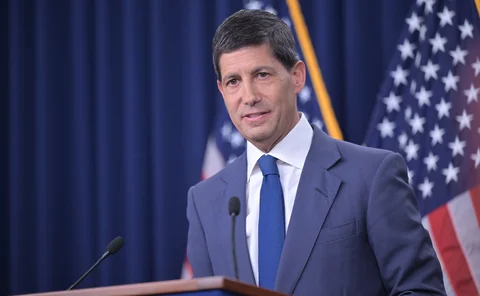
Federal Reserve holds rates with three members dissenting
Hammack, Kashkari and Logan push for 25bp rise in what FOMC chair says was a collegial ‘family fight’

Central banks’ AI policies must ‘catch up’ with times – Adrian
IMF markets head says institutions should act now as future instability may be ‘harder to manage’

One ledger or eight: the design choice that will shape cross-border money
Two rival tokenised settlement networks have both expanded – mBridge into Macau and Mongolia, Agorá to Canada. The contest between them is not primarily about technology, and not yet about currencies. It is about who keeps the ledger, argues Marcello…