
Research

Fed adviser sets out new equilibrium rate model
Long-term interest rates are more important for spending decisions, author claims

Bernanke: household borrowing not the main factor in 2008 crash
Panic in financial markets and not household borrowing created deep crisis, former Fed chair says; economists should emphasise credit when modelling

Technology shocks unbalance job market – paper
A technology shock that permanently raises productivity leads to unemployment, authors say

Competition offsets higher costs and demand in Sweden
Somewhat weak inflation keeps rate-setters from increasing interest rates despite stronger growth

T&T paper gauges exchange rate effects on import-reliant economies
Exchange rate pass-through to inflation is particularly relevant to economies that are heavily reliant on imported goods, authors say

Risk-adjusted model anticipates rate changes better – paper
Monetary policy forecasts perform better when adjusted to risk, authors say

Financial literacy differs greatly between countries – OeNB paper
Some differences are due to survey methods but others may reflect institutional factors, find researchers

US and UK central banks take similar policy stances, researchers find
Richmond Fed examines responses to major monetary policy shocks

Bank of Spain paper looks at G20 regulatory agenda
“Globally significant” banks’ perceived risk likely to rise, researchers say
Fed paper presents method to better estimate systemic risk
Authors find their approach outperforms several commonly used systemic risk indicators
Inattention helps explain flat Phillips curve – Fed paper
Inflation may be less sensitive to shocks because people are not paying attention, authors say

BIS paper weighs economic impact of macro-prudential policy
Cutting the LTV ratio leads to reduced output in emerging markets, authors find
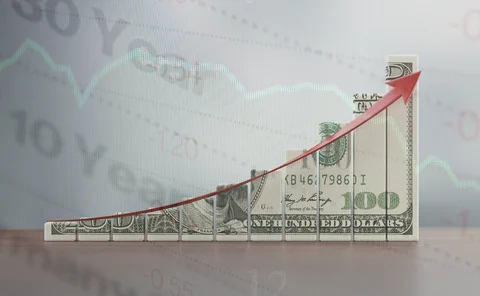
Flatter US yield curve may not herald a new crisis – San Francisco Fed
The curve inversion has not materialised, while low long-term yields may be related to quantitative easing

IMF paper builds corruption indicator using big data
Corruption shocks negatively impact long-term real outcomes, authors say

‘Stochastic lower bound’ impacts inflation – BoE paper
Assuming the lower bound is fixed might be unrealistic, authors say

China’s ‘big five’ banks highly inefficient – Bank of Finland paper
Biggest lenders suffer from persistent inefficiency, researchers say

Policymakers should focus on slack even amid uncertainty – Fed paper
“Standard advice” from the literature may be flawed under current conditions, authors warn

Global crisis uncertainty harmed investment – BoE paper
Authors say their results offer a benchmark for possible Brexit-related uncertainty

Banking stress tests need more robust methods – Bundesbank paper
Current methodologies suffer from significant uncertainty, researchers say

Passive investing boosts some risks and cuts others – Fed paper
Authors assess four ways the surge in passive investing might impact stability

Reserve requirements an effective tool to balance capital flows – BIS research
Higher interest rates encourage more inflows, but adjustments in reserve requirements can strike a better balance

Monetary policies spill over to currencies, BIS paper says
Paper examines impact of multiple monetary policies on cross-border bank lending

Removing low-denomination coins not inflationary - BoE research
Rounding would be applied to total bill and not individual items, paper argues

ECB policy changes foreign-denominated lending – Bank of Spain paper
Tighter ECB policy usually leads to increased lending abroad, researcher finds