
Asia-Pacific

MAS and HKMA aim to green red envelopes over Lunar New Year
Monetary authorities encourage the giving of used notes or electronic cash gifts to cut waste

Central banks keep trialling link between wCBDC and RTGS
Most respondents motivated to issue wCBDC to enable financial innovation
Majority of central banks still lack CBDC issuance powers
Legal mandates are scarce in both larger and smaller central banks
Two in five CBDCs designed to be programmable
Over half of respondents’ retail CBDC projects are at research phase

This is not quite Japan’s ‘Truss moment’ – ex-BoJ board member
Experts add that central bank is unlikely to have to intervene directly in sovereign bond market

People: Turkey appoints new deputy governors
Plus high-level restructurings in Thailand and Italy

People: President’s nephew confirmed as BI deputy governor
Plus new governor in Malawi and Croatia’s vice-governor to become minister

IMF overcalculated Taiwan’s USD exposure – central bank chief
Fund’s measure showing USD holdings at 45 times local FX markets is “misunderstanding”, Yang says

BoJ holds rates as politics and sovereign bonds take spotlight
Decision closes out week in which JGB yields rose to historic highs after PM called snap election

Legal threat to Fed accelerates Asean+3 contingency planning
AMRO chief economist says central bank independence of paramount importance for stability

Risk management reviews are most common assessment method
Centralised teams are less likely to conduct external or management evaluations
UK’s Orange Book risk approach rarely used by central banks
Only three centralised risk management departments utilise principle

Trade fragmentation still favours west over east – BdF study
Authors says US-led bloc better placed to win over neutral states than China-aligned grouping

BoK leaves policy rate unchanged
Economists predict South Korean central bank will hold at 2.5% for remainder of year
Staff error is largest cause of op risk at central banks
Legacy systems tend to trigger most threats in jurisdictions with greater than average number of incidents

People: HKMA extends deputy chief executive’s term
Plus new appointments in the Philippines, New Zealand and Vietnam

Central bank governors express ‘full solidarity’ with Powell
Lagarde and Bailey among signatories of statement in wake of Department of Justice investigation
Op risk incidents average over 100 a year among central banks
Financial impact is risk managers’ strongest metric for gauging incidents’ severity
Phishing and ransomware are central banks’ main cyber threats
Teams widely use training, monitoring and privilege management to mitigate cyber threats
Just under half of risk departments are sufficiently staffed
Units with satisfied staffing levels earn below global average annual salary
Mitigation and reporting are leading components of risk strategy
Decentralised teams more likely to embed philosophy in divisional decision-making
Most centralised risk teams prioritise cyber security
Decentralised teams primarily cover credit and counterparty, op and market risks
Risk policies widely reviewed by committee in larger teams
Central banks with larger teams favour risk committees over CROs
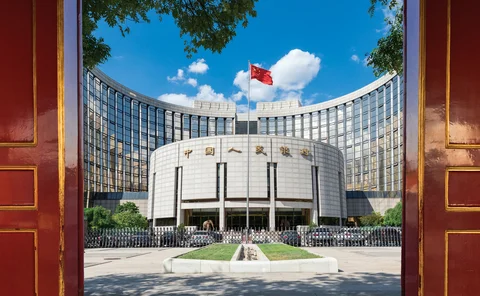
China launches ‘credit repair’ scheme to boost lending
Overdue personal debt of up to 10,000 yuan to be removed from database if debtor repays by March