
Financial crisis
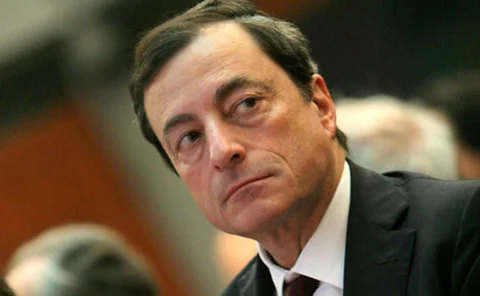
Supervision bolsters monetary policy transmission – Draghi
No sign of housing bubble developing across eurozone as a whole, ECB president says

NY Fed paper estimates US contagion risks
Authors design a network model incorporating non-banks to estimate how the risk of a “default cascade” has changed over time
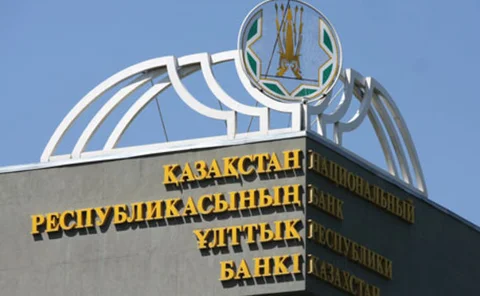
NBK intervenes as Kazakh banking troubles spread
Central bank moves in to rescue one bank and triggers liquidation of another
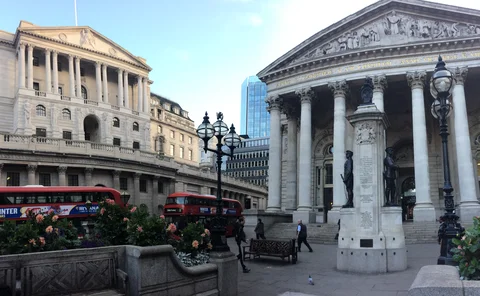
Former BoE economist proposes new regulatory approach
Panellists discuss whether post-crisis regulation has gone too far, asking whether banks need the extra capital

BoE’s Taylor pushes back against complaints of over-regulation
Capital requirements could have been made much tougher, and the FPC strives to achieve balance and accountability, Martin Taylor says

German central bank in Nazi era will be ‘special focus’ of independent study
Bundesbank funds research into twentieth century German central banks

Making the most of big data
Per Nymand-Andersen, adviser to senior management at the European Central Bank, discusses how central banks can benefit from embracing big data and what this could mean for the industry in the near future.

PBoC’s Zhou warns of ‘sudden’ contagion risks
Governor continues with tough line on financial imbalances as he prepares to hand the reins to an as-yet-unnamed successor

Bank of Spain warns Catalan crisis may cut growth by 60%
Uncertainty could imperil Spain’s recovery and reduce growth by 2.5% of GDP until late 2019

OTC derivatives fall to lowest levels since financial crisis, BIS says
The gross market value of outstanding OTC derivatives contracts falls to below $13 trillion at mid-2017

People: Powell and Yellen comment on Fed chair pick; FPC member appointed
Nominee as Fed chair praises predecessors; UK’s FPC has new external member; and more

High debt threatens financial stability in Norway, central bank says
Household debt ratios and rising property prices are the two main vulnerabilities for the system

European firms’ net debt cramped investment, Bank of Italy paper finds
Paper looks at eurozone and UK firms from 2006 to 2012

‘Black box’ AI could pose macro risks – FSB
Rise of artificial intelligence in finance may promote efficiency, but it can be hard to tell where the dangers lie, report finds

Tapping into big data’s potential
Central Banking convened a panel of experts to discuss how central banks can harness big data for their needs, hopefully without falling foul of some of the many pitfalls that await.

Trump nominates Jerome Powell as Fed chair
As a Fed governor, Powell has never issued votes of dissent against FOMC decisions

Bank of England pulls trigger on rate hike
Committee split 7-2, but Carney strikes hawkish note on need for further hikes

Banks will continue to gamble with public money, says Gordon Brown
Former UK prime minster says lax punishment of banks has left risky culture intact; “inevitable” rogue bankers will continue to gamble with public money

A new era for the BIS
As Basel III inches towards closure and a new BIS general manager prepares to move into his post, Jaime Caruana talks to Daniel Hinge about his eight years at the helm

BIS could have done more to convey capital benefits – Caruana
Outgoing general manager says he would like to have better conveyed the “positive message” around capital, and made more progress on policy spillovers

Venezuela replaces governor after less than two months in office
Constituent assembly appoints MP as economy battles hyperinflation and economic collapse

Text mining reveals differences in PRA approach
Researchers compare Prudential Regulation Authority’s communications to its predecessor using a machine-learning algorithm

Italian premier proposes Visco for a second term, despite opposition
Former prime minister Renzi tried to derail governor’s renewal, questioning his record on supervision

US debt and delinquency exceed pre-crisis levels – research
After five years of deleveraging, US households started to increase their debts in 2013