
Financial crisis

Greek bailout funds approved but debt relief still contentious
IMF agrees “in principle” to new support for Greece, unlocking European funds, but parties still fail to reach accord on debt relief

Governance frameworks need to fill in for legislative gaps, says Trinidad’s Hilaire
Governor of Caribbean central bank says financial entities have to be willing to “police themselves” by encouraging a culture founded upon strong corporate governance

National Bank of Denmark warns banks on stress test results
Some systemic banks came close to breaching threshold requirements in latest round of stress tests, central bank says

US Treasury proposals seek to water down Basel III
Proposals include axing parts of liquidity rules, reducing the use of stress testing and the possibility of allowing banks to opt out of the Volcker rule

Possible Fed appointments on the horizon
Treasury department official Randall Quarles and former Fed staffer Marvin Goodfriend believed to be on the shortlist; no date yet for appointment announcement
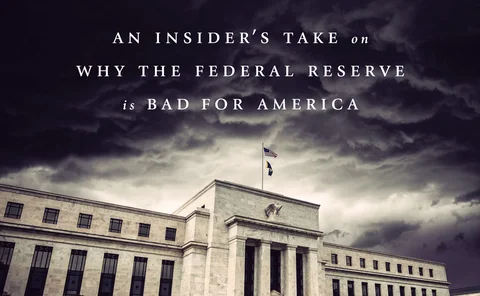
Book notes: Fed Up, by Danielle diMartino Booth
A “fascinating but annoying” account by a US Federal Reserve insider who openly criticises the culture of the US central bank and policy decisions made by the institution leading up to and following the financial crisis

More regulation ‘may not fix problematic conduct’, says Sarb’s Mminele
Deputy governor appeals to the entire financial market to challenge and realign current culture; “fundamental shift” needed in order to rebuild “trust deficit”

Balance sheet weakness and falling investment to blame for productivity slowdown – paper
IMF paper rejects structural hypothesis for slowdown in productivity growth following crisis; firms with balance sheet issues and those hit harder by credit tightening cut back on investment

Book notes: Crash Bang Wallop, by Iain Martin
A comprehensive study of the City of London and how it became the world’s leading financial centre prior to the financial crisis and the UK’s vote to leave the European Union
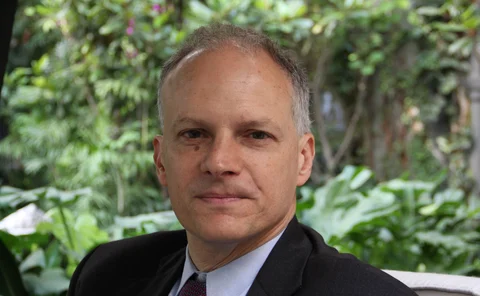
IMF’s Werner: Latin America must keep debt under control
Western hemisphere chief says there are some concerning signs on debt, although the risk of a systemic crisis is low; region well placed to weather Fed shock

Kohn worried about weight of expectations on Federal Reserve
The weight of expectations on the US Fed may be too high; the US is not as well placed as the UK to tackle another major crisis, says the former Fed vice-chair

US household debt surpasses pre-crisis peak
Household debt exceeds 2008 level for first time, driven in part by auto loans and student debt

Former Fed vice-chair Kohn on populism, top central bankers
Donald Kohn speaks to Christopher Jeffery about his fears for the Fed amid mounting populism, why he has few policy regrets and his experiences working with some of the world’s top central bankers

IMF paper sheds light on solvency and liquidity interactions
Neglecting the “solvency-liquidity nexus” could lead to mistakes in stress-testing models, authors warn

Bank Negara Malaysia to ramp up misconduct supervision, says Ibrahim
Shocking survey results shows 15% of respondents would act ‘unethically’ when not being monitored; new guidance principles and transparency framework to help, BNM governor says

Capital deepening ‘virtually absent’ in US and eurozone – ECB
US and eurozone have seen major falls in net investment, an ECB article says

Zimbabwe central bank actions like ‘putting lipstick on a frog’
Economic crisis is reminiscent of meltdown preceding dollarisation in 2008, but authorities have fewer options this time

Trade costs limit effects of internal devaluations – ECB paper
Researcher says trade costs explain Greek failure to boost exports

Reforms have helped curb bank CEO pay – BIS paper
Researchers examine how principles introduced by the Financial Stability Board impacted pay for top managers
Credit booms make for more severe recessions – BoE paper
Authors find credit growth is a more reliable predictor of the severity of recessions than debt

Paper looks at eurozone banks’ contributions to systemic risk
Researchers use the SRISK measure on a sample of eurozone banks
Italian banks will not block recovery – deputy governor
Further reforms of loan law are necessary, says Rossi

Fed greenlights Wells Fargo revamp, lifts growth limits
Bank’s 2015 plan contained “deficiencies” that have now been corrected, US agencies say, although a further hurdle is coming this year

Influential UK committee chair Andrew Tyrie to step down
MP says he will not seek re-election, ending a 20-year career in parliament, during which he oversaw major changes to UK financial regulation