

Swaziland central bank needs macro-prudential powers – IMF
Fund urges authorities to fast-track reform to give central bank financial stability mandate

Plans to give the Central Bank of Swaziland macro-prudential powers should be “accelerated”, say directors of the International Monetary Fund.
Authorities in the small African country have already put in motion plans to “bolster” the mandate and independence of the central bank, while “strengthening” its supervisory structure, including the creation of a financial stability unit.
But the fund believes more could be done to give the central bank greater oversight over financial stability and
Only users who have a paid subscription or are part of a corporate subscription are able to print or copy content.
To access these options, along with all other subscription benefits, please contact info@centralbanking.com or view our subscription options here: www.centralbanking.com/subscriptions
You are currently unable to print this content. Please contact info@centralbanking.com to find out more.
You are currently unable to copy this content. Please contact info@centralbanking.com to find out more.
Copyright Infopro Digital Limited. All rights reserved.
As outlined in our terms and conditions, https://www.infopro-digital.com/terms-and-conditions/subscriptions/ (point 2.4), printing is limited to a single copy.
If you would like to purchase additional rights please email info@centralbanking.com
Copyright Infopro Digital Limited. All rights reserved.
You may share this content using our article tools. As outlined in our terms and conditions, https://www.infopro-digital.com/terms-and-conditions/subscriptions/ (clause 2.4), an Authorised User may only make one copy of the materials for their own personal use. You must also comply with the restrictions in clause 2.5.
If you would like to purchase additional rights please email info@centralbanking.com
More on Macro-prudential
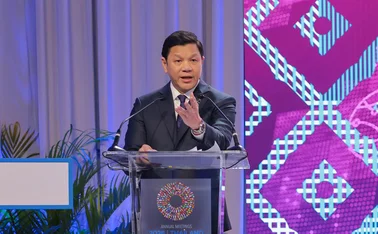
IMF, World Bank and BoT launch fraud prevention blueprint
‘Bangkok Blueprint’ targets more than just financial sector to ensure trust in digital financial products

Fed to overhaul supervision along regional lines
Bowman says restructuring aimed at implementing ‘culture of accountability’ following SVB collapse

Fed’s AML plan may mean ‘inconsistent’ supervision
Industry groups says Fincen should have co-ordinating role

Thai economy needs monetary, fiscal, financial policy mix – BoT
‘Single policy tool insufficient to mitigate more frequent shocks,’ central bank says

Asia-Pacific central banks say AI risks require ‘vigilance, agility’
MAS and BoT also sign anti-fraud MoU on sidelines of meeting involving 11 monetary authorities

Kazakhstan scraps FX rule for state-affiliated companies
Requirement for proceeds to be sold domestically was implemented when Ukraine war led to depreciation
BoK sees AI boom continuing
Central bank dismisses concerns that semiconductor business cycle has peaked

Vietnam tracks towards credit growth target
Central bank deputy governor says lending grew by around 7.4% in first six months of year