
Euro

Prospective eurozone members fail to meet convergence criteria, ECB says
Seven prospective member countries show greater convergence in their economic indicators but fail to meet requirements for their legal frameworks, ECB report says

Antti Heinonen says cash is still relevant in modern society
Former ECB head of banknotes says cash is still evolving to keep pace with new payments technology, and banknote designs are staying ahead of counterfeiters

Banks’ debt maturity needs extension – but not too much, paper argues
Eurozone banks’ debt securities need slightly longer maturity periods, but extensions envisaged under Basel III may be excessive, a Bank of Italy paper argues
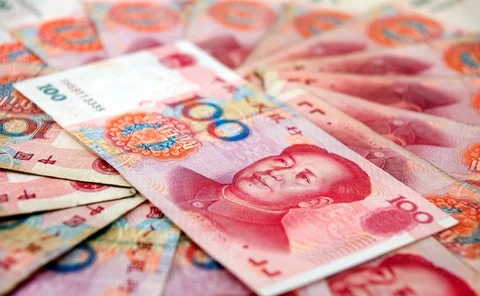
SBP’s Aziz sees renminbi gaining ground in global reserves
Pakistan’s reserves head sees potential for Chinese renminbi to muscle in on the euro and yen’s territory in global reserves, on account of negative interest rates

Lower real interest rates may harm productivity growth, researchers say
Lower real interest rates may reduce productivity growth rates, researchers say; Italy and Spain have suffered low or negative TFP growth during existence of euro

Montenegro should create dedicated ELA ‘subaccount’ – IMF staff
Euroisation is hindering the Central Bank of Montenegro’s ability to act as lender of last resort; IMF staff call for a strengthening of ELA capacity through a “subaccount”

Australian central bank adds S Korean won to reserve portfolio
Australian central bank slashes euro holdings by 20% as diversification into alternative currencies continues

Tighter quality standards on banknotes not needed, DNB paper suggests
The Netherlands Bank maintains the European minimum standard for sorting euro banknotes, as study sees no reason to impose stricter requirements

Austria should ‘stand ready’ to tighten capital requirements, IMF staff say
The country has made ‘significant progress’ in restructuring the regulatory and supervisory framework, the report says, but the banking sector's resilience could be strengthened

ECB ‘actively considering’ whether to scrap €500 note, Cœuré says
Executive board member says he finds arguments in favour of keeping highest denomination note ‘less and less convincing’, as evidence mounts of its role in corruption and crime

Weidmann says clearer liability would strengthen eurozone
Bundesbank chief says important element of fixing the eurozone’s ills is reinstating the ‘principle of liability’, instead of resorting to bailouts

Issing says eurozone status quo is in danger
Former ECB board member says Europe’s monetary union is still plagued by problems caused by absence of political integration, which could pull the eurozone apart

Reserve manager of the year: National Bank of Denmark
The National Bank of Denmark's new risk budget-based investment strategy stood up well to the unprecedented flows of funds into and out of the country in 2015.

Denmark hikes deposit rate after record drop in reserves
Central bank lifts deposit rates and reduces banks’ current account limits; capital outflows accelerated in December following ECB actions
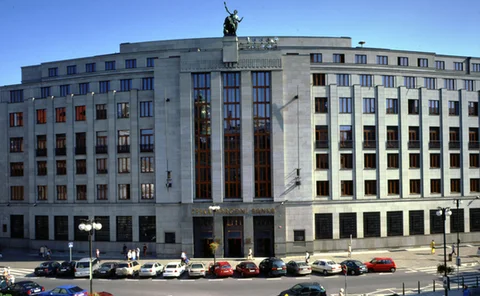
Czech Republic chooses not to set target date for euro adoption
Government decision follows central bank and ministry of finance advice; authorities cite need for greater real economic convergence as a ‘main barrier’ to adoption

Shift to single currency increased volatility of money growth, paper argues
The shift to European monetary union had a major impact on the volatility of money growth rates in the eurozone, a working paper from the Banque de France argues

Rajan weighs currency movements while RBI holds rates
Governor Raghuram Rajan spells out challenges posed by divergence of dollar and euro in press conference after Reserve Bank of India keeps key rate at 6.75%

PBoC and ECB announce ‘successful’ swap line tests
Tests in April and November provided ‘symbolic amounts’ of euro and renminbi liquidity, involving a ‘limited number’ of counterparties


Book notes: The challenge of economic rebalancing in Europe, perspectives for CESEE countries, edited by Ewald Nowotny et al
A useful book on the failure of the European economy to recover from the 2008 recession, and the slowing down of the convergence of central and eastern European economies with the core of the EU

Asymmetric credit growth drove pre-crisis eurozone imbalances, paper argues
Credit growth and competitiveness major causes of current account deficits, researcher says

RBA reduces share of euro in reserves
Australian central bank cuts euro holdings by 10% while nearly doubling RMB share of reserve portfolio; running yield ‘very low' at 0.2% at end-June, annual report says

Romania euro entry ‘no longer feasible’ for 2019, central bank governor says
National Bank of Romania governor says it is ‘no longer technically possible’ to join the single currency by January 2019; had previously warned of need for structural reforms

Book notes: Money and Trade Wars in Interwar Europe, by Alessandro Roselli
Alessandro Roselli’s book on interwar Europe should be compulsory reading for all those who are handling or interested in the current crisis in the euro area