
Central Banking Journal

Central bank of the year: Monetary Authority of Singapore
Singapore’s central bank stands out for its pioneering fintech efforts combined with its consistency of performance in monetary policy, financial stability and supervision

Economics in central banking: Greg Kaplan, Benjamin Moll and Gianluca Violante
Authors’ paper, ‘Monetary policy according to Hank’, boosts the realism of core economic models, delivering important insights into inequality and the transmission of monetary policy

Website of the year: Sveriges Riksbank
The Swedish central bank has redesigned and restructured its website to great effect, with users staying longer and engaging with more content

Risk manager: Saudi Arabian Monetary Authority
A multi-year overhaul of the Saudi central bank’s risk architecture has come to fruition, resulting in radical changes in behaviour

Risk management technology: Vermeg
Having successfully delivered the collateral management module of its Megara system to four major central banks, Vermeg has won a high-profile tender to deliver the technology for the Eurosystem Collateral Management System

Professional services initiative: World Gold Council
Having identified seven different ways of accounting for monetary gold among 70 central banks, the WGC developed guidance to bring greater consistency to accounting practices

Advisory services: Deloitte
Deloitte has a growing central bank footprint, including new projects on strategy and cyber resilience in Canada, fintech in Saudi Arabia and DLT in Hong Kong

Treasury systems initiative: Ion Treasury
Ion’s acquisition of Openlink in 2018 has boosted its central bank and agency clients to 65, with a new ECB contract being a ‘jewel in its crown’

Data services: Vizor Software
The Irish tech company has rolled out major updates to pave the way for more agile supervision as its scalable system won major repeat business with Sama and the Bank of England

Book notes: Democratizing Money?, by Beat Weber
This is a timely book about ‘how money really works’

Outstanding contribution for capacity building: Warren Coats
For his extraordinary life’s work in helping to put more than 20 central banks – from those in former Soviet republics to those recovering from war – on a sounder footing

Transparency: National Bank of Ukraine
The Ukrainian central bank has made strong progress in improving its transparency during a highly challenging operating environment

Payments and market infrastructure development: Reserve Bank of Australia
The RBA has spearheaded the development of an upgraded retail payment system that includes real-time settlement

Currency manager: Bank of Israel
The Israeli central bank is revolutionising the way it manages the country’s banknotes while maintaining security and preparing for the future

Currency services: De La Rue
2018 was a busy year for the UK-based banknote provider as it secured new clients and transformed its focus towards technology

Currency innovation: Giesecke+Devrient Currency App
The German company has helped central banks improve their educational outreach to bolster national currency security

Financial inclusion initiative: Federal Reserve Bank of St Louis
Improvements in the bank’s financial inclusion initiatives are helping tackle the polarisation of economic education in the US and across the globe

Financial market infrastructure services: ParFX
The foreign exchange platform has pioneered a market-driven effort to tackle concerns about poor market behaviour and distrust in the $5 trillion-a-day market

Reserve manager of the year: Bank of Mexico
The Latin American central bank has adopted a forward-looking asset allocation strategy as well as embracing absolute return approaches

Asset manager of the year: State Street Global Advisors
The US financial group used its global presence, and equity and fixed income expertise, to expand its central bank client base and assets under management in 2018

Global markets award: HSBC
HSBC’s global reach and expertise in emerging Asian markets has helped its long-term central bank clients develop more sophisticated reserve management strategies and move into new markets
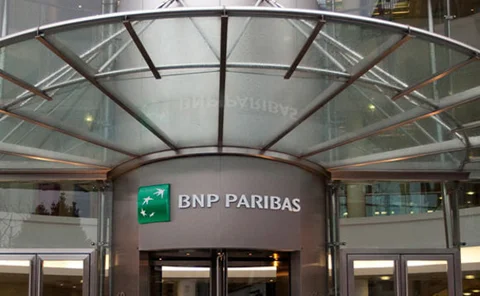
Innovation in reserve management: BNP Paribas Asset Management
The asset manager developed new fixed income investment strategies in 2018 that have delivered strong returns and diversification for clients, while also offering practical training support

Custody initiative of the year: Citi
The US financial group used its global presence and technological edge in 2018 to deepen existing relations and obtain new mandates

Initiative of the year: RBNZ’s Financial Strength Dashboard
The Reserve Bank of New Zealand’s Financial Strength Dashboard offers a window into the nation’s banking system