
Central Banking Journal

Sponsored forum: Climate change – Where can central banks contribute?
This webinar examines how reserve managers and those responsible for official sector portfolios can tackle the challenges climate change poses in the modern investment paradigm

Can central bankers turn finance green?
The Network for Greening the Financial System aims to bring about fundamental change. The central bankers who created it made a strong start but face serious challenges.

A powerful new force – Central banks and climate-related risks
Increasing global concern about climate change is causing central banks to take notice of the issue and its potential implications. Frédéric Samama, head of institutional client coverage at Amundi, examines the findings of Central Banking’s survey on…

The calm before the storm – The climate change 2019 survey
As climate-related risks to the financial sector become increasingly understood, central banks are demonstrating their willingness to develop capabilities to analyse the impact and modify their policies. A new survey indicates a watershed for central…
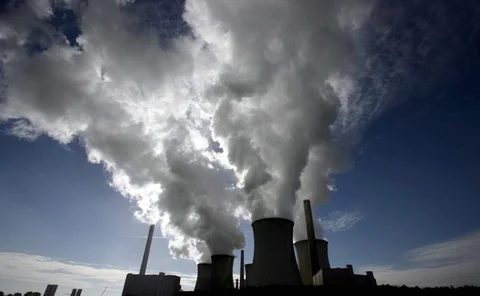
A climate of change
Central banks are striving to take practical steps to tackle climate change risks. Can they succeed?

Why two degrees matters to central banks
Ulrich Volz explores why strong leadership is required from central banks and supervisors to ensure the financial sector will be in a position to weather climate risks.

Book notes: Currency, credit and crisis, by Patrick Honohan
Honohan brings an analytical eye to the measures taken to avert a deep crisis in Ireland

Book notes: The third pillar, by Raghuram Rajan
Rajan sets out an ambitious – but deliberately non-radical – manifesto for reform at the local level

How Singapore manages its reserves
MAS managing director Ravi Menon explains Singapore’s total approach to reserve management, which includes the use of customised fixed income benchmarks and tapping into external investment expertise

Quantitative easing: a never-ending story?
The Federal Reserve is cutting the size of its balance sheet, but is unlikely to reduce it to pre-crisis levels due to fears about financial stability. It also appears to have kept its floor system for the same reason

Zhou on four key decisions that forged the modern-day PBoC
Former People’s Bank of China governor Zhou Xiaochuan shares his perspectives about four critical moments in China’s economic reform agenda

The BoE’s education outreach programme
The Bank of England launched econoME last year to bring a practical understanding of economics to the classroom. Its aim is to make policy-making more effective in the future. It plans to extend its offering to schools by designing materials for younger…

Emerging markets Argentina and Turkey: mission impossible?
High international debt exposures, large deficits and institutional frailty have fuelled capital outflows, weaker currencies and soaring inflation in Argentina and Turkey. Does the US Fed’s pause give the EM central banks reason for hope?

A dangerous moment for the Reserve Bank of India
The RBI’s high-profile skirmishes with India’s populist government in 2018 threatened the central bank’s mission. Central bankers worldwide should take note

NBU’s Smolii speaks out about political interference
Politically powerful people in Ukraine are still trying to block economic reform, but transparency is helping, says National Bank of Ukraine governor

Book notes: Floored!, by George Selgin
Michael Reddell remains unconvinced the Fed’s introduction of the IOR prolonged the recession, but credits Selgin’s argument the IOR policy made the central bank a more powerful credit lender

Book notes: Finance and philosophy, by Alex J Pollock
A readable and useful book that provides much food for thought, and should be read widely by economists and policy-makers

Book notes: Where economics went wrong, by David Colander and Craig Freedman
Chicago economics’ gladiatorial debating style has cost the discipline dearly, the authors argue

Climate change: a new challenge for financial stability?
Do climate change and the transition to a low-carbon economy pose a risk to financial stability? What is the role of central banks?

The role of e-cash in China
The use of e-cash stored on integrated circuit cards notably reduces cash handling fees and increases security. It also offers greater convenience notwithstanding the rise of mobile payments

The Brexit conundrum
The Bank of England has only limited room to respond to a hard Brexit

Renminbi reserves are still relatively small
Renminbi investments still account for a much smaller fraction of global forex reserves than China’s significance in the world economy would merit

Lifetime achievement: Zhou Xiaochuan
The former People’s Bank of China governor stands out for his high levels of integrity, intellectual rigour and bold reforms that have served the public interest in China and elsewhere

Governor of the year: Karnit Flug
The Bank of Israel’s first female governor delivered some hard-fought reforms during her time in office, and also stood up to the government and safeguarded macroeconomic stability