
Central Banking Journal

Specialised lending initiative: Deutsche Bank
As agent lender for securities purchased under the European Central Bank’s bond purchase programme, Deutsche Bank has played an important role in supporting secondary market liquidity

Book notes: EuroTragedy, by Ashoka Mody
The former International Monetary Fund insider elegantly tells the story of the creation of the currency that has defied economics, warning that it could get “worse, much worse”

Book notes: Keeping at it, by Paul Volcker with Christine Harper
Volcker, a man who has made history, delivers a fascinating memoir, providing insights into the key lessons learned during his decades of public service, writes Jean-Claude Trichet

Book notes: Macroprudential policy and practice, edited by Paul Mizen, Margarita Rubio and Philip Turner
An important overview of the current state of thinking about macro-prudential policy, but uncertainties remain about the current allocation of financial stability responsibilities

People: Kenyan and Samoan governors named to UN digital task force
Kenya’s Njoroge and Samoa’s Ainuu-Enari to investigate digital impact on financial inclusion

Beyond payments: central bank digital currency
The issuance of central bank digital currencies, such as Sweden’s proposed e-krona, could facilitate monetary policy beyond the zero lower bound

The euro: a troubled third decade?
Italy’s pact-busting budget highlights ongoing eurozone frailties

Book notes: The Fed and Lehman Brothers, by Laurence Ball
Ball claims the Fed could have lent to Lehmans, lawfully and prudently, had it chosen to do so, writes Reddell. But agreeing the Fed could have provided liquidity support does not automatically imply it should have

The EU tries to rethink its faltering AML regime
The European Union plans to centralise its anti-money laundering efforts following a series of scandals this year. Dan Hardie looks at the options available and the multitude of challenges that remain

Agent-based models: a new frontier for macroeconomics?
Agent-based modelling is opening up new possibilities for economics, but the discipline is still struggling to move from the sidelines to the mainstream
Book notes: The bank that lived a little, by Philip Augar
History of British commercial bank Barclays fails to address key questions, writes Michael Taylor

Tunisia’s El Abassi on central banking during a regional security crisis
Central Bank of Tunisia’s governor talks about capacity building, evolving relations with the IMF, integration among the Arab states and using technology to foster inclusion

What next for the BoJ’s unprecedented ETF experiment?
No other central bank has attempted such purchases, and exiting the policy may prove extremely challenging, says Sayuri Shirai

Demetriades on political pressures on central banks and their governors
Former governor of the Central Bank of Cyprus speaks about the Cypriot banking crisis, the need for EU-wide AML oversight, independence and his fears for stability of the monetary union

Book notes: The other half of macroeconomics, by Richard Koo
Richard Koo questions whether central bank policy can work during a balance sheet recession, writes Graham Bannock

Juan José Echavarría on Colombia’s path to sounder monetary and economic policy
The governor of the Central Bank of Colombia talks about policy efforts to promote stability, the importance of independent institutions and the implications of Venezuela’s economic collapse

The Bank of England’s missing records
Central banks need to implement robust archiving frameworks, should they want to maintain public trust and learn from the lessons of the past, writes former Bank of England official historian Forrest Capie
Book notes: Capitalism without capital, by Jonathan Haskel and Stian Westlake
The authors have created a compelling framework to characterise and explain the nature of intangible investments in our economies, writes Michael Reddell, but their conclusions are lacking in analysis and data

Book notes: Digital human, by Chris Skinner
Skinner provides a valuable insight into the challenges banks face as technology continues to permeate further into the financial industry

The battle for cyber resilience
The cyber attack on Bangladesh Bank prompted central banks around the world to change their approach and refocus on contingency planning, but are they ready now?
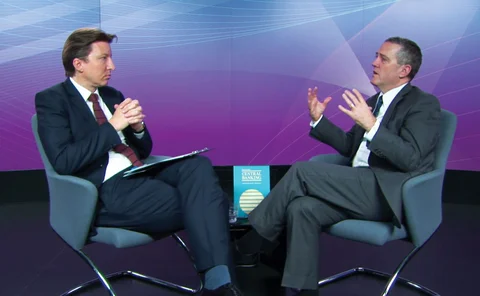
James Bullard on 2% rates, tariffs and Fed leadership
The president of the Federal Reserve Bank of St Louis speaks about the impact of US trade policies, the disruption to the banking industry from Silicon Valley, shrinking the Fed balance sheet and the potential for agent-based modelling

The perilous road to normality
Many central banks are starting to tighten policy, but their room for error is limited and their final destination unclear. What more can they do?
Big data in central banks focus report 2018
The third Central Banking big data focus report delves further into recent trends as central banks grapple with the question of upgrading their approaches to data

Data handling – A rethink
Official institutions are maturing as big data users but there is plenty more work to be done.