
Central Banking Journal

Putting big data into action
Big data is changing the way central banks think about the economy and oversee the financial system. In a forum sponsored by BearingPoint, Central Banking convened a panel of experts to discuss the innovative ways central banks are making use of big data.

Book notes: Till Time’s Last Sand, by David Kynaston
Kynaston allows readers to develop their own understanding of how the BoE has had to refind its place in a country where the political system has migrated from commercial republic to full-franchise democracy

Turning data challenges into opportunities
With central banks becoming increasingly reliant on data, BearingPoint elaborates on the increasing role of innovative regulatory and supervisory technology in supervision.

Big data in central banks: 2018 survey results
As work in big data enters the mainstream for central banks, its policymaking and supervisory influence is expanding, prompting significant investment in new technologies.

Suptech: More than just a new name for solving an old problem
The global financial crisis sparked a far-ranging overhaul of the international architecture for financial regulation, coupled with a deep reflection around the fitness-for-purpose and effectiveness of supervisory efforts, writes Anne Leslie-Bini.

Switzerland’s Jordan on extraordinary monetary policy and sovereign money
The Swiss National Bank governor speaks about currency intervention, negative rates, sovereign money and the diversification of reserves

Capitalising on regtech
Regulatory technology could prove effective in improving data reporting and supervisory monitoring, but central banks have a long way to go to making this a reality, writes Joel Clark.

A real-time payments revolution in Asia
Asian central banks have encouraged the development of instant payment systems to defend monetary policy transmission and counter cryptocurrency usage

The data commons: Taking big data global
The International Monetary Fund’s first-ever overarching strategy on data aims to spread big data expertise among fund members. Louis Marc Ducharme discusses the upcoming challenges.

Book notes: American default, by Sebastian Edwards
Edwards’ book is fascinating, well written and enjoyable, and provides an account of one of the US’s forgotten chapters of history

Is the pursuit of a common accounting standard for monetary gold a fool’s errand?
More consistent accounting for monetary gold could address transparency concerns and help smaller emerging economies to achieve greater independence by clarifying treasury transfers

Book notes: Unfinished business, by Tamim Bayoumi
Anand Sinha praises Bayoumi’s analysis of how the euro crisis and US housing crash were, in fact, intertwined

Book notes: China’s Great Wall of Debt, by Dinny McMahon
McMahon is too pessimistic about the chances of China managing to get its great wall of debt under control, writes Michael Taylor, but he is undoubtedly right about the scale of the challenge

Bank of Jamaica’s Wynter on the path to inflation targeting
Bank of Jamaica’s governor talks about revamping accountability, communications and operations as the central bank embraces inflation targeting

Alternatives to Japan’s 2% flexible inflation target
The Bank of Japan may review its policy framework, given its five-year failure to hit a 2% flexible inflation target

Book notes: Edge of chaos, by Dambisa Moyo
John Chown applauds Moyo’s analysis of how the current democratic framework is failing

Time for Central Bank of Argentina independence
Monetary financing has fallen sharply under Mauricio Macri’s administration, but must now end; independence law would help efforts to shatter Argentina’s inflationary shackles

Federico Sturzenegger on Argentina’s efforts to create a credible central bank
The Central Bank of Argentina governor, in his last interview before leaving office, speaks about panic in emerging markets, the IMF bailout, and bringing to an end high inflation and monetary financing

Have central banks created a ‘debt trap’? No, but ...
Tougher regulation has helped ensure extraordinary monetary policy has not caused a dangerous rise in private debt

Book notes: Unelected power, by Paul Tucker
Tucker’s well-argued text sets out a set of principles for those in unelected positions of power to ensure they continue to act for the benefit of the general public, but Reddell says it is a shame more attention is not paid to smaller central banks

Regulatory efficiency or rollback?
Team USA’s new clarion call for regulatory “efficiency” comes with a worrying undertow, particularly related to regulatory rollback and ‘light-touch’ supervision of algorithms

The toxicology of post-crisis shadow banking
Mark Carney tempted fate in 2017 when he declared the most toxic forms of shadow banking “no longer represent a global stability risk”. Did he speak too soon?

Book notes: I do what I do, by Raghuram Rajan
This collection of speeches and commentary sheds light on how the ‘rockstar’ central banker operated, but it reveals little in the more controversial areas of Rajan’s governorship
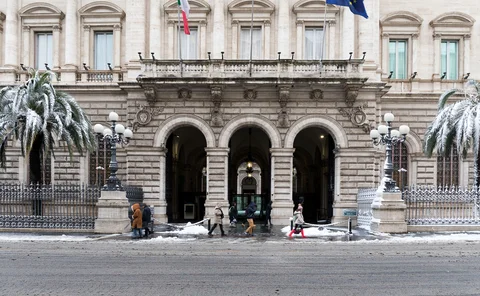
The Bank of Italy’s approach to risk-based budgeting
The financial crisis blurred the lines between Anglo-Saxon and continental European central bank models, presenting challenges when treating both the sources of risk and risk-bearing capacity using financial and accounting budgeting techniques