
Feature

Two future paths for central banking
Andrew Haldane identifies two future worlds for central banks along with their implications for monetary policy, macro-prudential regulation, operations and transparency.

The international monetary ‘anti-system’
A network of systemic risk boards might improve stability in the absence of a viable international financial system, writes Jacques de Larosière.

A new wave for polymer banknotes
Does the Bank of England’s move to introduce substrate banknotes represent a ‘tipping point’ for polymer currency? By Tristan Carlyle.

Finance and the Holy See: creating a central bank
The Vatican is setting up a ‘central bank’ as part of an overhaul of its finances. Isabella Bufacchi and Carlo Marroni examine the options available to the the Holy See.

ECB's Mario Draghi faces ongoing German ‘angst’
ECB president to face further German resistance on interest rates, banking union and OMTs – with Germany’s constitutional court ruling likely more problematic than some observers believe.

Central bank support for CCPs and TRs
The wider use of central counterparties and trade repositories may pose challenges for central banks. Carlos León, Clara Machado and Ricardo Mariño explain the tactics central banks are adopting.

The case for hedging reserves portfolios with futures contracts
Central banks may still be able to hedge their bond and money market portfolios against rises in interest rates. Elisa Vilorio makes a case for using interest rate futures.

Turkey’s pursuit of output-based models
The Central Bank of Turkey has shifted from using input-based approaches to output-oriented models for budgeting purposes in a bid to optimise its use of public resources. By Eyup Kahveci.

IMF moves to unshackle programme countries' monetary policy
The Fund's move towards more flexible conditionality in support programmes is part of a bigger push, but some say it does not go far enough

Independence no substitute for rules-based policy
Thomas Cargill summarises the conclusions of four papers by world-leading economists on the issue of central bank governance and finds independence is overrated

Reassessing the sovereign investor nexus
As sovereign assets continue to grow, managers look set to adopt multi-asset investment approaches that are more closely associated with defined-contribution pension plans

A new vision of the Old Lady
The strategic review at the Bank of England represents an opportunity to create an ‘Economics Directorate’, a research department and an external policy unit, writes Richard Barwell

Lifetime achievement award: Paul Volcker
Paul Volcker’s record of achievement in difficult circumstances continues to provide an inspiration to central bankers throughout the world

Central bank of the year: The People’s Bank of China
The PBoC has anchored market-based reform in China by curbing excesses in the financial system while pressing ahead with interest rate and capital account reform at a time of major political change
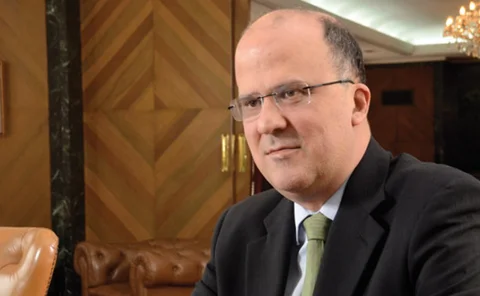
Reserve manager of the year: Central Bank of Colombia
The Central Bank of Colombia’s dynamic reserves management strategy and impressive performance amidst turmoil in the US dollar and emerging market currencies made it stand out from the crowd
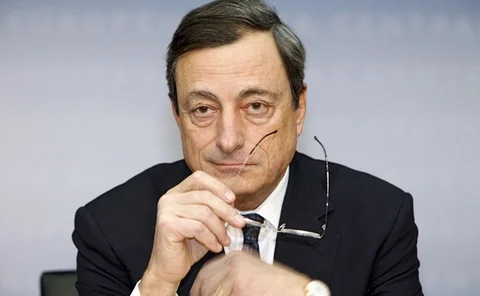
Governor of the year: Mario Draghi
Unflappable conviction and outstanding leadership has enabled ECB president Mario Draghi to decisively restore confidence in crisis-hit Europe

Global custodian of the year: Northern Trust
A clear and committed focus on servicing assets on behalf of sovereign clients – both big and small – combined with a robust technology platform made Northern Trust stand out last year

Asset manager of the year: BlackRock
Improved customer service and impressive investment capabilities in all types of strategies across a wide range of asset classes around the world made BlackRock the stand-out asset manager in 2013

Payments and clearing technology provider of the year: VocaLink
VocaLink has excelled by building the infrastructure for a new accounts switching service in the UK and exporting its pioneering Faster Payments platform overseas
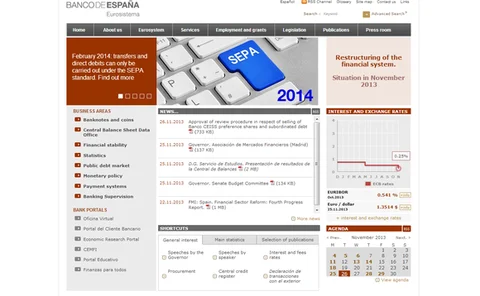
Website of the year: Bank of Spain
The Spanish central bank demonstrated formidable attention to detail in the design of its website, producing an end-product that is both well-designed and simple-to-use for all end-users

Risk management technology provider of the year: OpenLink
Its versatility of infrastructure has allowed OpenLink to thrive in a changing technological environment to meet new central banking demands

Transparency award: Sveriges Riksbank
Sveriges Riksbank, the Swedish central bank, plays a pioneering role in central bank openness and clear communications

Has the global financial crisis dented central bank independence?
Grace Koshie looks at the post-crisis role of central banks, examining issues of fiscal dominance and weaker policy freedom in an increasingly inter-connected world demanding ever-greater transparency

Monetary policy is the incorrect tool to curb asset bubbles
There is no evidence the use of monetary policy in Sweden to keep household debt in check actually works. Such a policy only undermines employment and results in the Riksbank breaching its mandate