
Feature

Renminbi to shake up the reserves management status quo
China is unlikely to fully liberalise its currency controls during the next five years. But this does not look set to prevent the renminbi from achieving full reserve currency status. By Gary Smith

Reserve Bank of India threatened by government’s economic policies
The Reserve Bank of India had a ‘good crisis’ and has earned a strong reputation for integrity and pragmatism during the past 15 years. But its efforts are threatened by current economic policy
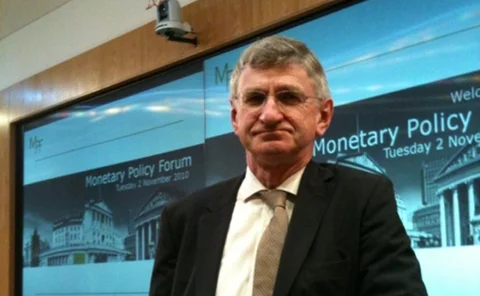
Collateral eligibility: the ultimate macro-prudential policy weapon?
The most potent policy weapon at the disposal of central banks when it comes to fulfilling macro-prudential supervision are asset eligibility rules, says William Allen

A sovereign wealth case study from Ghana
Ghana decided to join the ranks of countries with a sovereign wealth fund after the country discovered oil in 2010. Efi Chalamish and Steve Opata describe how the fund operates

New fault lines in financial regulation
Deleveraging could trigger another crippling credit crunch in Europe at a time when the recovery is still fragile. By Jacques de Larosière

Inflation targeting: a child of our time?
Starting in 1989 inflation targeting has come of age. But does it have the durability to withstand severe economic and financial shocks, or was it simply a child of its time that cannot mature?

Asia to develop emergency financial stability safety net
Charles Adams and Lei Lei Song chart the development of the Chiang Mai Initiative Multilateralization and explain three ways to develop Asia’s liquidity support mechanism

Ignazio Visco’s battle to emerge as governor of the Bank of Italy
Ignazio Visco emerged as the new governor of the Bank of Italy after a lengthy battle few thought he would win. How did he pull it off? Isabella Bufacchi reports

A new toolkit for eurozone survival
The eurozone’s short-term outlook depends on markets, voters, bureaucrats and politicians. Its longer term future requires radical change. Andrew Smithers considers the conditions that are needed for the eurozone to survive

Balance sheet lessons from the Bank of Japan
The Bank of Japan has expanded its balance sheet in more ways than any of its developed world peers. Hisashi Harui reviews the unconventional approaches it has used to ensure financial stability

Data: a core challenge for financial regulatory reform
Improving financial stability through the use of interconnected and predictive supervisory tools requires a rethink on data. By Constantin Gurdgiev and Keith Saxton

African central bankers embrace a new world order
Africa’s central bankers are adopting new approaches to managing their reserves as trade with Brics rises and the influence of developed nations wanes

When private shares meet public interest
Jannie Rossouw and Adèle Breytenbach look at a unique group of central banks: the eight that are privately owned.

The gathering storm
Solving the financial crisis increasingly looks beyond the reach of monetary and financial policies, writes Ludek Niedermayer. Worse could follow in 2012 for central bank balance sheets, he warns.
Held in reserve
Gary Smith says it is time for central banks to define what they want from reserves and reserve managers.

Hong Kong: where next?
Can the symbiotic relationship between Hong Kong and the renminbi continue? Chen Chao looks at the potential for growth – and competition.

Beijing’s second thought
Hui Feng examines the political calculus behind increasing international flows of China’s currency.

Tracking China’s currency
Ren Kangyu looks at how China’s currency has extended its reach beyond the mainland in the short space of seven years.
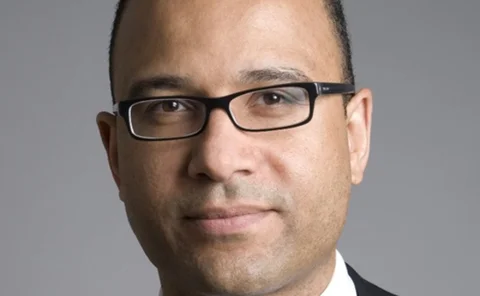
The G-20 and the dollar: what’s new?
Reform of the international monetary system is overdue but the pace of change is too slow, says Ousmène Jacques Mandeng.

The end of a monetary phenomenon
A gold-backed currency is the only viable alternative to failing fiat money, argues Kevin Dowd.

In gold we trust
Judy Shelton makes the case for the US government to issue bullion-backed bonds.

The case for a real SDR currency board
An enhanced special drawing right, backed by a basket of goods, would provide the global currency the global economy craves, argues Warren Coats.

Towards a global monetary policy
US monetary policy must change as the dollar’s dominance wanes, writes Allan H. Meltzer
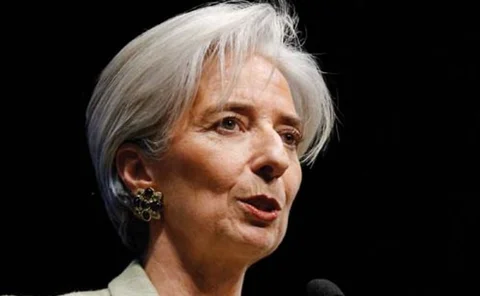
The fractured global monetary system
Robert Pringle reflects on the 40th anniversary of Bretton Woods