
Feature

Can central bankers turn finance green?
The Network for Greening the Financial System aims to bring about fundamental change. The central bankers who created it made a strong start but face serious challenges.

The calm before the storm – The climate change 2019 survey
As climate-related risks to the financial sector become increasingly understood, central banks are demonstrating their willingness to develop capabilities to analyse the impact and modify their policies. A new survey indicates a watershed for central…

Why two degrees matters to central banks
Ulrich Volz explores why strong leadership is required from central banks and supervisors to ensure the financial sector will be in a position to weather climate risks.

How Singapore manages its reserves
MAS managing director Ravi Menon explains Singapore’s total approach to reserve management, which includes the use of customised fixed income benchmarks and tapping into external investment expertise

Quantitative easing: a never-ending story?
The Federal Reserve is cutting the size of its balance sheet, but is unlikely to reduce it to pre-crisis levels due to fears about financial stability. It also appears to have kept its floor system for the same reason

The BoE’s education outreach programme
The Bank of England launched econoME last year to bring a practical understanding of economics to the classroom. Its aim is to make policy-making more effective in the future. It plans to extend its offering to schools by designing materials for younger…

Emerging markets Argentina and Turkey: mission impossible?
High international debt exposures, large deficits and institutional frailty have fuelled capital outflows, weaker currencies and soaring inflation in Argentina and Turkey. Does the US Fed’s pause give the EM central banks reason for hope?
The IFF China Report 2019
Insight and perspectives from the world's leaders, premier policy-makers and financiers

The IFF China Report 2019: The Bay Area Development
Located at the start of the Maritime Silk Road, the Guangdong–Hong Kong–Macau Greater Bay Area seeks to harness advanced technology and green finance to catch up with the economically advanced bay areas of New York, San Francisco and Tokyo.

The IFF China Report 2019: Financial deepening, fintech development and green financing
The past 40 years have seen China transform from a recipient of global aid to a major economic centre in its own right. China is now seeking to deepen its markets, gradually open its borders to global financial flows, and promote new and innovative forms…
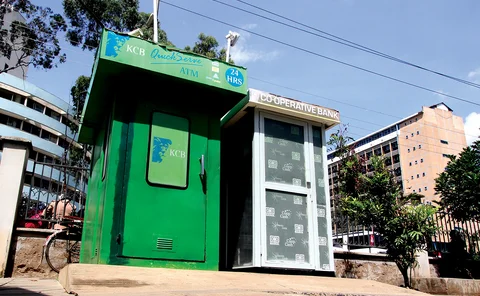
Fintech and the future – Improving financial literacy
Li Dongrong, president of the National Internet Finance Association of China and former deputy governor of the People’s Bank of China, explains how financial technology can aid sustainable growth, transform the structure of financial markets and promote…

A dangerous moment for the Reserve Bank of India
The RBI’s high-profile skirmishes with India’s populist government in 2018 threatened the central bank’s mission. Central bankers worldwide should take note

The IFF China Report 2019: The Belt and Road Initiative
Over the past five years, China has invested more than $70 billion in Belt and Road Initiative (BRI) countries, of which there are now in excess of 100. Leading Chinese and international policy-makers explain how BRI efforts are progressing. This section…

The Belt and Road Initiative 2019 Survey – A new driver for globalisation?
The second Belt and Road Initiative (BRI) Survey of 28 central banks reveals that they view the BRI as a major driver of globalisation, with a high percentage of respondents expecting the initiative to provide a significant boost to GDP. So far,…
The IFF China Report 2019: Redesigning the international trading and monetary system
Reform of the financial system that brought about the 2007–08 financial crisis has not gone far enough and advanced and emerging market economies must find a more co-operative way forward to ensure globalisation can continue.

The turmoil test for emerging and advanced economies
Greater integration between advanced and emerging market economies during globalisation has made both more susceptible to risk of spillover – financial contagion and volatility. As the US continues to normalise its monetary policy, deputy governor of…

Internationalising renminbi – Hong Kong leads the way
Hong Kong’s advantages in technology, talent and infrastructure make it best placed to form the primary transaction and risk management network for the overseas offshore renminbi market, argues Zhou Chengjun, IFF Academic Committee member and deputy…

An international system for all
Reform of the system that brought about the financial crisis in 2007–08 has not gone far enough, writes Zhu Xian, IFF vice-chairman and vice-president of the New Development Bank. Developing countries are demanding greater influence in global economic…

The IFF China Report 2019: New globalisation – The path to the future
Multilateral rules and multilateral bodies will need to be upgraded in the coming years to better represent the shift in economic gravity towards Asia, which has emerged as the largest contributor to global growth during the past decade.

Climate change: a new challenge for financial stability?
Do climate change and the transition to a low-carbon economy pose a risk to financial stability? What is the role of central banks?

The role of e-cash in China
The use of e-cash stored on integrated circuit cards notably reduces cash handling fees and increases security. It also offers greater convenience notwithstanding the rise of mobile payments

Renminbi reserves are still relatively small
Renminbi investments still account for a much smaller fraction of global forex reserves than China’s significance in the world economy would merit

Lifetime achievement: Zhou Xiaochuan
The former People’s Bank of China governor stands out for his high levels of integrity, intellectual rigour and bold reforms that have served the public interest in China and elsewhere

Governor of the year: Karnit Flug
The Bank of Israel’s first female governor delivered some hard-fought reforms during her time in office, and also stood up to the government and safeguarded macroeconomic stability