
Feature

Financial market infrastructure services: Bloomberg
The US company has helped central banks improve monetary operations and deepen forex markets by scaling up technical infrastructure and database monitoring capabilities

Payment services: Swift
The organisation has responded strongly to threats from cyber crime and the decline of correspondent banking

2020: fintech and beyond
At the turn of the decade, central bankers share their thoughts on financial technology – past, present and future

Paul Volcker, 1927–2019
The Fed chair made his name battling inflation, and left his mark on independence and post-crisis financial regulations

The pursuit of ‘fintecgrity’
Digital currencies, distributed ledgers and deep learning are set to transform the financial economy. How can regulators maintain integrity at the confluence of finance and technology?

Will the Fed pass its year-end funding test?
An unprecedented rate spike in September prompted the Fed to inject billions into funding markets. But will its efforts be enough to foil year-end pressures? Could opening the standing repo facility to foreign central banks help?

The challenges facing Christine Lagarde
The new ECB president will need to focus on a successful review of the ECB’s monetary and communications policy, while encouraging fiscal stimulus and structural reform

A spotlight on IPSAS Draft 69
Proposed accounting guidance for specific instruments by the Public Sector Accounting Standards Board may have significant implications for central banks

Central banks turn to Instagram to reach younger generations
The audiovisual social media network is helping some central banks offer financial education and other campaigns for millennials and Gen Zs

Big data in central banks: 2019 survey results
Many central banks are overhauling their data governance, which has facilitated a broadening in their use of big data. They are also turning to external specialists for help
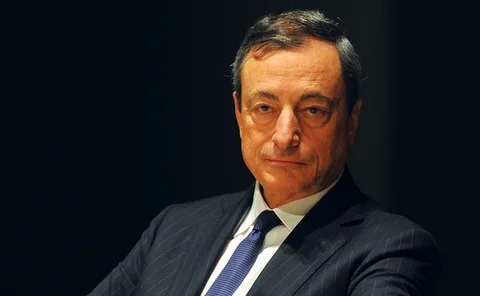
Was Draghi one of the great central bankers?
A look back at how Mario Draghi confronted the financial crisis and existential concerns about the euro

Tackling ‘dead-end’ monetary policy
A shift to lower inflation targets would help central banks escape forever-loose monetary policy, writes former IMF chief Jacques de Larosière

Big tech: a threat to banks?
The explosive growth of financial services offered by big tech companies in China offers important lessons

Overseeing China’s payments revolution
The PBoC has tried to strike a balance between facilitating bigtech innovation and reining in risks, amid an explosive growth in mobile payments

Five insights into China’s green finance transformation
China’s top-down, state-directed mechanism may be the most effective way to embed green finance in a timely manner, writes the PBoC’s Ma Jun

Macro-pru is no panacea
Many central banks need better macro-prudential policy frameworks and communication at a time of rising political interference

30 years of forecasting: have central banks learned anything?
Forecasting models are constantly being upgraded, but forecast errors are still persistent. What more can central banks do?


Modernising currency management
Central banks continue to strive to optimise currency operations at a time when the relative importance of cash is falling, but usage continues to grow. William Towning looks back at the last 30 years

The Deutsche Bundesbank’s digital transformation
The German central bank’s new digital agenda includes major re-engineering of legacy analytics, processes, innovation management and digital competency

Fintech and risk: what does the future hold?
Five key areas where regulators need to make judgements on fintech risks

Central banks face loss of independence – Central Banking survey
A new survey of Central Banking’s Editorial Advisory Board points to central banks facing existential challenges with little change in their frameworks or toolkits

Overcoming deflation: Japan’s experience and challenges ahead
Bank of Japan governor Haruhiko Kuroda explains how Japan’s long battle against deflation may offer insights for the future conduct of monetary policy at other central banks

Latin America’s escape from hyperinflation
Adoption of inflation targeting, flexible exchange rates and prudent fiscal policies in Brazil, Chile, Colombia, Mexico and Peru ended decades of runaway inflation