
Financial Stability
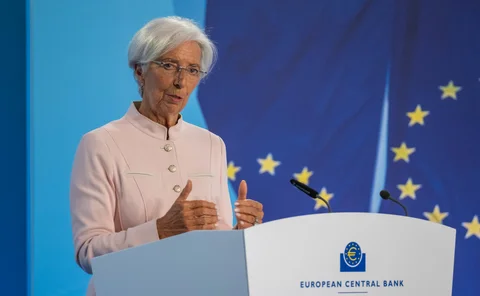
Case for euro stablecoins ‘weaker than it appears’, says Lagarde
ECB president says settlement in tokenised markets must be anchored in central bank money

UK needs closer EU ties in multipolar world – BoE’s Bailey
Governor urges greater support for multilateral institutions to solve growing global imbalances
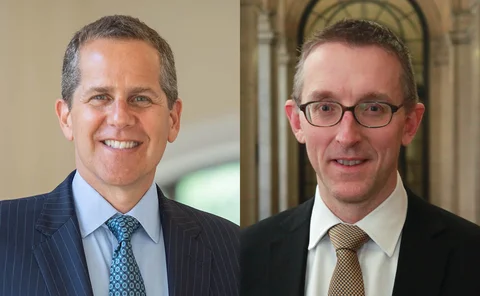
Prolonged Iran conflict poses stability risks – Barr and Woods
Fed governor and UK’s PRA chief also make renewed case for central bank independence

Asean+3 to prioritise digital cross-border payment co-operation
Group looking to open joint forum on tokenisation and stablecoins

BoE’s Bailey expects global consensus on FRTB internal models
UK is reviewing proposals from US and EU regulators before finalising its IMA rules

Podcast: The potential risks of the Genius Act
How the focus on issuers and reserve assets ignores the wider ecosystem

BoE says more work needed on UK bank capital requirements
Executive director for prudential policy David Bailey says leverage ratio among issues under review
NBFI oversight ‘no longer adequate’, say BdF economists
Researchers call for stronger supervision of non-bank sector ‘before risks actually materialise’

PNG chief says getting off FATF grey list a ‘national priority’
Papua New Guinea was placed on body’s AML/CFT monitoring list in February

BIS paper sounds alarm on gaps in crypto intermediary regulation
International co-operation a challenge as expanded activities risk contagion, authors say

Hedge ratios help explain swings in dollar – BIS study
Data on eurozone funds helps explain currency’s reaction to tariff announcements, authors say

BoE’s Breeden warns of potential private credit crunch
Deputy governor cautions investors not to regard wobbles as ‘idiosyncratic’
RBA ‘closely monitoring’ Mythos amid cyber security concerns
Bank engaging with other agencies and regulated entities as it examines implications of new AI model

Pakistan central bank seeks to reassure international investors
Governor says country in better position to weather shocks than before Ukraine war

PBoC says world in flux calls for more IMF involvement
Pan Gongsheng says world should confront ‘enormous challenges’ with multilateralism
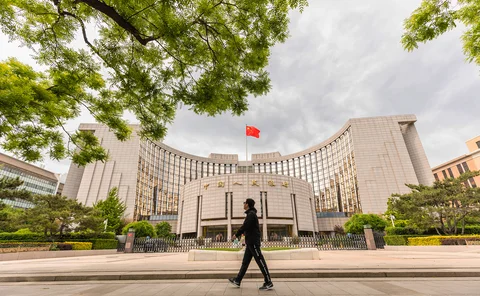
China increases lending limits for foreign banks
PBoC says move will create lending framework that prioritises renminbi
UK and Indian regulators seek better insights into private credit
Heads of FCA and Sebi speak at IMF meetings on boosting transparency and data sharing

Bahrain launches support package amid conflict uncertainty
Bank offers loan deferrals and liquidity measures as World Bank highlights country’s economic vulnerabilities
EMs could face capital outflow because of Iran war, IMF warns
Systemic impact from stress in private credit contained so far, latest financial stability report says

Asean pledges deeper integration in face of Middle East uncertainty
Bloc’s finance ministers and central bank governors highlight increased geopolitical risks

Sama’s Al-Sayari on financial resilience and the future of the riyal
The Saudi Central Bank governor speaks with Christopher Jeffery about the Middle East conflict, the transformation of the Saudi economy, improving prudential oversight and contingency planning, and the development of the fintech and tokenised ecosystem

Central bankers test AI’s ability to detect systemic risk
Innovation leaders tell Central Banking Meetings that information silos still pose challenges
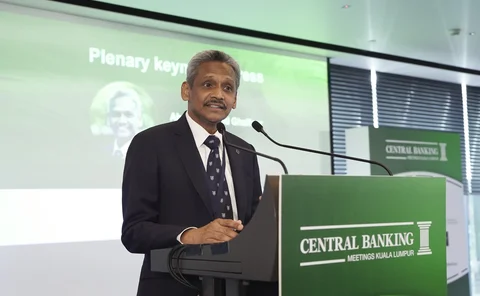
The evolution of central banks
Bank Negara Malaysia governor Abdul Rasheed Ghaffour writes that the roles and responsibilities of central banks are evolving in a changing landscape
UK markets say ‘no’ to mandatory haircuts and clearing – BoE
Central bank to consider industry feedback and come back with updated proposals in early 2027