
Eurozone

French paper examines impact of ECB policy changes on asset prices
Working paper considers how ‘policy shocks’ affected short-term interest rates, as well as the expected future path of short-term interest rates, between 2002 and 2013

Belgian review: Common debt will remain ‘taboo’ in Europe
Article published in National Bank of Belgium economic review describes the issuance of common debt as a ‘panacea’ for multiple problems in the eurozone

Eurozone shadow banks increase share of assets to 33%
Shadow-banking entities now own a third of the €57 trillion worth of assets in the eurozone financial system according to ECB report; expansion has ‘gathered pace’ since 2012

IMF's Blanchard warns macro-prudential tools ‘may not be up to the task'
Chief economist outlines benefits of debt-financed infrastructure projects in the eurozone at opening of IMF and World Bank annual meeting
National Bank of Denmark narrows range of collateral it accepts
Financial market ‘normalisation' provides ‘opportunity' to omit assets made eligible after crisis to keep Danish banks from borrowing in euros

European economists analyse global value chains
Bank of Portugal working paper analyses the global value chains in the eurozone and underlines the core role of Germany in production linkages

IMF flags up uneven application of shadow banking regulations
Report finds ‘indications of increased market and liquidity risk' in sector; China ‘stands out and warrants particular monitoring'

IMF warns of new asset bubbles caused by ‘expansionary policies' post-crisis
Report finds global imbalances are shrinking, and concludes this is driven by structural reduction in demand rather than ‘expenditure switching' to domestic products

Bundesbank unveils new card clearing infrastructure
Bundesbank and EBA Clearing launch new XML-based infrastructure for card clearing; payments chief says it allows banks to ‘leverage’ their Sepa investments
PBoC sanctions direct trading between renminbi and euro
People’s Bank of China names euro as latest currency to be directly tradable with the yuan on the Chinese interbank market

Portuguese central banker warns new €10 banknote may not be accepted by all vending machines
Bank of Portugal board member says he cannot guarantee the note will be accepted by all machines, as owners are responsible for making necessary software changes

ECB releases rotation schedule for voting governors
New voting rotation system sees Spanish, Irish, Greek and Estonian governors sit out first decision in January; ECB allots €82.6 billion to 255 banks in first targeted LTRO

‘Flower power’ drives new Dominican Republic banknote series
The Dominican Republic is issuing upgraded banknotes to include the country’s new national flower; Israel and eurozone also introducing new notes in the market

Mersch: T2S may prompt ‘more global network for mobilisation of collateral assets'
ECB board member says Target2 offers 'possibilities for linkages' between T2S central securities depositories with those 'from other geographical areas'
ECB comprehensive assessment could stem ‘secular stagnation' in eurozone, bank staffers argue
Economists from the ECB and the Bank of Spain make the case in new book on ‘secular stagnation' that also includes contributions from Larry Summers and Paul Krugman

Olli Rehn: Scotland would need central bank to join EU
Independent Scotland would not be able to both keep the pound sterling and join the EU, former commissioner argues, referring to ‘core part' of union treaty

Small eurozone countries can use government spending to combat imbalances
ECB-published working paper examines small open economies in a monetary union, whose options for dealing with shocks are limited
One in 10 eurozone households spend more than they earn, Bundesbank paper finds
Households with female, young, or divorced heads have harder time making ends meet, but ‘rather confident in the possibility to get funded through informal lending channels'

Unconventional monetary policy has heightened medium-term risks to banks, IMF paper finds
No evidence that unconventional monetary policies has ‘helped' banks, according to paper; finds deterioration of medium-term bank credit risk in US, UK, and the eurozone

Lithuania takes delivery of first euro coins
1,740 tonnes of coins must be minted ahead of currency switchover on January 1; delivery is supervised by police under special agreement signed in May
ECB publishes ‘manual' explaining eurozone banks' comprehensive assessment
Publication of the manual ‘demonstrates ECB's commitment to transparency' on how it is conducting the ‘rigorous' assessment of the eurozone's biggest banks
Eurozone banks ease credit standards for first time since crisis hit in 2007
ECB bank lending survey shows that more banks eased credit standards than tightened them in second quarter of 2014
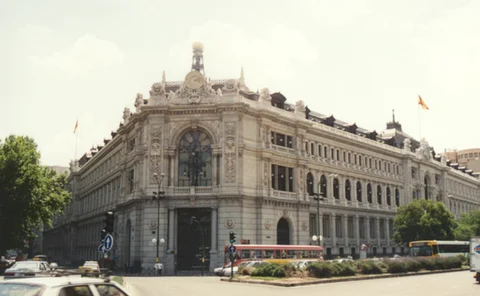
Spanish economists see short-run benefits in structural reforms
Working paper published by Bank of Spain says product and labour market reforms could boost output and employment now and in the future

IMF staff note: Structural reforms 'more desirable' than nominal wage cuts in Europe
International Monetary Fund staff note says ‘many reforms’ are still needed in deficit countries; highlights benefits of greater fiscal integration in longer term