
Research

Tests find New Zealand banks ‘robust’ to dairy stress
Stress tests conducted by the Reserve Bank of New Zealand in late 2015 find five largest lenders to dairy sector can withstand further drops in payout and land values

Bank capital matters for risk-taking channel of monetary policy, Norges Bank paper finds
Less capitalised Norwegian banks are more likely to extend credit to risky firms in response to a cut in the policy rate, author finds

IMF paper examines effect of ‘winning the oil lottery’
Research into the impact of oil discovery in certain municipalities in Brazil shows GDP per capita and urbanisation on the rise

Stressed governments persuade banks to increase bond buying, paper finds
European governments under fiscal stress persuaded domestic banks to increase their holdings of sovereign debt, a paper from The Netherlands Bank finds

Macro-prudential policy must give guidance on how to deleverage, paper says
Different deleveraging methods have varying effects on the economy, ECB working paper finds; policy-makers must give banks concrete guidance on how they implement certain measures

‘Compositional’ drag on wages set to fade, BoE article finds
Labour force composition has changed markedly in recent years, putting downward pressure on wages, but recent data implies the effect may soon dissipate, researchers say

Paper uses machine learning to nowcast GDP in Lebanon
Working paper published by IMF explores use of machine learning technique in assessing economic conditions in Lebanon, where analysis is a ‘distinct challenge’ on account of data lags

Paper finds evidence in favour of ‘exchange-rate-anchored inflation targeting’
A working paper published by the IMF finds ‘tight management’ of the exchange rate can help support inflation targeting in ‘less developed countries’

Regulation affects pass-through to current account, BoE paper finds
Discussion paper sets out theoretical and empirical backing for idea that low rates can cause a current account deficit to grow, in the presence of liberalised financial markets

Securitisation can dampen business cycles, paper finds
When securities are bought by ‘non-financial agents’ instead of financial intermediaries, they can help dampen rather than amplify cycles, research says

Central bank models need to adjust to nature of exchange rate pass-through, paper says
Exchange rate pass-through shown to be incomplete, endogenous, nonlinear and asymmetric; working paper seeks to quantify effect over time
Networks did not spread 2008 shocks in eurozone money market, paper argues
Banking networks in the eurozone did not play a major role in spreading shocks in the financial crisis, ECB working paper argues; eurozone banks are ‘not network dependent’

US monetary policy contraction means drop in global output – paper
Raising interest rates in the US leads to lower global output and inflation in the short term; most 'pronounced' responses evident in the mid-1990s to mid-2000s
Dutch pension funds show signs of herding, paper says
Regulatory price of risk for different asset classes 'should be balanced', warns Dutch working paper, in light of herding behaviour
Research calls for better understanding of ML/TF risks in Islamic finance
Working paper published by International Monetary Fund warns there is ‘no common understanding’; some risks may be the same as in conventional finance, but some may not
Colombian inflation measures might be ‘overstating’ true level – research
Some core inflation measures are failing to filter the impact of exchange rate on prices; policy-makers must be aware of the risk of expectations losing their anchor
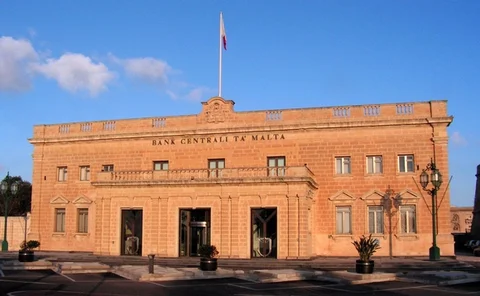
Central Bank of Malta revamps main structural model
Version three of the ‘Stream’ model captures the interlinked nature of the fiscal and financial sectors, with extra detail added to the financial block and new data used for estimation

Mexico’s stress tests reveal some institutions remain ‘vulnerable’ in extreme scenarios
Stress tests indicate that even in adverse scenarios banking sector remains sound; some banks and investment funds are vulnerable to extreme scenarios, including interest rate adjustments

Paper looks at macro-prudential impact on mortgage affordability
Working paper assesses how macro-prudential policies influence the share of households that can “access and sustain” a mortgage at different loan-to-value ratios
Wholesale funding shocks hit credit supply, paper finds
Shocks to securities and interbank lending markets have significant effects on banks’ supply of credit, an ECB paper finds; researchers use monthly loan data for eurozone banks

Eurozone sovereign debt crisis has increased financial fragmentation, paper argues
Eurozone corporate bonds have different risk premia according to which country a company is headquartered in, paper argues; fragmentation has ‘dampened effectiveness’ of ECB policy

RBI paper questions impact of global spillovers
Authors find money and credit markets in India are largely unaffected by spillovers, although there is an impact via debt markets and the indirect effects of global growth and inflation

Germans have unexplained high cash preference – Bundesbank article
Germans have a much higher tendency to use cash for larger transactions, article in a first edition of a new Bundesbank publication says

Hong Kong activity should weather higher rates – paper
Research published by IMF argues consumption and investment will “remain robust”, despite increase in interest rates in tandem with the US