

Changing of Lagarde: who might take over at the ECB?
De Cos and Knot among contenders, following reports that president may be stepping down early
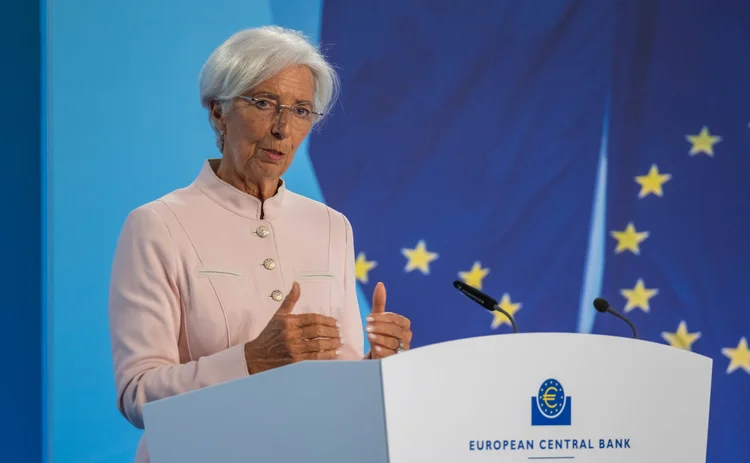

Bank for International Settlements general manager Pablo Hernández de Cos and former Netherlands Bank governor Klaas Knot are among the potential successors to Christine Lagarde, following reports that the European Central Bank president was preparing to step down early.
An article in the Financial Times today (February 18) quoted a “person familiar with her thinking” who said she would leave ahead of the end of her term in 2027. A later article quoted a different official who said she was likely to leave the ECB this summer.
The ECB said today that Lagarde was “totally focused on her mission and has not taken any decision regarding the end of her term”.
The bank’s board member responsible for payments, Piero Cipollone, also told journalists following a meeting of the Italian banks’ trade association that he “did not have this information” and that the president was “fully in control of the bank” which she was leading with “strength and energy”.
Outgoing Banque de France governor François Villeroy de Galhau dismissed the report as a “rumour” when addressing a French parliamentary committee.
The report says that Lagarde wants to enable outgoing French president Emmanuel Macron and German chancellor Friedrich Merz to find a new ECB president ahead of France’s presidential election in April 2027. Macron is ineligible to stand in the election and his party is currently trailing in the opinion polls behind Marine Le Pen’s National Rally.
Stefan Gerlach, chief economist of EFG Bank and a former deputy governor of the Central Bank of Ireland, says Lagarde’s early departure could be interpreted as leading European politicians “ganging up” on Macron’s successor, who would expect to have a role in appointing the next ECB president.
Gerlach notes that Lagarde may consider running for the French presidency herself. He notes that she is a highly skilled and experienced politician who is well regarded at the senior levels of the ECB, even if some of her monetary policy communications have occasionally unsettled markets.
Lagarde was appointed to a non-renewable eight-year term as ECB president on November 1, 2019. Last June, she dismissed reports that she wanted to leave early to replace Klaus Schwab as chair of the World Economic Forum (WEF) by saying she was “determined” to complete her term at the central bank.
“When push comes to shove, the ECB is shaped above all by the four largest euro area economies: Germany, France, Italy and Spain,” Gerlach says. He recalls that at the ECB’s founding there was a perception that Germany could not have both the location of the institution and the presidency, with some countries preferring Paris as the headquarters.
Frankfurt was ultimately chosen as the seat, and no German has ever served as ECB president.
Knot, who headed the Netherlands Bank until last year alongside the Financial Stability Board, would be the second Dutch national to become president of the ECB, should he be appointed. The bank’s first president was his compatriot Wim Duisenberg, who was followed by Jean-Claude Trichet of France, Mario Draghi of Italy and then Lagarde.
Gerlach views some of the candidates from outside the largest economies as very experienced and credible, but feels they are less likely to be selected. In his view, de Cos – a former governor of the Bank of Spain – is the most likely contender.
A former governor at a Eurosystem central bank tells Central Banking that the principle of “non-renewability” was an important aspect of serving on the ECB board. This effectively excludes current board member Isabel Schnabel, who the former governor says would be a “wonderful” candidate.
The former governor adds that non-renewable tenures are important because they improve the ECB’s independence and ensure that senior officials do not bend to politicians’ will during their final years on the board in order to have their terms renewed.
They say that although the current Bundesbank president Joachim Nagel may seem like the obvious pick for the job, Jürg Kukies, a German former finance minister, is also an option.
The ECB has never been headed by a Spanish national. Gerlach notes that earlier concerns about high levels of public debt in the eurozone’s southern member states, and their impact on a candidate’s credibility, have largely faded over time.
“It would be good for the next ECB president to be a career central banker,” Gerlach says, adding that a technocrat might communicate policy in a way that was less likely to generate unnecessary market volatility.
Florian Heider, scientific director at the Leibniz Institute for Financial Research, tells Central Banking that the ECB’s most valuable assets are its independence and credibility. The former, he says, is based on adherence to its mandate and not to the politics of individual eurozone member states.
“The president’s term of office is deliberately set at a non-renewable eight years,” Heider says. “If someone resigns prematurely, this may raise questions or even send negative signals. Any appearance of national politics in central banking undermines the credibility of a currency. When it comes to the presidency of the ECB, it is skill and experience that matter, not nationality. Political considerations should have no place in the appointment process.”
A source inside the ECB tells Central Banking that most of the ECB’s rank-and-file staff are keen to see Lagarde leave. Under her presidency, the relationship between ECB leadership and staff has become strained. A survey conducted by the bank’s staff union last year found that six out of 10 of the bank’s employees did not trust Lagarde – a stark contrast with the 77% approval rating for Draghi in 2015.
“Lagarde has clearly destroyed the team spirit we had on her arrival,” one respondent to the survey said last year.
The ECB declined Central Banking’s request for comment.
Gerlach says some of the internal criticism of Lagarde reflects normal tensions within a large institution.
“With only a small number of promotions possible, there will always be some disappointment among those that have worked at the institution for a long time,” he says. “And promotions may increasingly be based on other factors than seniority, including the need for gender balance and to be broadly representative of the euro area.”
One former ECB board member tells Central Banking that although they heard rumours at the end of January that Lagarde was considering leaving, they did not understand the timing.
“Resigning early would be bad for the ECB,” they said, adding that it would also jeopardise her chances in running for the French presidency.
Frank Elderson, the vice-chair of the ECB’s supervisory board whose tenure was extended on February 17, would also have to resign if Knot were to have a chance of securing the top job, the former board member explains, as there could not be two Dutch nationals in leading positions at the central bank.
They note that the appointment last month of Boris Vujcic, governor of the Croatian central bank, as ECB vice-president had been a surprise, though it provided eurozone finance ministers with “maximum optionality”. The former board member says that if Bank of Finland governor Olli Rehn had been appointed, Knot’s time would have been made more difficult, as both come from countries that are traditionally seen as hawkish.
The former board member says Nagel is still a contender for the position, but the question remains of who would succeed him at the German central bank. Schnabel was “keen” to go to the Bundesbank, or alternatively she could serve out her a “buffer time” in her current role before trying for the top job at the ECB, though doing so would be controversial.
They add that Lagarde remains interested in joining the WEF, but this has become more difficult following reports that she walked out of a dinner hosted by the forum on January 21 after US commerce secretary Howard Lutnick entered the room.
The case for appointing de Cos is difficult, the former board member explains. He would have to leave his position at the BIS, and emerging markets would “not be amused” if another European replaced him, given that there are some “very good former and current governors” who could take up the position of general manager at the institution. They note that Italy is also likely to throw its support behind de Cos.
The former board member says another candidate is Fabio Panetta, who has extensive central banking experience and does not have the same legal baggage as Schnabel.
Only users who have a paid subscription or are part of a corporate subscription are able to print or copy content.
To access these options, along with all other subscription benefits, please contact info@centralbanking.com or view our subscription options here: www.centralbanking.com/subscriptions
You are currently unable to print this content. Please contact info@centralbanking.com to find out more.
You are currently unable to copy this content. Please contact info@centralbanking.com to find out more.
Copyright Infopro Digital Limited. All rights reserved.
As outlined in our terms and conditions, https://www.infopro-digital.com/terms-and-conditions/subscriptions/ (point 2.4), printing is limited to a single copy.
If you would like to purchase additional rights please email info@centralbanking.com
Copyright Infopro Digital Limited. All rights reserved.
You may share this content using our article tools. As outlined in our terms and conditions, https://www.infopro-digital.com/terms-and-conditions/subscriptions/ (clause 2.4), an Authorised User may only make one copy of the materials for their own personal use. You must also comply with the restrictions in clause 2.5.
If you would like to purchase additional rights please email info@centralbanking.com
More on Governance

Paraguay’s central bank rebuffs bank supervision criticism
Several politicians have called on BCP leadership to resign over supervision of Ueno Bank

Central Bank of Libya announces new governor
Naji Issa’s resignation – rejected in August – suddenly accepted in surprise leadership shake-up

Former NBP chief questions Glapiński’s political neutrality
Possible tribunal referral could leave Poland’s central bank short of a leader
Governor says NBU not under suspicion in police raid
Bank also rejects reports that Andriy Pyshnyy had submitted his resignation
Venezuela seeks shift to inflation targeting in medium term
Minister says dollarisation not ‘right answer’ and debt sustainability analysis to be published soon

Trump sets up committee to investigate Cook
Courts had previously ruled US president had not followed due process in trying to fire Fed governor

BCRA challenges claim of $1bn loss on gold hedges
Central bank says derivatives transactions in 2025 reflected routine hedging operations

BIS’s Hernández de Cos on AI, non-bank risk and tokenisation
General manager talks about how the BIS is navigating a complex global environment