
Benchmarking

Communications often involved at early stages of central bank policy
Most central banks say comms teams are involved in early planning stage of policy decisions
Fintech communication is most challenging for central banks
Central banks view fintech as greatest challenge, but rate monetary policy communication highly

Central bank profits under pressure
The structure of a central bank’s portfolio and its relationship with shareholders can affect shock-absorbing capital and the amount of profit distributed

Financial sector still a headache for central bank modellers
Macro-financial links are difficult to integrate into key models, with progress since the global financial crisis slow. But some central banks are making breakthroughs

Governance Benchmarks 2021 report – the frameworks that rule central banks
How are central banks governed? Benchmarking data offers insights on appointments, legal structures, powers, decision-making bodies, independence and more

Many central banks have formal safeguards over firing governors
Benchmark respondents give details of how governors are appointed and dismissed
Boards or committees tend to set monetary policy
Some central banks set the same monetary policies as part of supra-national institutions
Formal strategy committees remain relatively rare
Boards of directors are widely used but specialist oversight committees are less common
Central bank mandates differ between advanced and emerging economies
Governance Benchmark 2021 data shows emerging economy central banks more likely to have financial stability mandate
Central banks take different routes to financial stability
Some give ultimate authority to governors but others use committees
Governor salaries 12 times higher than GNI per capita
Salaries ranged between $33,101 and $723,551
Few central banks have diversity or sustainability policies
Eight in 10 have a whistleblower policy
Governors can serve 25+ years at 40% of central banks
Governors in high and upper-middle central banks have longest possible tenures
Governors at four in five central banks left before their term ended
Countries with highest governor turnover were experiencing political instability
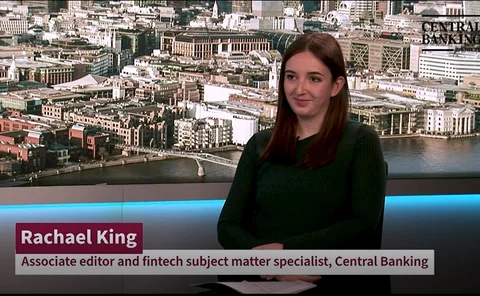
Fintech & IT Benchmarks 2021 – presentation
Central Banking’s fintech and IT subject matter specialist Rachael King speaks with Christopher Jeffery about fintech and IT staffing and salaries, research and investment, system resilience, CBDCs and the wider fintech ecosystem

Greening the central banks
What are members of the NGFS doing to ‘green’ their own operations? Officials from the central banks of Belgium, Canada and Morocco highlight some of their initiatives

The evolving ‘strategy function’ in central banks
Some institutions participating in a survey of 27 central banks still struggle to fully harness an effective ‘strategy function’, according to the ECB’s Jean-Charles Sevet and Alejandro de la Cuesta

Governors Nabiullina, Tabaković and Bezhoska on systemic risk and women in power
Russia, Serbia and North Macedonia governors discuss bank reforms, corruption and the Covid-19 crisis

Fintech & IT Benchmarks 2021 report – executive summary
Shedding light on fintech initiatives, staffing, salaries, cyber security and more

Fintech & IT Benchmarks 2021 report – detailing the evolution of technology
Benchmarking data sheds light on staffing trends, priority areas of research and uptake of new technology, cyber security challenges and central bank digital currencies

Emerging-market central banks lead on women’s empowerment
EME central banks have more women at staff level and in senior positions, but there are deep disparities worldwide, with childcare availability appearing to be a major cause
Most central banks spend less than 20% of their IT budget on security
Average spend was 16% of IT budget
Central banks take less than 50 minutes to fix critical outages
Time tolerances for critical system downtime range from one to 32 hours
Average IT salaries are highest in Europe
Pay varies by income of institutions’ host economies