
Advanced economies

OECD says interest rates should stay high ‘until well into 2024’
Report says monetary policy needs to stay tight until underlying inflationary pressures are lowered

US official outlines expanded role for poorer nations at IMF
Shambaugh discusses quota reform and new officials for developing countries

Financial regulators: one, two, maybe a few?
As Jamaica moves to introduce the ‘twin peaks’ approach to financial oversight, Ben Margulies assesses some of the pros and cons

House prices suffer steepest fall since global financial crisis
BIS data shows sharp falls in many advanced economies, though prices are still up on 2010

Earth to Jackson Hole: create sustainable future bonds for stability and prosperity
Marina Zucker-Marques and Kevin Gallagher offer a template for a new central bank asset

Global growth is stalling: what must be done?
Jagjit Chadha says leaders are failing to make a serious attempt to tackle deepening global problems

Time to pay policy-makers based on their performance
The remuneration framework for central bankers needs reform amid failures to hit inflation targets, argues David Bholat
Book notes: The crisis of democratic capitalism, by Martin Wolf
A sincere attempt to explain and fix the failing of capitalism in liberal democracies

IMF’s Adrian on the systemic threat posed by a ‘weak tail’ of financial institutions
The IMF’s financial counsellor speaks to Christopher Jeffery about bank runs and emergency interventions, market and oversight failings, and the need for action on run rate assumptions, interest rate risk, deposit insurance, crypto regulation and a ‘weak…

Advanced economies face slowdown and stubborn inflation
Jagjit Chadha analyses the shifting outlook for the world economy, with more hard work ahead for central banks

Non-banks key to ‘absorbing’ sovereign debt – BIS paper
New database of key players in sovereign debt markets reveals EME reliance on non-banks

Another financial crisis hiding in plain sight
Steve Kamin analyses how the risks that sank SVB were plain enough to those who looked for them
Book notes: States and the masters of capital, by Quentin Bruneau
Chronicling the practices and players involved in privately financed sovereign debt

What economists learned from Covid-19
A rush of work on ‘epi-macro’ yielded breakthroughs and then faded. Will there be lasting benefits?

Governance Benchmarks 2023 report – the frameworks that underpin central banks
Data reveals differences in profits, appointments and policies among EMEs and advanced economies

Central Banking Awards 2023: third group of winners announced
Awards include economic research, payments reform and risk management services

Pandemic purchases averted ‘destabilising loop’, BIS finds
Central banks tended to use different tactics in advanced and emerging economies, report says
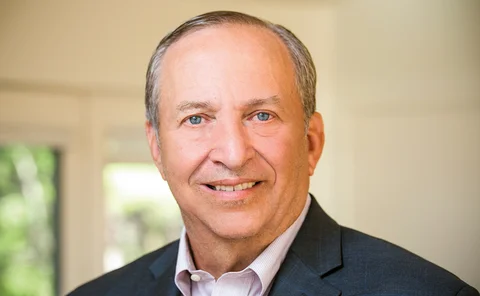
Blanchard and Summers say higher inflation likely to persist
Veteran economists say structural factors are likely to push up neutral rate and inflation

Can new BoJ governor Ueda maintain his neutral position?
Kazuo Ueda will face divided views on monetary easing and its growing side-effects when he takes office, writes Sayuri Shirai
Loose monetary policy has ‘big’ impact on crisis risk – NBER paper
Authors find causal link between easy policy stance and future financial instability

The strong dollar, global inflation and global recession
Steve Kamin asks whether the Fed’s tight policy is pushing the world towards recession

The canary in the goldmine
Gold accumulation may herald broader concerns about dollar holdings, writes Jennifer Johnson-Calari

BIS bulletin weighs pros and cons of ‘front-loaded’ tightening
Recent rate increases are highly synchronised and twice as fast as previous cycles, authors say

Malpass says debt relief critical for poor countries
World Bank president says world risks “disorderly default process”