
United States
Rethinking decoupling
The decoupling hypothesis has been one of the casualties of the crisis, Martina Horáková argues
Ratings agencies: regulate or downgrade?
Ludˇek Niedermayer worries that regulating ratings agencies will simply increase their influence and create the wrong incentives
Emerging-market shocks have mixed results on US assets
Bank of England looks at international financial transmission between emerging and mature markets

US budget deficit forecast trimmed
US officials expect the 2009 fiscal deficit to be smaller than originally forecast, after scrapping money earmarked for further bank bailouts
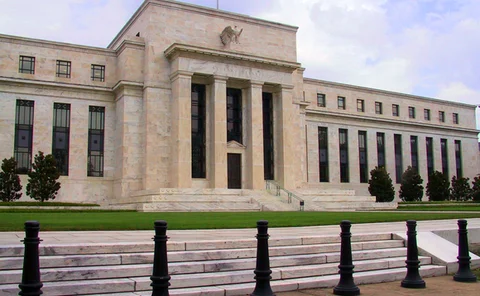
Fed extends Talf programme
The Federal Reserve extends key loan facility for asset-backed securities, soothing market concerns
Small firms also make it in exports
Philadelphia Federal Reserve says exporters not necessarily larger than non-exporting firms
New York Federal Reserve – Annual Report 2008
New York Federal Reserve’s Annual Report shows its balance sheet tripled in the past year

Fed enhancing large institutions’ oversight: Tarullo
Federal Reserve’s Daniel Tarullo says supervision of large institutions to get a new boost
More than a fifth of jobs not advertised
Philadelphia Federal Reserve studies vacancies, hires, and vacancy yields in the US job market
Beige Book points to economic stabilisation
Federal Reserve’s Beige Book suggests decline in economic activity is ceasing

Bankers warn against financial protectionism
IIF sees risk as a result of national governments’ efforts to restore confidence

Italy’s Visco : target global imbalances
Bank of Italy’s Ignazio Visco says that macroeconomic imbalances must be taken care of
Central counterparties for CDS compared
Ad hoc industry group comprising both buy-side and sell-side publishes report on credit-default-swap central counterparties
Lender recourse increases the likelihood of default
Richmond Federal Reserve shows the impact of lender recourse on mortgage defaults
Fed’s Greenlee: further stress testing needed
Federal Reserve’s Jon Greenlee says that many institutions would benefit from additional stress testing

IMF sees world economy coming out of recession
International Monetary Fund says global economy pulling out of recession, but recovery expected to be sluggish
Fed’s Kohn sets out case for independence
Federal Reserve’s Donald Kohn appeals to lawmakers to maintain independent central bank

Counterparty risk drives foreign-exchange swap market
Bank for International Settlements investigates dislocations in the foreign-exchange swap market between the dollar and three major European currencies
Hong Kong’s markets mirror US in turbulent times
Hong Kong Monetary Authority looks at financial market interactions with the US and mainland China

Washington's timetable for regulatory reform
Patton Boggs, a law firm,sets out how and when Obama's proposals for US financial regulation reform will become law in 2009
US's Moran on sovereign wealth
Malan Rietveld talks to Jim Moran, a Democratic member of the Unites States House of Representatives and co-chair of the Congressional Task Force on Sovereign Wealth Funds.
Bernanke responds to claims of Merrill cover-up
Ben Bernanke, the chairman of the Federal Reserve, on Thursday claimed that the central bank had acted "with the highest integrity" in discussions with Bank of America over its takeover of Merrill Lynch, a now defunct investment bank.
Fed declares victory on deflation risks
The Federal Open Market Committee (FOMC) on Wednesday signalled that it no longer believes a serious threat of deflation exists.