
Asia-Pacific

Case for retail CBDC ‘not compelling’ in Singapore – Menon
But MAS is building CBDC and sees some “promising use cases” for digital assets

Most central banks carry out frequent stress tests
All banks that carry out stress tests say they have improved financial stability
Cyber attacks on financial market infrastructure are rising
Two-thirds report recent increase in attacks, but 80% report good cross-border arrangements
Over half of central banks say AML risks are rising
But most say central banks co-operate sufficiently across borders against money laundering

Crypto assets may threaten Asian stability, IMF officials warn
Rising correlation between crypto and equity markets poses financial stability risk, say economists
Central banks rarely lead AML/CFT efforts
Most institutions do not want more AML/CFT powers
Earnings in upper-middle income economies outstrip high income peers
Financial stability staffing tends to match jurisdiction’s income level
Most central banks lack primary oversight of NBFIs
Many institutions capable of regulating non-banks, but just a few solely exercise such powers
A quarter of central banks have insufficient financial stability powers
Some respondent institutions need new powers urgently
Middle income countries more likely to report rising NPL levels
Most high income respondents say NPL levels have fallen in last five years
Banking resolutions are rare events in most countries
Two jurisdictions account for 77.9% of resolutions reported by sample
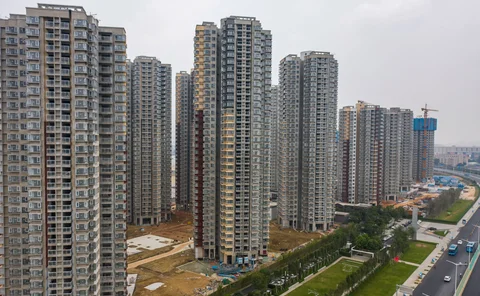
The PBoC, real estate debt and financial stability in China
Central bank policy-makers are restricted in terms of capacity and space by their efforts to manage the nation’s property bubble amid declining growth
Reserve requirements most commonly used macro-pru tool
Responses show differences in measures favoured by high and middle income economies
Most central banks do not want more macro-pru powers
But minority of benchmark participants want governments to adopt measures in use elsewhere
Central banks rarely administer deposit guarantee schemes
Lower-middle income countries less likely to have such schemes
Richer nations less likely to have central banks as sole macro-pru authority
Respondents from lower-middle income countries more likely to be only macro-prudential body

The case for restoring the role of monetary aggregates
Tim Congdon argues that a surge in money supply in response to Covid-19 sparked heightened inflation and central banks need to refocus their attention on monetary aggregates
Central bank boards often used for stability decisions
Institutions from high income countries most likely to give stability remit to boards

Turkish business chief criticises central bank as lira falls further
Governor says central bank is working to make Turkish firms use more lira-denominated assets

Monetary policy set a maximum of 12 times a year
Frequency of meetings highest on average in upper-middle income economies

Asian central banks deploy FX reserves to prop up currencies
Analysts remain confident in Asia’s financial stability, but recession risks are building