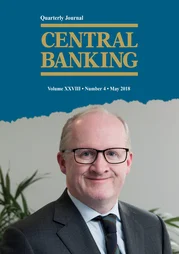
Central Banking Journal - Volume XXVIII Number 4
Articles in this issue

Regulatory efficiency or rollback?
Team USA’s new clarion call for regulatory “efficiency” comes with a worrying undertow, particularly related to regulatory rollback and ‘light-touch’ supervision of algorithms

Philip Lane on systemic risk, transparency and Brexit
The Central Bank of Ireland governor speaks with Dan Hardie and Chris Jeffery about transparency, shadow banking, ECB succession and tackling systemic banking risk in the eurozone

The Bank of Italy’s approach to risk-based budgeting
The financial crisis blurred the lines between Anglo-Saxon and continental European central bank models, presenting challenges when treating both the sources of risk and risk-bearing capacity using financial and accounting budgeting techniques

Andreas Dombret on ECB policy, deposit insurance and Basel III
The Deutsche Bundesbank executive board member speaks about exiting QE, the viability of European deposit insurance, the German banking system and doing a deal on Basel III

Official reserve management in the 21st century
A lack of operational clarity and reluctance to view reserve portfolios holistically have prevented optimal, rules-based approaches to reserve management becoming commonplace. BlackRock‘s Terrence Keeley, Stuart Jarvis and Michael Palframan explain how…

The toxicology of post-crisis shadow banking
Mark Carney tempted fate in 2017 when he declared the most toxic forms of shadow banking “no longer represent a global stability risk”. Did he speak too soon?

Central Banking Awards 2018: Gallery
See the winners from the big night, including leading figures from across the industry who came to pick up their awards
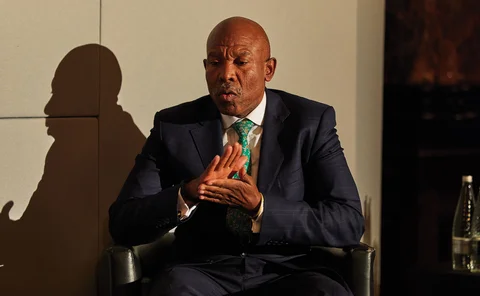
Kganyago on central bank independence and future plans for the IMFC
The South African Reserve Bank governor spoke with Christopher Jeffery at the Central Banking Awards about the South Africa’s new president, the importance of operational independence and key targets for the IMFC

Former governor: Life lessons from Taiwan
Perng Fai-nan, former governor of the Central Bank of the Republic of China (Taiwan), shares key insights upon accepting Central Banking’s Lifetime achievement award

Artificial intelligence: The future of regulation?
The raft of new rules imposed on regulated financial institutions in the aftermath of the global financial crisis has a huge compliance cost. Could artificial intelligence offer efficiency gains?

Reducing the regulatory burden
Former Federal Reserve Bank of New York senior vice-president Kenneth Lamar discusses risk‑based reporting, its challenges and whether fintech will help reduce the regulatory burden.

The move to risk‑based supervision
Rapid regulatory change has led to a steep increase in data volumes and policies, and a new environment has opened up for discussions on effective regulatory supervision and a transition to risk-based supervision.

Sponsored forum: New risks and opportunities
Panellists discuss how risk-based supervision can create better outcomes for central banks and firms.

Central banks: the economy’s emergency responders
When economic infrastructure is destroyed during natural disasters, central banks spring into action, engaging contingency plans to ensure the economy continues to run

Communications on financial stability should be strengthened
The IMF’s Olga Stankova outlines how central banks and other official agencies can better communicate their financial stability work

Book notes: How global currencies work, by Barry Eichengreen, Arnaud Mehl and Livia Chiţu
A comprehensive introduction to the history of global reserve currencies, with analysis of how advances in technology and the structure of trade have reshaped the landscape

Book notes: I do what I do, by Raghuram Rajan
This collection of speeches and commentary sheds light on how the ‘rockstar’ central banker operated, but it reveals little in the more controversial areas of Rajan’s governorship

Book notes: The paradox of vulnerability, by John Campbell and John Hall
Quality of national institutions vital to handling financial crises, say authors

Book notes: Respectable banking, by Anthony Hotson
The author’s sensible goal of “respectable banking” is admirable, but the recommendations would not all help to achieve this