
Monetary policy

RBA minutes point to dangers from debt
Growth in household debt exceeds growth in incomes, creating risks to consumption; board members say situation warrants “careful monitoring”

Making the rules and breaking the mould (Allan Meltzer: 1928–2017)
John Taylor writes about the extraordinary life of a pioneering economist whose lifelong work defied traditional rules – but one who strongly advocated them for central banks

BoE economist sees monetary policy benefits to demonetisation
Removal of high-denomination notes could help central bankers maintain policies of low inflation and interest rates near the zero lower bound
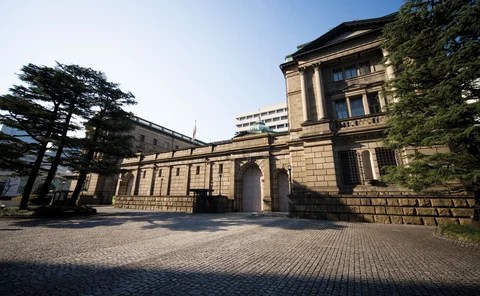
Bank of Japan strikes upbeat tone as it keeps policy on hold
The Bank of Japan decided to leave policy settings unchanged at its June meeting, but sounded more upbeat on the outlook

FOMC votes for hike but stays cautious on outlook
Fed committee votes for second rate hike of 2017, but enthusiasm for further tightening appears to be fading

Wilkins offers optimistic assessment of Canadian economy
Carolyn Wilkins says Bank of Canada will assess whether current “considerable” monetary stimulus is still required; growth across sectors is an “encouraging” sign for the economy

Wheeler hits out at commercial bank for unforgiving commentary
RBNZ governor says commentary threatens its integrity, damaging the central bank and financial markets; former RBNZ official says Wheeler overreacting

Sarb monetary policy committee does not suffer from ‘groupthink’ – Kganyago
Sarb governor says there are often disagreements when it comes to policy decisions; central banks have now become “masters of communication”

Inflation overshoot should affect adaptive part of expectations, says Kuroda
Bank of Japan governor says there is still a long way to go until the price stability target is achieved

Draghi flags wage weakness as he defends easing measures
“Very substantial” accommodation still needed, says ECB president; central bank is devoting resources to understanding low wage growth

Obstfeld and Taylor back dual trilemma global finance theory
Economists still need to better incorporate financial stability into their thinking, the authors argue, with the concept of a financial trilemma helping to explain recent instability

Surprise policy announcements impact cash demand and consumption - paper
Unanticipated policy announcements can significantly reduce a consumer's monthly ATM withdrawals

Wage growth remains a concern for Australia – Lowe
Governor warns low wage growth is hindering household consumption; there are some signs the labour market is recovering, with employment growth registering stronger in recent months
BoJ’s Sakurai defends aggressive monetary easing
A member of the policy board says yield-curve control allows flexibility for the central bank to implement monetary easing

Chinese monetary policy now more in line with G3 central banks – BIS paper
“Liberalisation and transformation” of the Chinese economy has led to changes in the PBoC’s monetary policy rule, and an improvement in inflation performance, authors say

Chile’s economy on sound and stable footing – report
Following earlier action in the year, central bank is unlikely to move interest rates again; growth forecasts revised following copper mine strike

Fed paper warns on helicopter money risks
Tool appears much less powerful when less realistic elements of the New Keynesian framework are removed; other options could work better, authors say

Inflation is preventing interest rates from rising faster, says Powell
Labour market progress points towards a faster pace of normalisation for the Fed, but below-target inflation is preventing rates from rising above the current “gradual pace”

Policy rate forecasts influence expectations – Riksbank paper
New data allows researcher to assess the “potency” of rate forecasts, which do appear to influence expectations

Pace of monetary easing may slow, says Central Bank of Brazil
Committee unanimously cut interest rates to 10.25%, but political uncertainty could slow the future pace of easing; economist praises approach to monetary policy communication

Brainard turns cautious on inflation concerns
Lack of wage growth and lower than expected inflation data could slow further monetary easing, says Fed governor; interest rates are likely to rise “soon”

Book notes: Crash Bang Wallop, by Iain Martin
A comprehensive study of the City of London and how it became the world’s leading financial centre prior to the financial crisis and the UK’s vote to leave the European Union

Irish paper tracks monetary policy’s effects on mortgage default
Researchers use “quasi-natural experiment” based on data from two types of loan

Long-standing Uzbek central bank chairman dies
Fayzulla Mullazhanov led the central bank since its formation following the collapse of the Soviet Union