
Monetary policy

Sponsored forum: Tapping into big data's potential
Central Banking convened a panel of experts to discuss how central banks can harness big data for their needs, hopefully without falling foul of some of the many pitfalls that await.

Risk of protectionist policies not yet factored in – Poloz
Bank of Canada governor says household debt, wage growth and labour market are all considered for monetary policy projections

BoJ lowers inflation forecast as policy stays on hold
BoJ downgrades inflation forecast again, leaving tightening unlikely anytime soon

A new era for the BIS
As Basel III inches towards closure and a new BIS general manager prepares to move into his post, Jaime Caruana talks to Daniel Hinge about his eight years at the helm

Weidmann says ECB should have set time for end to asset purchases
Current policy risks blurring line between fiscal and monetary policy, Bundesbank president says

ECB QE lowers yields via portfolio reshuffling – research
Sovereign bond-buying programme sharply reduced 10-year Bund yields

Venezuela replaces governor after less than two months in office
Constituent assembly appoints MP as economy battles hyperinflation and economic collapse

Teaching machines to do monetary policy
Machine learning may not yet be at the stage where central bankers are being replaced with robots, but the field is bringing powerful tools to bear on big economic questions
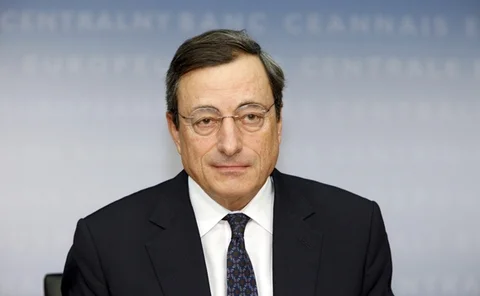
ECB to reduce monthly asset purchases to €30 billion
Central bank extends QE by nine months until September 2018, and keeps rates unchanged

Low inflation partly down to luck – CEPR report
David Miles and co-authors argue advanced economies’ luck on inflation could run out; recommend central banks prepare

Brazil’s central bank slows pace of monetary easing
Central bank scales back cuts to 75bp with suggestion it will slow pace further moving forward; inflation continues to fall as forecast

ECB likely to extend QE despite stronger growth, analysts say
Central bank expected to prolong programme by six months at reduced monthly rate of €30 billion

The optimal size for central bank balance sheets
As the Fed seeks to reduce the assets on its balance sheets, Charles Goodhart examines the role between monetary and fiscal policy, central bank and debt office, and the optimal size of a central bank’s balance sheet

Sri Lanka working to introduce ‘proactive’ policy – governor
Central bank in the past tended to do “too little, too late”, leading to big swings in interest rates, says Coomaraswamy

RBNZ faces mandate review under new government
Coalition agreement retains Labour pledge to consider shake-up of Reserve Bank mandate

Interview: Edward Prescott
The Nobel Prize-winner speaks to Daniel Hinge about time inconsistency and real business cycle theory, and explains why there is no ‘productivity puzzle’

RBA needs representative for the poor – religious group
The proposed new board member would help the central bank understand the effect monetary policy has on the poor, says group

Fiscal policy shocks amplified by accommodative monetary policy – paper
IMF research analyses impact of government spending spillovers, noting effects are amplified in countries with interest rates near the lower bound

Goldfajn stresses current target remains ‘credible’
Central bank pushed back against calls for the target to be raised during 2016 debate

Higher rates contributed to recovery in Latin America – IDB economist
Less hawkish policies can fail to generate growth but push up inflation, research finds

Inflation target supports price setting and wage formation – Ohlsson
Target contributed to economic recovery in Sweden, Riksbank deputy governor says

BoE’s new MPC members disagree on future path of hikes
New deputy Dave Ramsden sees current degree of slack to be too great to warrant removal of stimulus, while Tenreyro believes it cannot “persist for too long”

Blanchard and Summers call for rethink of stabilisation policy
Both economists question consensus on fiscal prudence and advocate stricter financial regulation

BoE paper sheds light on global policy transmission
Comparison of UK and Hong Kong based on bank-level data finds evidence of both portfolio and funding effects