
Macroeconomics
Tighter policy policy may increase financial instability, researcher says
Higher rates may pressure banks’ balance sheets and increase assets held by money market funds, says paper published by San Francisco Fed

High corporate debt harms Italy’s productivity, IMF research says
Policymakers should look at discouraging structural corporate debt, researchers say

Global uncertainty increases financial interconnections – paper
Researchers use a network approach to evaluate financial interconnectedness

Bank of Korea unveils changes to its DSGE model
The existing model’s accuracy was reduced following structural changes in the economy

Standard measures understate slack in European labour markets – ECB paper
Researchers use survey data from 24 countries to track effects of sovereign debt crisis

‘Intensified’ tax competition will affect euro area – research
Latest ECB bulletin shows “possible erosion of tax bases” in the EU, after recent US tax reforms

Economists need to better understand macrofinancial links – BIS paper
Stijn Claessens and Ayhan Kose call for “new generation of models” among other research to solve ongoing puzzles

Veteran economists weigh in on ‘rebuilding’ macro theory
Economists including Olivier Blanchard, Andy Haldane and Simon Wren-Lewis tackle the question of how – and whether – to save the DSGE model

One big bank falls short of ECB’s capital requirements
One bank falls short and a second comes close, although five banks failed the test in 2016

Google’s Hal Varian on how technology is changing economics
Google’s chief economist talks to Christopher Jeffery about how big data and machine learning are facilitating changes in economic thinking; discusses the impact technical breakthroughs may have for central banks

Paper: foreign fund inflows raised US pre-crisis risk-taking
The Bank of Italy paper correlates data on foreign inflows with four indicators of risk

People: Fiji appoints deputy; Commission proposes new SRB chair term
Esala Masitabua will become deputy governor in Fiji on January 1, 2018; European Commission proposes extending Elke König’s mandate as chair of the SRB; and more
Banking sector openness affects policy transmission, BoK paper finds
Bank of Korea study focuses on smaller open economies

More work needed on supply channel of finance – BIS paper
Demand-side links between the financial and real sectors are better understood, say authors
Korea suffering from ‘missing inflation’ – deputy governor
Core inflation is still in the mid-1% range despite economic improvement

Interview: Edward Prescott
The Nobel Prize-winner speaks to Daniel Hinge about time inconsistency and real business cycle theory, and explains why there is no ‘productivity puzzle’

Paper highlights disparity in which fields of economics women enter
New York Fed study examines female participation rates in economics through conference case study, suggesting there may be barriers for women entering finance

IMF cautions global vulnerabilities put growth at risk
Fund calls central banks to provide needed monetary support while tackling underlying threats

More communication may hamper monetary policy, paper says
Independence and bigger MPCs may convey confusing messages and provoke forecast errors

Disagreement over inflation expectations weakens monetary policy – Bundesbank paper
Research uses data from Fed’s survey of professional forecasters from 1968 to 2017

Data shows growing medium-term risk for global economy – IMF
Researchers assess three types of financial data as predictors of GDP growth risk

SNB’s Jordan praises John Taylor legacy
The governor values how the Taylor rule has provided policy guidance, becoming an important benchmark

Only 30% probability of eurozone inflation hitting target in next year, paper says
Italian researchers present composite index based on 15 indicators of price dynamics
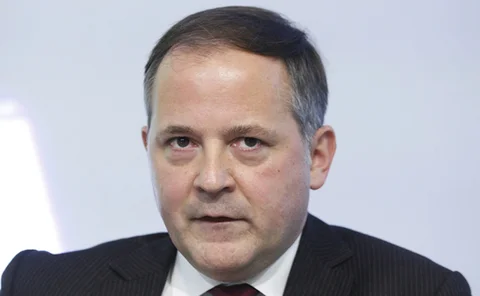
Benoît Cœuré: exchange rate pass-through has fallen for eurozone
ECB board member calls for reconsideration of IS curve modelling