
Financial crisis

The Eurosystem has done enough; time for politicians to choose
The Eurosystem has done enough to support the eurozone, says Jens Weidmann, who believes the euro area should either accept fiscal union or allow sovereigns to default

Booknotes: After the Music Stopped: The Financial Crisis, the Response, and the Work Ahead
According to Alan Blinder's publisher, he has taken the time 'to think his way through to a truly comprehensive narrative of how the worst economic crisis in postwar American history happened'
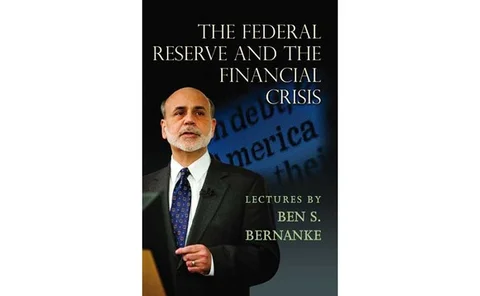
Booknotes: The Federal Reserve and the Financial Crisis
This volume is based on the transcripts of four lectures from a series delivered by the chairman of the Federal Reserve Board at George Washington University in the spring of 2012

Booknotes: Bull By the Horns: Fighting to Save Main Street from Wall Street and Wall Street from itself
This is a great book with a clear message: no more bailing out of too-big-too-fail banks.

Booknotes: The Leaderless Economy: Why the World Economic System Fell Apart and How to Fix It
The title of Peter Temin and David Vines’ book, especially its subtitle, promises the reader a lot

Bank of Spain financial stability report finds ratio of bad loans still growing
Contraction in new lending to households and businesses, combined with a poor macroeconomic environment, means Spanish bank loan books are on average not improving

European Parliament poised to approve next step in banking union
European political groupings have reached agreement on a text for the recovery and resolution piece of Europe's planned banking union

Asmussen and Rehn sketch plans for European body to replace ‘troika'
ECB board member defends scale of emergency liquidity extended to ‘insolvent' Cypriot banks; confirms the bank has an open mind on ABS purchases to ease SME credit crunch

Korea paper warns developing economies over financial openness
Research suggests open capital markets in developing economies create output volatility; suggests Asian countries are the least stable in a crisis

Bundesbank paper examines dynamics of crisis repo funding
Discussion paper finds changing pattern of fund management during global financial crisis, as ability of parent banks to protect subsidiaries dwindled; signals importance of strong capital base

RBI executive director discusses challenges in sustainable housing finance
Deepak Mohanty examines how best to extend housing finance in India, against the backdrop of multiple financial crises caused by unsustainable mortgage growth

Colombian paper flags danger from abnormal credit growth
Credit expansion does not always imply excessive risk-taking, but abnormal credit growth causes greater risk-taking and contributed to Colombia’s financial crisis in the late 1990s, paper finds

French paper warns of banks precipitating crises through hoarding
Research develops new ‘domino effect’ model, examining how banks may bring about crises by attempting to protect themselves
IMF working paper examines monetary policy ‘leaning against the wind'
Monetary authorities that want to stimulate the economy while maintaining financial stability should cut deeper, but then raise rates again faster

BIS paper urges statistics expansion
Research tells policy-makers to take advantage of the ‘sense of urgency’ that follows financial crises to expand the data they collect, including more comprehensive information on banks

ECB paper finds initial response to financial crisis was not good enough
Working paper suggests policy up to end of 2011 was insufficient to reduce credit availability problems for small businesses, underlining the importance of more recent innovations

Robert Pringle’s Viewpoint: Wider lessons of the Cyprus bail-out
The clumsy attempts to resolve a banking crisis in Cyprus underline the need to make more rapid progress on wider issues afflicting much larger financial markets in Europe

Eurozone rocked by Cypriot depositor haircut plan
Markets take a hit, peripheral bond yields rise and commentators raise fears of contagious bank runs as Cypriot parliament debates plans to take 6.75% haircut from ‘insured’ depositors

Icelandic paper finds country's response to banking crisis was optimal
Research by Central Bank of Iceland looks at various alternatives to Iceland’s handling of the 2008 banking collapse, but finds none yield better outcomes than the baseline scenario

Nalm 2013: Kotz stresses necessity of exceptional policy despite moral hazard
Former Bundesbank board member says exceptional response by major central banks to the financial crisis was unavoidable as cost of inaction would have been ‘massive’

BIS paper urges inclusion of financial cycle in output gap calculation
Working paper warns ignoring the financial cycle when calculating the output gap can cause policy-makers to overlook unsustainable output movements

NY Fed paper highlights money market fund ‘stampede’ risk
Staff report finds intermediation by money market funds can turn unexpected withdrawals into runs, meaning a small shock can bring down the whole banking system

BIS paper anatomises global liquidity
Study finds liquidity conditions are shaped by credit supply, credit demand, and monetary policy; financial crisis a product of all three

Dutch paper says foreign banks can help or harm developing markets
Working paper finds foreign-owned banks in developing countries can provide cheaper and higher quality financial services, but may also transmit shocks across borders