
Financial crisis

BoE economists mine tweets for early-warning indicator
Central bank put its work on ‘text mining’ and big data to work during Scottish independence referendum in an attempt to create an early-warning indicator for bank runs

Public support works when big and well-aimed, study finds
Large-scale public sector support operations for distressed borrowers work best when they are large and have strong conditionality, according to DNB paper

IMF paper finds standard risk metrics perform poorly with low financial depth
Authors find ‘excess credit’ is a better early warning indicator for financial instability than credit-to-GDP where countries have limited financial depth

Nobel economist Sims on fiscal stimulus, Eurozone loss sharing and role of central banks
The Nobel laureate speaks with Christopher Jeffery about his scepticism regarding secular stagnation, the eurozone’s failings and the need for inflationary fiscal stimulus at the zero lower bound
Managing financial stability, monetary systems and the economic order
If policy-makers fail to address the challenges presented by strong feedback loops between the economic and monetary systems, the next crisis could seriously damage faith in market-based economies

Book notes: Money and Trade Wars in Interwar Europe, by Alessandro Roselli
Alessandro Roselli’s book on interwar Europe should be compulsory reading for all those who are handling or interested in the current crisis in the euro area

Icelandic paper looks for early-warning signals across past crises
Working paper identifies six clusters of financial crises in the country since 1875; finds macroeconomic variables give a ‘more robust warning signal’ than financial alternatives

Bundesbank research warns of risks from rising intraday interest rates
Discussion paper finds intraday rate rose from zero to around 60 basis points after 2008 and sovereign debt crises; researchers suggest it is reflecting a liquidity premium
Bundesbank research tracks changing financial cycle
Discussion paper seeks to establish the ‘empirical regularities’ of the financial cycle using an econometric model, finding the cycle has grown longer and more severe over time

Greek lessons for central banks acting as lenders of last resort
Is it appropriate for a central bank that also acts as lead financial supervisor to act as a lender of last resort at a time when its actions are becoming quasi-fiscal in nature? By Ludek Niedermayer

Belgian paper examines ‘crisis-proof’ services
Working paper finds ‘significant’ differences between the elasticity of goods exports and services exports with respect to GDP growth during the crisis

UK government launches plan to improve BoE governance
Bank of England Bill proposes changes to committee structure, adjustments to the Court, establishing new roles and axing old ones, and audits to assess value for money

ECB raises concerns over Greece’s draft resolution law
Hastily assembled legal opinion on draft law warns of possible detrimental effects on the Bank of Greece, including impact on independence, increased liability and ‘operational burden’

Greece uses bridge loan to repay IMF and ECB
Loan received today used immediately to repay debts, while government works to unlock full bailout; Ben Bernanke joins debate with criticism of German trade surplus
Bundesbank paper tracks causes of financial crisis balance sheet contraction
Working paper identifies characteristics and behaviour that had a dampening effect on German banks during the 2008 crisis, noting the importance of taking a nuanced view
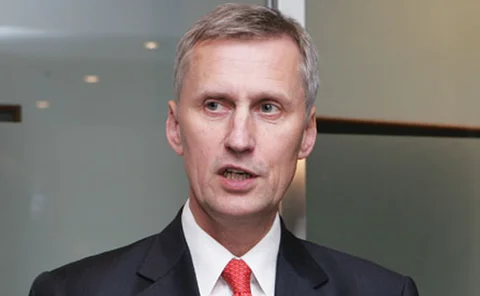
Martin Wheatley resigns as FCA chief executive
FCA chief quits after it emerges the UK chancellor will not be renewing his term next year; worldwide search begins for successor
Iceland offers pension funds relief from capital controls
Pension funds will have access to a limited amount of foreign currency in an effort to smooth the transition as controls are lifted
Central banks cannot avoid fiscal impact, Bundesbank panellists warn
Academics and central bankers point to fiscal impact of monetary policy and lender of last resort function, raising the question of how much fiscal power central banks ought to wield

EBA calls for more risk-sensitive securitisation regulation
Opinion submitted to European Commission recommends end to ‘one-size-fits-all’ capital treatment of securitisations, with two-stage process to determine which should be subject to lighter touch

Iceland’s Guðmundsson plans post-capital controls monetary redesign
‘Inflation targeting plus plus’ would help the small, open economy to pursue independent monetary policy, insulated from violent capital flows, the Icelandic governor tells Central Banking

Haldane blames ‘dread risk’ for ultra-low rates
Exaggerated fear of catastrophic but rare events may be a factor behind stubbornly low interest rates, Bank of England chief economist says

Eurogroup calls emergency conference as Greece turns to ESM for help
Greece asks for two-year bailout programme from European Stability Mechanism, triggering yet another emergency Eurogroup meeting; ECB’s Cœuré admits exit from the euro is now possible

BIS calls for new paradigm in economic policy
Annual report argues broken international monetary system and low productivity reflects failure to ‘come to grips’ with how financial and real economies interact, domestically and globally
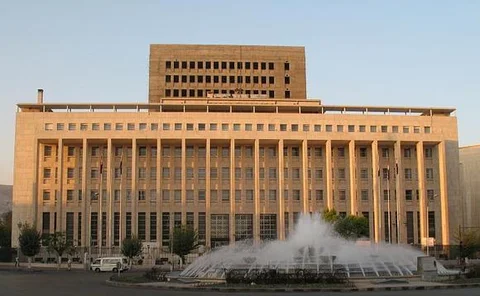
Chatham House paper tries to quantify Syrian economic breakdown
Devastation from war, displacement of millions and oil and gas production falling into the hands of Isis and Kurdish forces have combined to create economic disaster