
Banks

New BoE climate risk scenarios spark race for extra data
Banks need information from clients or third parties to populate 1,760 stress test variables

Bundesbank warns about digital challenges for German banks
Report stresses the importance of reinforcing cyber security processes

US regulators to align policies on lower income lending
OCC backs down on separate CRA rules and starts joint consultation with Fed, FDIC

Technology is the best bet in fighting money laundering
Danish FSA chief Jesper Berg says there is a need to think ‘outside the box’ on AML, rather than blame flawed regulatory and institutional design in dealing with corrupt money flows

BoJ to offer zero-interest loans for climate projects
Central bank highlights five areas of focus in new climate strategy

Most central banks communicate in at least two languages
Central banks must weigh challenge of translating sensitive messages against reach

Bank of Israel allows banks to resume dividend payments
Central bank recommends ‘prudent approach’ as Covid-19's impact remains uncertain

BIS paper sees fintech creating ‘barbell’ market structure
Authors say regulators should take action as digital innovation drives changes in market structures

IMF’s Zhang says external financial lifelines must be ‘preserved’
Fund is providing AML/CFT training in the Pacific to stem correspondent banking crisis
Wide gap between some central banks’ communications budgets
But comms salaries are fairly level between high and middle income groups

Recipe for a chief (fin)tech officer
Private-sector experience, a knowledge of supervision and a zest for innovation are key ingredients for a chief fintech officer
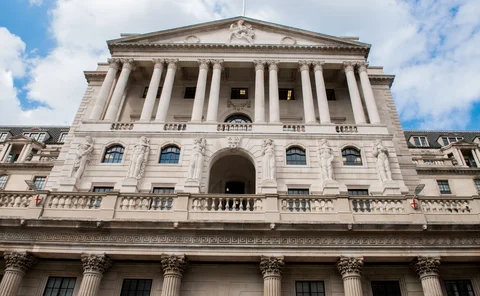
BoE removes ‘guardrails’ on bank dividend payments
Central bank eases restrictions as outlook for UK financial sector improves

UK financial sector slowly improving on diversity – BoE paper
Research shows women are gaining a foothold, but progress with age and nationality diversity has stalled
Email top for internal central bank communications
In-house platforms, events and seminars also widely used

BoE paper explores impact of machine learning on credit
Benefits of AI-driven screening depend on market characteristics, authors find
Trust and comprehension seen as more important than audience size
Central bankers see trust as the most important measure of communications effectiveness

Stress tests may be poor guide to capital levels – BIS paper
Authors develop model of how “noisy” tests may cause problems for regulators

US comptroller takes direct charge of agency’s bank supervision
US agency eliminates chief operating officer role as part of internal reorganisation

Somalia’s governor on rebuilding its central bank
Governor Abdirahman Mohamed Abdullahi discusses reviving Somalia’s war-damaged economy, re-creating a payments system, and dealing with remittances

Basel III helped absorb impact of Covid-19, says BCBS
Early study of pandemic finds better-capitalised banks lent more to households and businesses

South African Reserve Bank: the first 100 years
Central bankers and academics reflect on a tumultuous first century for Africa’s oldest central bank
Monitoring tools critical to measuring comms effectiveness
Facebook and YouTube remain most popular social media options, but some central banks are experimenting with others

O CBDC, O crypto! Wherefore art thou regtech?
Putting more investment and energy into regtech, instead of solely focusing on crypto and CBDC, would help to secure more of the expected benefits from digital evolution
Inflation reports more frequent than financial stability reports
Clear majority of central banks also use ‘layering’ in key publications