
Research

Not everyone can make it to the top
Boston Federal Reserve finds American families’ economic mobility is decreasing

Privately-funded social security better
Central Bank of Turkey says fully funded social security provides greater welfare effects
Linking saving ratios and current account balances
Key differences in saving and investment ratios explain current account balances, but experiences still differ by region says an article published by the Reserve Bank of Australia
French banks resilient in crisis but hurdles remain
French banks have weathered the crisis through a diversified model and well-managed risk but many challenges remain, argues research published by the International Monetary Fund
Reasons for renminbi undervaluation disputed
Undervaluation of the renminbi is impenetrable as a result of the lack of clarity in academic literature, argues Bank of Finland paper
Belgium and euro area will not face deflation
Policymakers’ swift adoption of expansionary policies will prevent Belgian and Euro area economies from spiralling deep into deflation, argues the National Bank of Belgium
Towards a better measure of wealth
Report seeks to highlight the limitations of GDP as a measure of economic and social well-being, particularly problems in its measurement

The real effects of financial risk
Research estimates the magnitude of key effects on the real economy from financial sector stress
How competition influences bank failures
Bank of Finland uses evidence from Russia to investigate link between competition and failure
Monetary policy and the Jordanian central bank
Research charts the impact of central bank independence on policy

Riksbank's Svensson calls for better forecasting
Riksbank’s Lars Svensson reviews the development of the Riksbank’s transparency and communication since its independence in 1999
Sounder banks’ borrowers get burned in mergers
Centre for Economic Policy Research (CEPR) looks to Japan for firm-level evidence on the real effects of bank bailouts
Remittances a potential tax base
International Monetary Fund investigates the impact of remittances on public-debt sustainability
Estate agents do serve social role
Boston Federal Reserve looks at the conflict of interest between a seller of a house and a real-estate agent
A model for an economy's target value of assets
Centre for Economic Policy Research investigates global imbalances

Banque de France review offers regulatory preview
Report features contributions from Jaime Caruana, Claudio Borio, Sheila Bair and Nout Wellink

Watch demand-type shocks in move to peg
Czech National Bank economist says monetary policy should pay attention to demand-type shocks when moving to an fixed-exchange-rate-peg regime
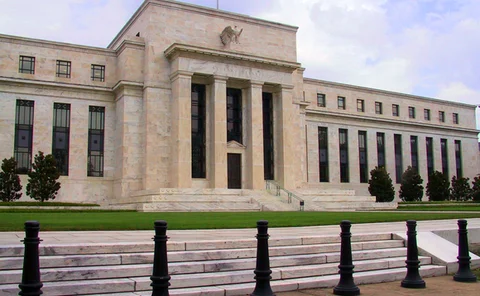
A model for monetary policy analysis
San Francisco Federal Reserve finds labour market impacts policy's goals

How do financial markets price new information?
European Central Bank research paper investigates the reception of public signals in financial market
Payments between healthy and unhealthy banks
Bank of England research investigates how settlement banks in CHAPS, the UK's large-value payment system, deal with operational risk
Responding to oil price shocks
San Francisco Federal Reserve research investigates how monetary authorities should react to oil price shocks
How financial markets in Africa develop
International Monetary Fund research makes an empirical examination of the determinants of financial market in Africa, looking particularly at banking systems and stock markets

Productivity in Chinese provinces
Bank of Finland research goes in search of innovation-driven gains in Chinese provinces
Modelling the labour market
Research published by the Bank of England reviews recent approaches to modelling the labour market and their implications for inflation dynamics