
Croatia

Croatia and Bulgaria join ECB’s exchange rate mechanism
Both countries move closer to eurozone membership as largest Croatian banks come under SSM
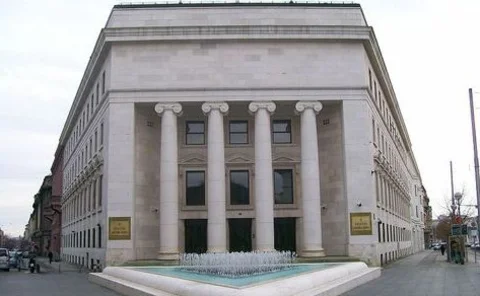
ECB sets up €2 billion swap line with Croatian National Bank
The line will remain in place until the end of 2020, but can be extended as long as it is needed
Croatian central bank starts bond-buying programme
HNB also holds repo auction and may relax banks’ capital buffers in response to coronavirus

Croatian governor warns ECB spillovers are raising real estate prices
IMF should advise less separation between macro-prudential and monetary tools, Boris Vujčić says
ECB to assess Croatian banks in euro membership prep
Croatia could join the eurozone by 2024
Croatian central bank moves towards “close co-operation” with ECB
Draft law forms part of process for joining European single currency
The IFF China Report 2019
Insight and perspectives from the world's leaders, premier policy-makers and financiers

The IFF China Report 2019: Redesigning the international trading and monetary system
Reform of the financial system that brought about the 2007–08 financial crisis has not gone far enough and advanced and emerging market economies must find a more co-operative way forward to ensure globalisation can continue.

Podcast: Croatia’s Željka Majher says central banks should set diversity goals
Director of HR at the Croatian National Bank is against numerical gender targets, but says a diversity goal could help increase the pool of candidates central banks hire from

Croatian parliament reappoints Vujčić as governor after delay
Economist turned politician becomes deputy governor; three vice-governors also appointed
Is this the beginning of a new era of credit risk management technology?
In the aftermath of the 2008 financial crisis, inadequate credit risk management systems have been widely held responsible by regulators for spreading the crisis’ germs all over the financial sector. As a result, a myriad of regulations affecting credit…
Croatia’s Vujčić on tackling NPLs and home-host supervision
Croatian National Bank governor Boris Vujčić explains why dealing firmly with NPLs via a ‘provisioning clock’ does not choke growth while detailing the benefits of ‘home-host’ dialogues, such as the Vienna Initiative
Croatian governor: western Europe could improve NPL provisioning
Central and eastern European countries are leading the way in dealing with NPLs, says Vujčić

ECB says draft Croatian law could harm central bank independence
Proposals would give state auditor “undefined powers” over central bank, ECB says

Croatian National Bank sees inflation recovering this year and next
Annual CPI inflation fell to –1.8% in May, but the central bank expects it to pick up in the coming months, eventually rising to 1.2% in 2017

Prospective eurozone members fail to meet convergence criteria, ECB says
Seven prospective member countries show greater convergence in their economic indicators but fail to meet requirements for their legal frameworks, ECB report says

EBA publishes first complete list of European O-SIIs
European Banking Authority publishes first full list of other systemically important institutions in Europe; some national supervisors make more use of discretion than others
Croatia makes it 25 central banks in Target2
The Croatian National Bank will, along with 24 commercial banks in the country, participate in the RTGS system from February 1, making it the fifth central bank outside the eurozone to join

Croatian governor: Europe has a way to go with structural reforms
Boris Vujčić points to benefits of greater labour market flexibility and easier equity financing at IIF conference; Hungarian council member stresses need for productivity growth

Irish deputy sees value in ‘well-developed’ rental market
Stefan Gerlach says it is important renting is an attractive long-term proposition, as deeper rental markets help make the economy more resilient to shocks

IMF sees deflation threat to Western Balkan recovery
Special report on economic transition in Western Balkans identifies deflation spilling over from eurozone as risk to recovery in the region; most of the countries experiencing negative inflation
Models with time-varying parameters improve GDP forecasting, finds Croatian working paper
Research finds that Bayesian models are better at predicting short-term GDP fluctuations in Croatia than naive benchmark models
Croatian National Bank knows best on FX policy, IMF finds
Croatia's central bank stuck up for its exchange rate policy in Article IV discussions with the IMF, which conceded the bank knew best on a range of issues

Greek paper finds Turkish economy bucks EU trends
Academics use a GVAR model to examine interlinkages between southeast European economies and how they react to eurozone macroeconomic policy; Turkey bucks trends followed by EU members