
Federal Reserve System

Fed’s QE contributed to increased risk-taking by lenders – research
Mortgage real estate investment trusts increased leverage following Fed’s asset purchases

Central bank cyber security: a weak link in the financial system?
Disgruntled hackers are targeting central banks, whose cyber defences may not be up to the test

Fed keeps rates unchanged but points to strong economic activity
FOMC says it expects to implement gradual increases in federal funds rate
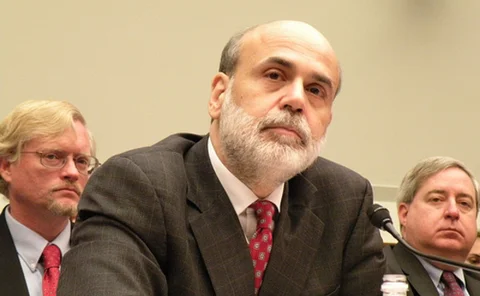
‘Bernanke targeting’ may outperform Taylor rule – Fed paper
Paper tests Ben Bernanke’s proposal for temporary price level targets

Flattening yield curve opens questions about nine-year US expansion
Officials and market observers disagree about information conveyed by bond yields

CCAR ‘apocalypse’ leads to excess bank capital, says lobbyist
Head of new trade body says Fed should average capital requirements over multiple scenarios

Banks tend to game stress tests, Fed economists say
Models tend to be subject to “strategic adjustments”, paper finds
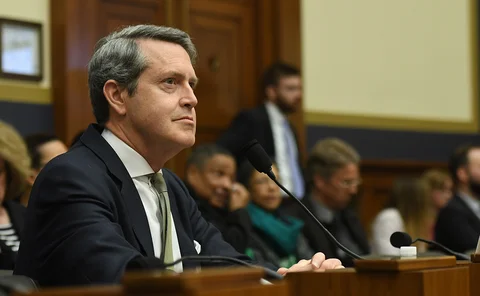
Implementation of new Sofr rate is “ahead of schedule”, says Fed vice-chair
Implementation of new ‘Sofr’ rate is “ahead of schedule”, says Fed vice-chair

Trump criticises Fed over rate rises and threatens higher tariffs
US president says rate hikes are “taking away our competitive edge”

Branching out: foreign banks seek shelter from Fed rules
Foreign banks stashing repo businesses within their branches, outside Fed’s full gaze

Book notes: American default, by Sebastian Edwards
Edwards’ book is fascinating, well written and enjoyable, and provides an account of one of the US’s forgotten chapters of history

Central bank digital currency a ‘terrible idea’, US Congress told
Move to central bank cryptocurrency would make Fed “overwhelming credit allocator” - researcher

US expansion set to continue despite trade disputes – Powell
Protectionism may still negatively affect economy, Fed chair concedes

Trump tariffs could force Fed’s hand – IMF
US central bank could be forced to raise rates more quickly if tariffs force prices higher
Monetarist perspective affects normalisation forecasts – Chicago Fed paper
Incorporating money demand into projections affects forecasts of remittances and money multiplier
Fed signals solid growth in report to Congress
FOMC members support gradual normalisation of monetary policy
Protectionism triggers ‘rising level of concern’ in US – Powell
Fed chair thinks it is difficult to predict the effect of trade barriers on the economy

High reserves and low yields force central banks to focus on returns – survey
Equities become more important in reserve portfolios, accounting for 90% of returns in 2017

Fed paper builds dynamic factor model for nowcasting
Model produces “reasonably good” estimates of Ecuadorian GDP and outperforms other models

Book notes: Unfinished business, by Tamim Bayoumi
Anand Sinha praises Bayoumi’s analysis of how the euro crisis and US housing crash were, in fact, intertwined

‘Low for long’ endangers stability, warns BIS committee
Some banks could face solvency issues if faced with a “snapback”, warns Philip Lowe
Banks stumble in second round of Fed stress tests
Fed demands Deutsche Bank take remedial action; two others told not to increase dividends
Fed’s Quarles defends FSB from US critics
Supervision chief says FSB is not a threat to sovereignty and helps solve collective problems

Policy normalisation puts EMs in ‘perilous’ situation – Mexico’s Calafell
Deputy governor says monetary policy may tighten faster than markets expect