
Macro-prudential

Kazakh central bank injects $1.2 billion into four banks
Institutions submitted plans to increase capital and reduce NPLs, says governor

Basel Committee in ‘last few metres’ of post-crisis marathon
Secretary-general says it would be unwise to quit with the finish line so close, but adds the committee won’t be running another marathon for a while

Fed should have adopted BoE approach to mortgage lending – Tarullo
BoE’s approach to leveraged lending aimed to prevent “hard stop”, Cunliffe says; caps on mortgage lending were enforced by UK central bank in 2014

IMF recommends Spain take a tougher approach on NPLs
Fund advises central bank to set up a group to oversee public asset management company Sareb

Low volatility challenges central banks – BSP deputy governor
BSP deputy governor examines the correlation between volatility and uncertainty, and the calibration of monetary policy and macro-prudential policy in the Asean region

DNB to introduce climate-related risks in its supervision
Transition to a carbon-neutral economy will also create financial stresses, Dutch central bank says

Banco Sabadell relocates outside of Catalonia
The bank wants to ensure it remains under the supervision of the ECB

ECB targets NPLs with tougher prudential rules
The proposed regulation will only apply to new distressed assets from January 1, 2018
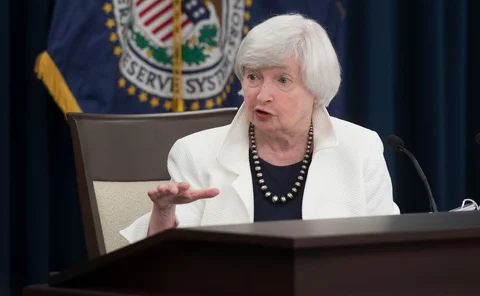
Yellen defends contentious FSOC decision on AIG
Top regulators narrowly vote to remove AIG’s designation as systemic, exposing sharply contradicting views on the Financial Stability Oversight Committee

Fitch warns Philippines on prudential standards
Real estate sector appears stable but risks could “crystallise” if left unchecked; closer central bank scrutiny may prove inadequate

Capital rules may be too risk-sensitive, Basel fears
Complexity is slowing the roll-out of standards, says Basel Committee deputy

Portuguese governor clashes with government
Treasury intends to transfer banking resolution competencies out of the central bank

BoE issues consumer credit warning to banks
Preliminary stress-test results show UK banking system could incur £30bn loss over three years; UK central bank says financial system is “underestimating losses”

Don Kohn extols virtues of co-operation across policy domains
Good communication between policymakers in different spheres and complementary policy action can bring significant benefits, FPC member says

RBNZ proposes tougher rules for bank outsourcing
Banks must show they can open at 9am the day after entering resolution; foreign-owned banks need to supply separation plans

Portuguese government welcomes proposal for new supervisory agency
New agency could take financial oversight and bank rescues away from the central bank

Lower monthly quotas effective at preventing mortgage defaults
60% of US defaults during financial crisis caused by lack of ability to pay, paper finds

IMF report studies country responses to volatile capital flows
Set of case studies emphasises value of macro-prudential policy in resisting credit booms across emerging and advanced economies

Swaziland central bank needs macro-prudential powers – IMF
Fund urges authorities to fast-track reform to give central bank financial stability mandate; reliance on customs union leaves economy vulnerable

Australian first-home buyers have better finances, study finds
RBA research paper finds fewer people are transitioning from renting to owning houses, but those who do tend to be more financially stable

Argentina attempts to speed up financial transactions
The central bank will allow the public to directly submit their tax returns to banks, as part of a series of measures designed to boost credit

Riksbank: housing market is a ‘serious threat’ to stability
Swedish central bank welcomes amortisation proposals, but says further measures may be needed

New board oversight will not “lower the bar” – Fed’s Powell
The proposed new regulation will not lower the bar for boards or lighten the load of directors, says the Fed governor

Graeme Wheeler: LVR restrictions seem to be working
RBNZ governor looks back over five turbulent years; says housing market restrictions have reduced systemic risk and the market seems to be cooling