
Central Banks

Top EU court should dismiss UK bonus cap plea, says advocate general
Opinion rejects UK’s main legal challenge to EU bonus cap law and argues use of word ‘cap’ is misleading; UK Treasury says opinion ‘demolishes’ case for fixed ratio
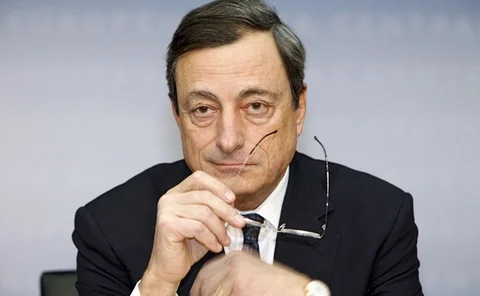
Draghi sets sights on capital markets at SSM inauguration
Mario Draghi says policy-makers can draw on new model for banking supervision when working to integrate capital markets; Danièle Nouy calls for consistent regulation across countries
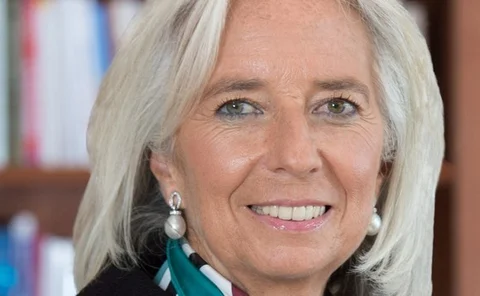
Lagarde lauds new Mexican bonds with ‘strengthened' collective action clauses
Mexico issued $2 billion in 10-year bonds with new collective action clauses, which Lagarde says ‘will play a critical role in enhancing the architecture for sovereign debt markets’

Argentine governor says peso becoming more predictable
Central Bank of Argentina governor Alejandro Vanoli believes the peso is becoming more predictable due to his efforts to control the exchange illegal market

New Zealand’s banknotes get first upgrade since 1999
Reserve Bank unveils a ‘brighter, more modern look’ for its banknotes, and a host of new security features; net cost will be NZ$40 million over five years

Norges Bank's Øystein Olsen on governance and managing the world's largest SWF
Øystein Olsen, governor of Norges Bank, speaks to Christopher Jeffery about greater transparency and governance, including managing the world’s largest sovereign wealth fund

Klaas Knot: It’s up to governments now
Netherlands Bank president tells parliament that European governments will have to boost growth and ‘stir up’ inflation themselves; latest central bank bulletin reinforces point

The shift to a multi-polar world
Extraterritorial reach of US policies could hasten the use of alternative currencies; decision on renminbi inclusion in SDR may be a tipping point for relevance of Bretton Woods institutions

Dealing with an age of turbulence in emerging markets
Nigerian deputy governor details the options available to emerging markets when reacting to changes in developed-world monetary policies and associated fund movements

BIS' William Coen on Basel III and preventing the next crisis
William Coen, the secretary-general of the Basel Committee, speaks about the banking industry’s response to Basel III, supervision versus regulation and preventing the next crisis.

The ECB's approach to central banking without data borders
Data sharing and access to confidential information – on a need-to-know basis – remain a legal, cultural, technical and organisational challenge at the ECB and elsewhere, writes Aurel Schubert

Assessing credit risk post-crisis at a central bank
Eric Wolfe explains how the Bank of Canada has developed its own credit assessment processes to avoid mechanistic reliance on credit rating agencies.

Czech currency intervention and forex reserves
Michal Skorepa and Mojmír Hampl explain how the Czech National Bank’s activities have directly and indirectly affected the value of the koruna, including the impact of direct interventions in 2013

Book notes: What Have We learned? Macroeconomic Policy After the Crisis, by George Akerlof, Olivier Blanchard, David Romer and Joseph Stiglitz
This book brings together the great and the good of the economics profession, policy-makers and academics, to assess what the dust jacket describes as the “brave new economic world"

Book notes: Finding Equilibrium, by Till Düppe & Roy Weintraub
This unusual book describes the early progress in the mathematisation of economics and, in particular, micro-economic model building

Book notes: GDP: A Brief but Affectionate History, by Diane Coyle
A whistle-stop tour of the development of GDP, a workhorse of economic modelling and analysis

Kuroda wins over BoJ policy rebels
Three of four dissenters at the last policy meeting line up behind Bank of Japan’s expanded easing programme as inflation slips lower

Bank of Canada weighs inflation target increase
Consideration should be given to an inflation target that is above 2%, deputy governor argues; says lower neutral interest rate could lead to ‘non-trivial’ increase in ZLB episodes

Linde: Spanish banks have ‘solid solvency position’
Bank of Spain governor says performance of Spanish banks during ECB stress tests was ‘positive’; banks face the future in a ‘solid solvency position’

BIS paper warns Basel III likely to prove ‘challenging’ for emerging markets
Working paper points to a number of obstacles to implementing the Basel framework in emerging markets and developing economies, and suggests potential solutions

Central Bank of Brazil takes action to boost credit
Co-operative banks in Brazil to be granted as much as 760 million reais for new loans and allowed to issue bonds, in a move designed boost credit in the country

BoE’s Forbes says financial ‘deglobalisation’ has upside
Kristin Forbes highlights ‘massive contraction’ in global bank flows as main factor reversing financial globalisation, resulting in both positive and negative effects on the UK economy

Kocherlakota wants Fed to mimic Bank of Canada communication
Minneapolis Fed president calls for ‘symmetric’ inflation target and two-year horizon for achieving it; says FOMC should adopt Canada-style language to characterise inflation objective

Robert Pringle’s Viewpoint: Time to cure central bankers’ deflation phobia
The policies followed since the ‘great crisis’ have not succeeded in restoring confidence. It is time to try a different approach