
Central Banks

Active FX intervention could have long-term costs, says Bank of Mexico deputy
Central bank policies to manage capital flows ‘may have resulted in short-term benefits’ but their costs in terms of market distortions ‘may be high’

Bank for International Settlements sees danger lurking beneath exuberant markets
Recent rapid 'flip-flopping' by markets from risk-on to risk-off and back reveals fragility hidden beneath buoyant asset prices, and central bank interventions may make the problem worse

Central banks in SE Europe publish 19th century data
Institutions in Albania, Austria, Bulgaria, Greece, Romania, Serbia and Turkey team up to shed light on ‘statistical dark ages’ going back to the Ottoman Empire in 1830

BIS quarterly review warns even high quality securitisations carry risks
Quarterly review article says even simple, transparent and high-quality securitisations create uncertainty, making estimating risks tricky, especially in mezzanine tranches

Basel Committee: US and EU capital rules still falling short
Basel Committee’s second assessment of compliance with Basel framework finds both EU and US are not complying in all areas, but both argue deviations are justified

Belarus central bank handed 12% inflation target
President of Belarus expects inflation to fall from 20% to 12%, while the central bank simultaneously reduces its policy rate by at least 500 basis points

Bank of Russia vows to carry out ‘unlimited' interventions to defend ruble
Central bank returns to market less than a month after allowing currency to float; cuts interest rates on forex repos

Argentina governor wants new growth model for LatAm
Central Bank of Argentina governor believes Latin American countries need to invest in infrastructure and boost internal production

Sweden's central bank and macro-prudential regulator clash over leverage ratio
Riksbank calls for stricter and earlier implementation of Basel III measure a day after Financial Supervisory Authority rejects proposals

BoE’s Bailey considers relevance of macro-prudential tools in insurance sector
Deputy governor says there is a ‘good argument’ for a macro-prudential response to a situation where insurers are liquidating their assets on a pro-cyclical basis

SNB working paper examines drivers of Swiss franc real exchange rate
Research finds terms of trade and relative government are ‘the most significant explanatory variables’, while Balassa-Samuelson effects are unimportant

Spanish working paper explores inflation dynamics
Research considers the impact of different industrial structures on the response of inflation to technology, interest rate and entry cost shocks

Iceland introduces foreign currency funding rule based on Basel Committee's NSFR
Measure is intended to limit extent to which banks fund long-term lending in foreign currencies with unstable short-term funding; Three-year NSFR could be introduced in 2015

Fisher: Fed should let security holdings 'roll off' at maturity
Dallas Fed president plans to urge FOMC colleagues to ‘think more outside the box' during final four months in office

Qatari royal takes over oil fund
Previous CEO lasted little over a year before he was replaced by a member of the Qatari ruling family; sovereign wealth fund comes bottom in global governance and transparency rankings

Brainard says Federal Reserve monetary policy can ‘lean against the wind’
FOMC member says limited range of macro-prudential tools means Fed is more likely than some other central banks to use monetary policy for financial stability purposes – but there are risks

Brazil hikes rate but will deploy further measures ‘sparingly’
Central Bank of Brazil increases key interest rate by 50bp to 11.75% and says it will use additional measures ‘sparingly’; economists expect tightening to stop early 2015

BoJ’s Sato explains QE dissent
Board member who voted against expansion of QE in October says he already sees a ‘virtuous circle’, meaning more asset purchases bring high risks will little reward

Resource costs of Australian payments system down as percentage of GDP
Consumers face similar cost for credit and debit card payments despite higher cost of credit cards to the economy, RBA paper finds
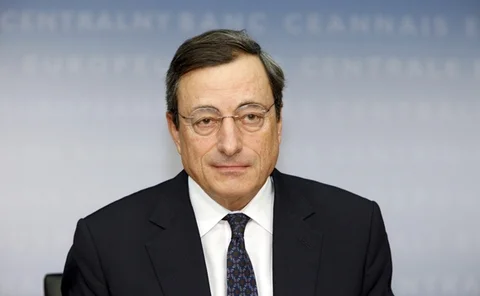
Draghi plans showdown ‘early next year’
Governing council will reassess monetary stimulus in 2015; Draghi says he does not need unanimity to launch quantitative easing

Bank of Canada's Poloz defends language on household imbalances
Governor explains Bank of Canada has not changed its assessment of household imbalances, after describing them as a 'significant risk' to financial stability in policy announcement

Ethiopia still ‘under banked’ despite 34% increase in bank branches
National Bank of Ethiopia reveals large increase in bank branches in annual report; argues there is still a need to ‘further develop’ the financial sector
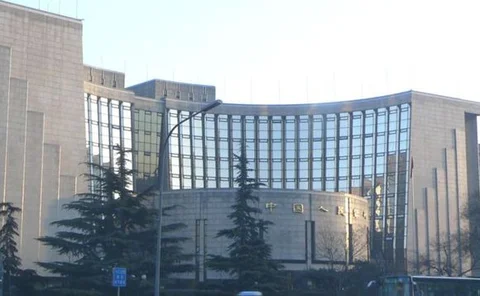
PBoC highlights ‘rapid’ growth of electronic payments
Quarterly report on payments in China says electronic payments, particularly mobile payments, grew significantly in Q3

BoE extends Funding for Lending Scheme
Scheme will continue for an additional year in a bid to boost credit provision to small businesses; Mark Carney admits lending to smaller firms is still problematic