
Economics

South African Reserve Bank: the first 100 years
Central bankers and academics reflect on a tumultuous first century for Africa’s oldest central bank

Vast majority of central banks provide communications training
Social media, writing skills and public speaking emerged as key areas
Academics miss out on central bank background briefings
After journalists, private sector analysts are offered briefings most often

ECB paper investigates macro-pru’s impact on inequality
More research is needed on how borrower-based measures affect income inequality, researchers say
Communications often involved at early stages of central bank policy
Most central banks say comms teams are involved in early planning stage of policy decisions

Rising spillover risks from macro-prudential policies
Tools used to restrict credit in specific sectors can increase the riskiness of credit in other areas, creating challenges in the use of household-specific and corporate credit-calming measures, write Lucyna Górnicka and Apoorv Bhargava

MAS’s Vincent Loy and Celine Sia on transforming data management
The assistant managing directors explain how uniting business and technology functions is opening up new possibilities for data collection, governance and analytics

Bank of Italy paper uses agent-based model of housing market
Limits on borrowing are effective but not currently needed for Italian housing sector

Shadow banking changes macro-prudential trade-offs – BdF paper
Presence of non-banks increases importance of dynamic capital ratios, researcher argues

Charles Goodhart on inflation targets, financial stability and the role of money
The LSE professor says inflation targets should have been 0%, the Fed’s move to AIT is a mistake, independence is under threat from inflation, big balance sheets support liquidity, AI can help supervisors and climate stress tests are unconvincing

Central banks will need new tools if low rates persist – Rogoff
Governments must clamp down on crypto assets while central banks develop CBDCs, economist says

Germany facing ‘strong upswing’ – Bundesbank
Central bank revises 2021 GDP growth forecast from 3% to 3.7%

Financial sector still a headache for central bank modellers
Macro-financial links are difficult to integrate into key models, with progress since the global financial crisis slow. But some central banks are making breakthroughs

A return of the inflation monster?
There are fears that a shift in intellectual approach towards running economies ‘hot’ could herald a return of the money-eating inflation era

Time series models need adapting for Covid-19 shock – ECB paper
Authors explain methods for making Phillips curves and VAR models more robust

Policymakers should consider adjusting ECB’s target – BdF paper
Lower eurozone r* points to adjustment of monetary policy strategy, researchers find
Asset managers should face minimum cash levels – ECB paper
Researchers say macro-prudential measure would improve market allocation of financial resources

Chilean central bank measures country’s carbon footprint
Study aims to create methodology to assess emissions and develop plan to cut footprint
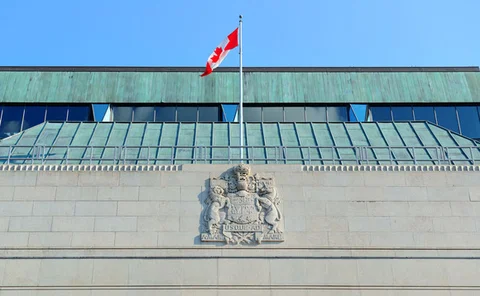
Australia, Canada and New Zealand form network for indigenous inclusion
Ottawa will host symposium on indigenous economics later this year

The evolving ‘strategy function’ in central banks
Some institutions participating in a survey of 27 central banks still struggle to fully harness an effective ‘strategy function’, according to the ECB’s Jean-Charles Sevet and Alejandro de la Cuesta

Eurozone’s public debt rose sharply in 2020 – official figures
Public debt in the bloc jumped to 98% of GDP in wake of Covid-19, Eurostat says

Emerging-market central banks lead on women’s empowerment
EME central banks have more women at staff level and in senior positions, but there are deep disparities worldwide, with childcare availability appearing to be a major cause

‘Giant of the field’ Robert Mundell dies
The Nobel laureate influenced a generation of economists via the Mundell-Fleming model

People: Steven Maijoor moves to DNB
Bank of Slovenia vice-governor nominated; ECB media relations chief stepping down; and more