
Speech
PNG’s Kamit on how to reap benefits of microfinance
Bank of Papua New Guinea’s Wilson Kamit says that microfinance should go hand-in-hand with improvements to financial literacy
PNG’s Bakani calls on government to cut costs
Bank of Papua New Guinea’s Loi Bakani says that the government should cut expenditure in the face of low export-commodity prices
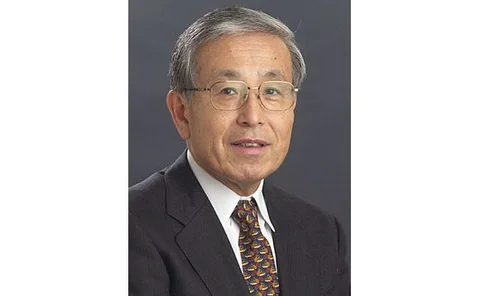
IMF’s Kato praises China’s commitment to the Fund
China’s intention to invest in International Monetary Fund’s notes is highly important, says Takatoshi Kato, a deputy managing director of the Fund

BIS’s Caruana calls for rule-based approach
Jaime Caruana from the Bank for International Settlements says rule-based approach is needed to address the procyclicality of the financial system
Sri Lanka’s Wijewardena on integrity in microfinance
Central Bank of Sri Lanka’s W.A. Wijewardena covers credibility and reputational risk in the microfinance industry
BoJ’s Shirakawa: monetary policy not enough against bubbles
Bank of Japan governor says more policy tools required to preserve stability
BoE’s Haldane: OTC markets need reforming
Bank of England’s Andy Haldane says over-the-counter post-trade infrastructure needs top-down push to reform
BoE’s Tucker: banking social contract needs reform
Bank of England’s Paul Tucker says that banks must adjust and it will not be cheap
Fed Hoenig: new rules must be simple
Kansas City Federal Reserve’s Thomas Hoenig calls for new rules for systemically-important institutions to be comprehensible
Bernanke: public must grasp economic developments
Ben Bernanke says the public’s economic understanding is crucial for the conduct of monetary policy
Boston Fed’s Rosengren on forward-looking regulation
Boston Fed’s Eric Rosengren says that regulation must look for future risks in the system
Mauritius’ Bheenick: Doha talks key to recovery
Mauritius’ Rundheersing Bheenick says that Doha is key to driving a global recovery
Treasury's Allison: financial system more stable
There are tentative signs that the financial system is beginning to stabilise and that the US Treasury's efforts have made an important contribution to this, said Herbert Allison Jr, the assistant secretary for financial stability at the US Treasury.
Why money laundering is a real challenge
Combating money laundering is a real challenge in many developing countries because of the scarcity of capacity and resources, said Tom Alweendo, the governor of Bank of Namibia.
Germany's Weber calls for strong ESRB presence
Central banks should have a strong presence in the executive committee of the proposed European Systemic Risk Board (ESRB), said Axel Weber, the president of the Bundesbank.
SNB's Jordan cautions on low rates
Responsible behaviour on the part of homeowners, and bank discipline when granting loans, is needed to ensure that a low-interest environment does not lead to destabilisation of the property market, said Thomas Jordan, a member of the Swiss National Bank…
Rejigging the OTC derivatives market
Patricia White, an associate director at the division of research and statistics at the Federal Reserve, has testified on how the central bank believes the derivatives market should be regulated.
Inflation targeting: lessons from the crisis
Spencer Dale, the chief economist at the Bank of England, has said inflation targeting should remain a mainstay of macroeconomic policymaking in Britain.
Gonzalez-Paramo on the future of central banking
In this speech, Jose Manuel Gonzalez-Paramo, a member of the executive board of the European Central Bank, argues that the crisis "will bring about a new environment for policy-making in a number of areas related to central banking."
Canada to support private liquidity creation
The Bank of Canada, as the ultimate provider of liquidity to the system, is thinking through whether to adapt its facilities to support continuous private liquidity creation, said Mark Carney, the governor of the central bank.
IMF's Lipsky: expansionary fiscal policy still key
Fiscal policy in advanced and many emerging-market economies should remain expansionary at least through 2010, said John Lipsky, the first deputy managing director of the International Monetary Fund.
Bernanke: bottom-up actions key for recovery
Economic recovery and development is a bottom-up as well as top-down process, said Ben Bernanke, the chairman of the Federal Reserve.
Don't hike rates too early, Fed's Duke warns
Elizabeth Duke, a governor of the Federal Reserve, has noted that previous downturns have been deepened or prolonged by the premature withdrawal of monetary or fiscal stimulus.