
Research

Reserve Bank of Fiji adviser targets 5% growth
Lorraine Seeto believes the Fijian economy can grow by 5% each year; highlights the need for more investment, more exports, and a low and stable inflation rate
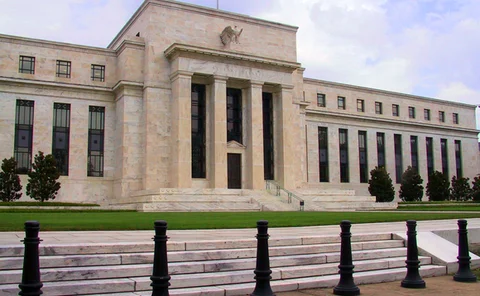
Dallas Fed highlights transformation of FOMC statements over past 20 years
Before 1994, markets were left in the dark over interest rate changes; statements have expanded seven-fold in the past 20 years, reflecting the evolution of monetary policy operations

BoJ paper: ‘Sudden stop' central factor in recent financial crises
Guillermo Calvo argues 'sudden stops' help explain a number of issues which conventional monetary policy fails adequately to address

Bank of Finland publishes research overview
Newsletter highlights research on bank-sovereign feedback loops, information costs and their effect on investment and financial liberalisation in China

Temptation preferences can inform asset pricing, Fed researchers find
According to San Francisco Fed paper, self-control preferences have important implications for macroeconomic issues, such as social security reform, income tax reform and asset-pricing issues

Bundesbank economists propose composite FSI with real economy predictive power
Composite financial stress indicator is better at predicting developments in the real eurozone economy than volatility indexes that are currently commonly used

IMF paper says ageing populations are dampening impact of monetary policy
Working paper says monetary policy is becoming less effective in advanced economies undergoing demographic shift; calls for policy-makers to adapt

Obstfeld: Weak ex ante financial constraints prompt 'bad equilibria' in markets
Absent adequate fiscal space, financial instability will lead to price instability or sovereign default, which will further impair the functioning of financial markets

FOMC policy rate guidance pushes up US equity prices
Netherlands Bank research paper finds policy rate guidance also leads to significant reduction in implied volatility for US government bonds

Surpluses of Germany and China feed global imbalances, BIS research finds
Bank for International Settlements paper compares current account and creditor positions of Germany and China, finding Germany’s surpluses to be more resilient in the face of the global financial crisis

Fed minutes ‘significantly affect’ US asset prices
New York Fed economic policy review finds that US asset price volatility increases when the Fed releases minutes from policy meetings, but less so since FOMC has become more transparent

Customers of failing banks less likely to trust other people
DNB working paper says mistrust prompted by experience of crisis increases likelihood of bank runs and undermines long-term growth
Implicit government guarantees leads to increased risk-taking at banks
Fed discussion paper argues that strengthening market discipline by reducing bank complexity is needed to address moral hazard

BIS economists find Fed's QE helps curb tail risk perception
Paper published today finds the effect of the Fed's announcing unconventional monetary policy measures is strongest when used in conjunction with forward guidance on low interest rates

NY Fed staff say effect of policy changes depend on risk environment
New staff report argues that macro policy announcements affect asset prices to different extents depending on the existing economic outlook; when risk is elevated, the impact is reduced

Financial crisis caused significant shift in the euro area Beveridge curve
ECB paper finds that labour market consequences of the crisis have been heterogeneous across countries, with Spain and Germany diverging the most

IMF paper considers impact of China’s capital account liberalisation
Researchers suggest that reduced capital control will likely lead to net outflows from equity and bond markets as domestic investors look to diversify

New York Fed paper wary of higher inflation targets
Staff report finds that pursuing a higher trend rate of inflation would likely create a ‘more volatile and unstable’ economy and unseat inflation expectations
Financial contagion function of reputation rather than size of banks
Bank clustering and large in-coming interbank loan more important than leverage ratios, while central bank intervention reduce contagion only slightly, Bank of Finland discussion paper finds
Ireland economists construct new business-cycle indicator
Economic letter published by Central Bank of Ireland presents an indicator to provide policy-makers with ‘real-time’ signals; index has declined in recent months as domestic demand remains weak

German banks move to lower-risk sovereign bonds
Deutsche Bundesbank discussion paper investigates banks exposures to sovereign debt and finds they are increasingly investing in bonds from larger countries with lower inflation
Segmented structure of Russian interbank market leads to volatile interest rates
Liquidity-absorbing and liquidity-provision operations are conducted by the biggest banks, reducing credit risk but also restraining market development, according to Bank of Finland discussion paper

Polish paper presents new method for constructing fan charts
Fan charts are an increasingly popular tool for depicting forecasts; working paper proposes a new method for formulating the charts that incorporates 'a mix of judgment and statistics'
Sovereign default spreads drove European bank risk exposures during crisis
Systemic risk of European banks reached its height in late 2011 at around €500 billion, based on a measure introduced in a recent Fed working paper