
Germany

German supervisors need more granular data – IMF staff
Staff say concerns about a housing bubble “look premature” but better data would help the authorities be prepared for imbalances; urge faster progress on structural reforms

People: Nagel leaves Bundesbank; GIC makes string of appointments
Joachim Nagel steps down from Deutsche Bundesbank executive board; Singapore’s sovereign wealth fund creates new posts and fills others; East African Community gets new secretary-general
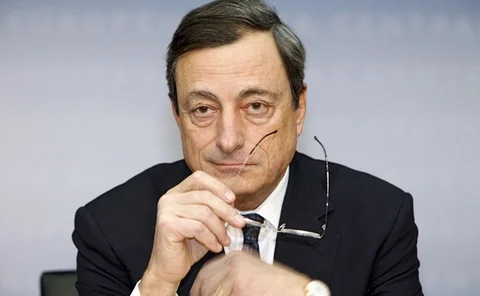
Draghi points to savings glut in some eurozone countries
Germany and others are contributing to a global savings glut, Draghi argues; renews call for structural reform and rejects appeals to curtail monetary expansion

EBA publishes first complete list of European O-SIIs
European Banking Authority publishes first full list of other systemically important institutions in Europe; some national supervisors make more use of discretion than others
Draghi warns criticism of monetary policy may delay recovery
Mario Draghi says some politicians' criticisms of ECB policy might delay eurozone recovery; says easing policies are working but need time to bring about recovery
Four largest eurozone economies show different reactions to monetary policy, paper finds
The economies of Germany, France, Italy and Spain show marked differences in responding to policy rate rises, researchers argue
Bundesbank publishes data on German ‘closed-end’ investment funds
Deutsche Bundesbank begins publishing data on German ‘closed-end’ investment funds; sector had total assets of €82.4bn in January 2016, with nearly half of investments in property market
Germans have unexplained high cash preference – Bundesbank article
Germans have a much higher tendency to use cash for larger transactions, article in a first edition of a new Bundesbank publication says

Small and medium eurozone banks must assess business models, Lautenschläger says
Smaller financial institutions need to examine their business models in detail, eurozone regulator says; SSM wants harmonised treatment of institutional protection schemes

ECB’s liquidity provision had ‘highly uneven effects’ on interbank markets, paper argues
ECB emergency liquidity provision had very different effects on stressed and non-stressed interbank lending markets; paper reconstructs interbank lending from Target2 database

German constitutional court to rule on OMT ‘in a few months’
Germany’s constitutional court is reviewing the European Central Bank’s outright monetary transactions and their application under German law; decision expected 'in a few months'
Bundesbank over halfway towards gold repatriation goal
Deutsche Bundesbank repatriated 210 tonnes of gold in 2015, it says; 41% of gold reserves now housed in Frankfurt

Lagarde nominated for second term as IMF head
Christine Lagarde is backed by UK and Germany for a second term as managing director when her first expires in July; the International Monetary Fund launches the selection process
Bundesbank paper explores interbank market functionality during crisis
The German interbank market did not fail, per se, in the 2007-8 financial crisis, a Bundesbank discussion paper argues; bank fundamentals determined ability to roll over interbank positions

Weidmann calls for ‘truly independent’ fiscal council
Jens Weidmann says there are shortcomings with existing proposals for the body, including the absence of a ‘comply-or-explain’ approach
Historical data supports fiscal theory of the price level, Bundesbank paper argues
Data from the US, Germany and Italy give policy-makers useful data on the long-term influence of fiscal policy on inflation, a Bundesbank discussion paper argues

Buch keen for macro-prudential tools despite no guarantee of use in ‘near future’
Bundesbank’s deputy president says it is important the authorities have the ability to nip ‘any unwelcome developments’ in the real estate market in the bud, should they arise
German interbank contagion risk concentrated around four large banks, paper argues
German researchers propose new model to calculate costs of interbank contagion

New York Fed’s Musalem: culture is as important as capital
Head of the New York Fed’s integrated policy analysis group highlights potential for ‘dissonant sub-cultures’ at firms that otherwise promoted values and codes of conduct
Bundesbank paper explores why banks may lend too much
A limited number of banks may engage in excessive lending, and those that do are more likely to rely upon capital support, says Bundesbank paper
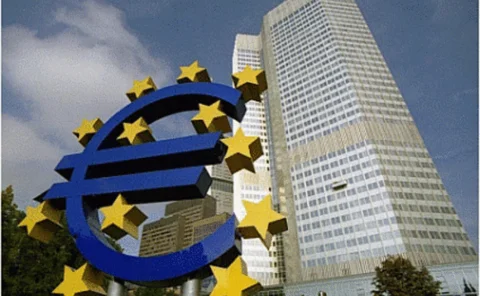
First Target2 data release sheds light on imbalances
Data on cross-border eurozone financial flows gives clarity as to the sharply different directions funds have been travelling, with Germany still comfortably the most popular destination
SMEs possibly worst hit by fragmentation of monetary policy transmission, ECB paper finds
Small and medium enterprises may have suffered most from fragmentation in monetary policy transmission following the financial crisis, according to research
ECB bulletin: risks to taxpayer funds gradually diminishing
An article in the European Central Bank's latest bulletin weighs the fiscal impact of financial sector support during the crisis, highlighting the benefits of a move towards banking union
Bundesbank's Buch pinpoints importance of impact studies for macro-pru policy
Claudia Buch emphasises the usefulness of impact studies for macro-prudential policy, arguing data is an insufficient stand-alone indicator