
Asia-Pacific

BIS research highlights changes in Asian loans market
BIS investigates changes in loan-loss provisioning in Asian banking sector in wake of Asian financial crisis

Markets start to price in QE3 following Bernanke speech
Equity prices rise and dollar eases as markets interpret Federal Reserve chairman’s comments as signalling increased likelihood of further quantitative easing

IMF's Shinohara airs concerns over slowing Asian growth
Weak demand in Europe and US has potential to harm growth prospects for Asia, says IMF deputy managing director

US must get tough on China to fix imbalances, says Aliber
The US can reduce its government deficit and unemployment rate if it addresses the ‘predatory’ trading and currency policies of China and other Asian countries, says leading economist Robert Aliber

Filipino governor announces new fund to assist small businesses
New office building opened in Roxas City; coincides with introduction of Capiz Credit Surety Fund and public learning programme in the region
IMF paper studies Indian growth spillovers to south Asia
Results of a panel growth regression suggests India’s growth has impacted region since 1995

Asia to develop emergency financial stability safety net
Charles Adams and Lei Lei Song chart the development of the Chiang Mai Initiative Multilateralization and explain three ways to develop Asia’s liquidity support mechanism

Norges Bank governor sees ‘bright spots’ in global picture
Despite tough conditions globally, Øystein Olsen says growth in Asia and limited recovery in the US are welcome positives

Central banks bought close to 440 tonnes of gold in 2011
World Gold Council unveils report showing large central bank gold purchases in 2011; emerging economies lead the way in rebalancing their reserves to include more of the precious metal
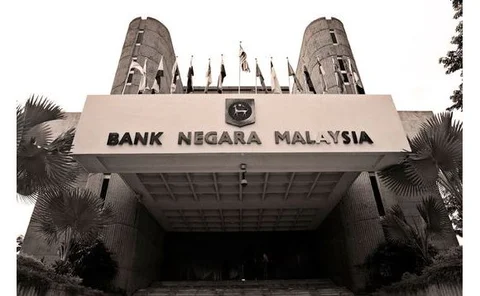
Malaysia warns external environment could restrict growth
Bank Negara Malaysia fourth quarter report on economic and financial developments says strong domestic demand will drive growth in 2012 despite challenging external environment

Shirakawa warns against renewed risk of spillover effects from Europe
Bank of Japan governor Masaaki Shirakawa says Asian banks should pay careful attention to deleveraging by European financial institutions; calls for further efforts to develop corporate bond markets in the region

Emerging markets benefited from solid balance sheets, says BIS paper
Bank for International Settlements study says Latin American and Asian countries experienced more sustainable levels of credit growth due to healthy balance sheets pre-crisis

Rapid credit growth in Asia driven by domestic factors, says IMF paper
International Monetary Fund study says domestic monetary policy can play a pivotal role in managing credit growth in emerging Asian markets

MAS's Menon calls on Asian countries to boost IMF resources
Monetary Authority of Singapore managing director Ravi Menon says Asian countries will need to contribute further to International Monetary Fund to enhance global safety net

Thailand blames floods and ‘likely’ eurozone recession for rate cut
Bank of Thailand drops benchmark interest rate by 25 basis points to 3%; says recession now "likely" in the eurozone

IMF’s Lipton: credit easing policy in Asia may be warranted
Fund first deputy managing director David Lipton says policy-makers in Asia may need to introduce unconventional monetary policy measures in the event of a global recession

Thailand’s Trairatvorakul calls for commitment to Asean community goals
Bank of Thailand governor Prasarn Trairatvorakul says success of Asean Economic Community will depend on members’ willingness to promote free flow of trade

European uncertainty reflected in central bank decisions worldwide
Germany, Austria, India and South Korea lower growth estimates as a slew of countries hold interest rates; world looks on and waits to see if Europe can agree a solution to the sovereign debt crisis

FSB Asia Regional Consultative Group holds first meeting
Asian regional consultative group gathers in Korea to exchange views on key financial stability issues
BIS paper examines effects of negative asset price bubbles in Asia-Pacific
Bank for International Settlements study shows underpricing of assets in Asia-Pacific caused cross-border spillovers

Malaysia’s Aziz emphasises importance of policy co-ordination in Asia
Bank Negara Malaysia governor Zeti Akhtar Aziz says European sovereign debt crisis showed co-ordination between national interests was necessary in Asia

MAS’s Ong says insurance industry can aid growth
Monetary Authority of Singapore deputy managing director Ong Chong Tee says Asia’s growth prospects are at risk from events in developed countries

EMEs have scope to respond to a global slowdown: RBA’s Battellino
Reserve Bank of Australia deputy governor Ric Battellino says emerging market economies have capacity to respond to decline in weakness in global demand
IMF paper identifies risk-sharing, contagion trade-off in Asia
Fund study shows risk sharing in Asia is found to be low between countries in the region compared with contagion effects