

Basel implementation monitoring strategy approved

The group of governors and heads of supervision at the oversight body of the Basel Committee on Banking Supervision have agreed on the strategy for assessing the implementation of Basel III rules around the world.
In a meeting on January 8, 2012, the attendees also discussed the Basel Committee's proposals on the liquidity coverage ratio.
The group fully endorsed the committee's comprehensive approach to monitoring and reviewing implementation of the Basel regulatory framework.
The Basel
Only users who have a paid subscription or are part of a corporate subscription are able to print or copy content.
To access these options, along with all other subscription benefits, please contact info@centralbanking.com or view our subscription options here: www.centralbanking.com/subscriptions
You are currently unable to print this content. Please contact info@centralbanking.com to find out more.
You are currently unable to copy this content. Please contact info@centralbanking.com to find out more.
Copyright Infopro Digital Limited. All rights reserved.
As outlined in our terms and conditions, https://www.infopro-digital.com/terms-and-conditions/subscriptions/ (point 2.4), printing is limited to a single copy.
If you would like to purchase additional rights please email info@centralbanking.com
Copyright Infopro Digital Limited. All rights reserved.
You may share this content using our article tools. As outlined in our terms and conditions, https://www.infopro-digital.com/terms-and-conditions/subscriptions/ (clause 2.4), an Authorised User may only make one copy of the materials for their own personal use. You must also comply with the restrictions in clause 2.5.
If you would like to purchase additional rights please email info@centralbanking.com
More on Banking

Singapore issues guidelines for ‘responsible use’ of AI
MAS says financial institutions can adopt different approaches in proportion with their risk profiles

RBNZ to receive money from tax on New Zealand banks
Finance minister says levy to ensure costs borne by market players, not taxpayers

DBS becomes Singapore’s second RMB clearing bank
PBoC and MAS agree to deepen collaboration on securities, e-CNY and other areas
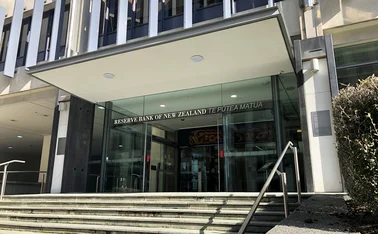
RBNZ seeks regulatory powers over payments system
Central bank says New Zealand’s High Value Clearing System currently poses significant risks

Thailand approves its first virtual banks
Thai, South Korean and Chinese firms will operate online-only lenders, central bank announces

FDIC vice-chair heralds likely changes under Trump 2.0
Hill suggests looser regulation and ignoring climate risks will be focus under new administration

ECB and EBA establish new bank supervisory committee
New body aims to harmonise supervisory, resolution and statistical reporting

FCA official confirms end of ‘temporary permissions regime’
European firms must have UK regulatory approval by December 30