
Central Banks

BIS's Caruana warns low interest rates are ‘self-validating'
Persistent low interest rates can become self-validating, BIS general manager Jaime Caruana warns, in annual speech in which he called for greater international co-ordination

Plosser: Fed should be stripped of dual mandate
Charles Plosser says the Federal Reserve should ‘focus solely’ on price stability, as monetary policy has ‘very limited ability’ to influence employment
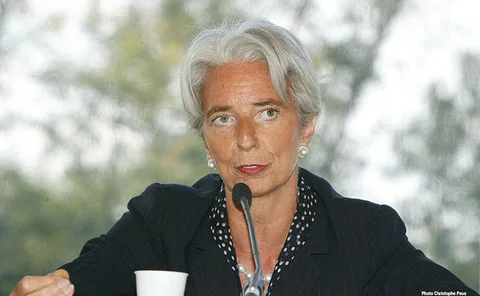
Lagarde sets competitiveness goal for Caribbean
IMF head Christine Lagarde encourages economies in the Caribbean to address the ‘twin challenges’ of competitiveness and climate change

Israeli banks' core capital ratio would fall to 7.5% in crisis, stress tests show
Banking system would show cumulative loss of three billion shekel, says Bank of Israel, but there would be 'no risk to stability'

BoE scraps 170-year old weekly balance sheet ‘snapshot' to hide emergency liquidity
Bank of England to remove data on emergency liquidity provision from weekly statement, in a step away from full transparency in the interest of financial stability

Bank of Canada may ‘expand’ payments oversight
Deputy governor Lawrence Schembri says the central bank might be charged with the oversight of ‘prominent’ payment systems as well as those that pose systemic risks

Bulgarian central bank calls for jail time after bank runs require emergency liquidity
Bulgarian National Bank says those destabilising the banking system should face jail; bank run met with emergency liquidity from the government

Questions mount over Bank of Ghana's involvement in airlift of $3m football bonus
Experts say central bank must have been aware of $3m government operation that breached forex controls imposed by the bank in February

France and Luxembourg join race to become Europe's renminbi hub
France and Luxembourg next in line for clearing banks after striking deals with PBoC over the weekend; French institutional investors also granted permission to invest in China

BIS warns central banks to bite the bullet on monetary policy normalisation
BIS annual report says it may already be too late for a gradual exit from unconventional policy; warns markets may pre-empt exit if they feel central banks are behind the curve

Solomon Islands central bank publishes first working paper
Paper considers the efficacy of monetary targeting in Solomon Islands; finds evidence suggesting it is more effective than inflation targeting would be

Dutch central bank to cut size of governing board
The Netherlands Bank says it will reduce the size of its governing board in November when it loses some of its powers to the SSM; only president and three directors will remain

Bank of Lithuania joins with country's oldest university to set up research centre
Collaboration aims at promoting ‘practical application' of scholarly undertakings; Bank chair notes criticism that Lithuanian economics is ‘detached from reality'

Irish brief examines relationship between rate changes and bond yields
Economic letter published by the Central Bank of Ireland compares the impact of rate changes on bond yields in the eurozone and Switzerland

RBI sees case for reviewing governance of public sector banks
Public sector banks continue to pose some of the ‘major challenges' facing the banking sectors, the Reserve Bank of India says

Turkish central bank in broad social media push
Bank joined four social network platforms this week in bid to raise public's financial awareness; also says it will aim to foster ‘habit of saving and encouraging the use of' lira coins

RBNZ weighs ‘European presence' to aid reserve management
Reserve Bank of New Zealand says it will review whether a full-time European presence will improve returns on forex reserves; outlines plans to replace vaults
RBI hiring 53 sportspeople out of civic duty
Reserve Bank of India is looking to recruit people from a host of sporting backgrounds, including cricket and table tennis, to working in support roles at the central bank

Temasek marks 40th birthday by opening New York office
Office is the Singaporean sovereign fund's first in the US; chair Lim Boon Heng says Temasek is forward-looking - even experimenting with Bitcoin

Tarullo says Fed must ‘hone' stress test regime
Fed governor says some firms still lack ‘reliable information' about their business exposures; hints at more attention to developing tests' macro-prudential elements

Lagarde says financial inclusion has key role in closing gender inequality gap
IMF managing director says women face extra cultural and educational hurdles in tapping into financial services, but financial inclusion can empower them

Polish paper finds ‘substantial decrease’ in impact of exchange rate on consumer prices
Researchers say the exchange rate channel of the monetary policy transmission mechanism has weakened, but inflation has become more responsive to interest rate changes

BoE introduces ‘ground-breaking' macro-pru measures to prevent housing bust
Mark Carney unveils a cap on high loan-to-income mortgages and affordability test; influential MP calls it a ‘major departure' for UK financial policy

Bank of Uganda halves number of MPC meetings
Uganda’s central bank says ‘less frequent’ policy announcements will help businesses plan; MPC will now meet every other month