
Central Banks

Bulgarian state to rescue majority of depositors at scandal-hit banking group
Central bank seeks law change as council claims banking supervision was only in the purview of one deputy governor; loan records apparently destroyed on purpose

Lockhart needs higher wage growth and participation before raising rates
Atlanta Fed president says firmer wage growth and a higher participation rate are needed before the Federal Open Market Committee should raise interest rates

Review finds Belgian CPI still ‘diverges’ from HICP
National Bank of Belgium’s latest economic review analyses the recent changes in the methodology underpinning CPI, and demonstrates why it remains different from HICP

IMF steps up call for QE in Europe
The European Central Bank should launch a large-scale asset purchase programme if inflation does not pick up; IMF staffers untroubled by risk of asset bubbles

Israel publishes first financial stability report
Bank of Israel repeats demand for new committee for setting macro-prudential policy in its first financial stability report since 2004
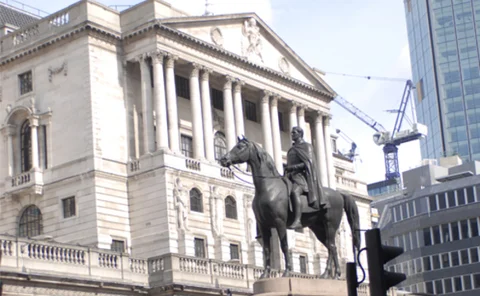
Financial Policy Committee angles for full powers over UK leverage ratio regime
Bank of England body poised to ask for lead role in design and implementation of leverage ratios in UK; move described as a natural fit

People: Riksbank vice-chairman to head FSA, former Hungarian governor new CFO at EBRD
Sven-Erik Österberg will chair Financial Supervisory Authority from January; Andras Simor changes role at European Bank for Reconstruction and Development; More

Spanish economists devise system for detecting risks to budget forecasts
Working paper published by the Bank of Spain presents a new ‘toolkit’ to monitor the government budget in real time; authors say it will help protect state’s reputation
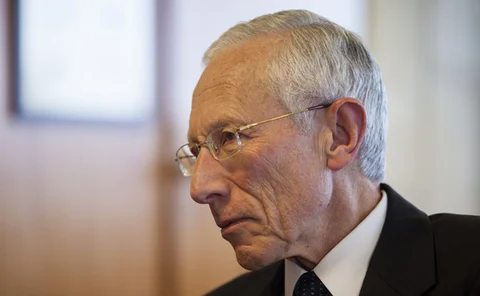
Fischer keen to add financial stability to Fed mandate
Fed vice-chair Stanley Fischer praises progress with reforms in his first speech since becoming second in command; open to reforming the Financial Stability Oversight Council

Forecasting of ECB and New York Fed became ‘noticeably worse’ during crisis
Researchers at the ECB and New York Fed examined forecasting performance of their central banks; finding they suffered during the crisis, but not more than external parties

Balance between Hong Kong and Singapore ‘vital’ for financial stability
Researchers at the IMF find Hong Kong and Singapore complement each other as financial centres because they specialise in different markets and clienteles

Regulation may force some banks out of repos, says NY Fed's Davis
The New York Fed's head of financial market infrastructure, Jeanmarie Davis, says some banks will 'revisit their presence' in the repo business due to increased regulatory requirements

IMF calls on Iceland to defend central bank credibility
As the evaluation committee prepares to interview candidates for governor, IMF visit reminds Iceland of the need for a credible and independent central bank

Central Bank of Colombia looks to Switzerland for help on financial stability issues
Colombian central bank signs two-year capacity-building agreement with Swiss authorities; Azerbaijan governor praises SNB's ‘technical assistance'

Parliamentary committee questions Central Bank of Ireland transparency
Committee will examine whether confidentiality provisions in central bank legislation mean information on financial misconduct is withheld from the public

BoE's Andrew Bailey says Basel III will be more transparent in the future
Head of the Prudential Regulation Authority also argues level of ‘precision' for rules sought by banks and investors ‘is not realistic'

ECB finds Phillips curve 'insufficient’ to forecast inflation
Article in latest ECB monthly bulletin finds evidence of a ‘curve-type relationship’ between inflation and economic slack, but the specification is ‘subject to considerable uncertainty’

Central banks wrong to try and close output gap, says RBNZ's McDermott
Reserve Bank of New Zealand assistant governor John McDermott says the role of monetary policy is to keep inflation predictably low, not try and boost output
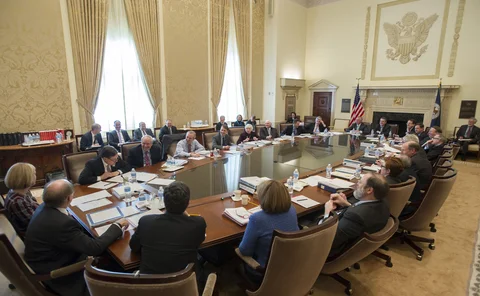
Fed set to finish taper in October
FOMC mulls decision on whether to raise Fed funds rate or shrink balance sheet first before year-end; fears either strategy could jeopardise Fed's communication efforts
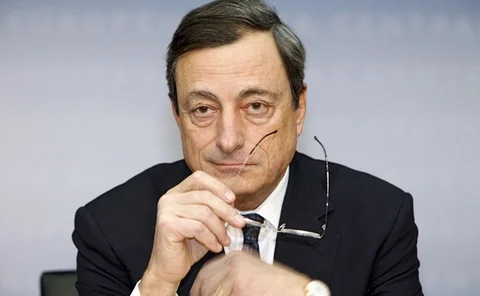
Draghi: structural reforms are too important to leave to member states
Mario Draghi calls for new European rules that would compel eurozone member states to reform their economies; Benoît Cœuré describes it as ‘convergence process 2.0’

Incoming BoE deputy Shafik says SSM makes working with ECB more important than ever
Minouche Shafik says single supervisory mechanism will improve co-ordination with Bank of England, but that it is too early to tell whether 'huge' project will be successful

Malawi cuts policy rate in line with falling inflation
Less pressure on prices and a more stable exchange rate meant an even bigger cut was on the cards, but the MPC preferred to wait and see what the budget brings

IMF paper examines banks’ public bond holdings
Working paper published by the IMF finds that large banks accumulate high-risk public bonds during sovereign crises; examines relationship with bank lending
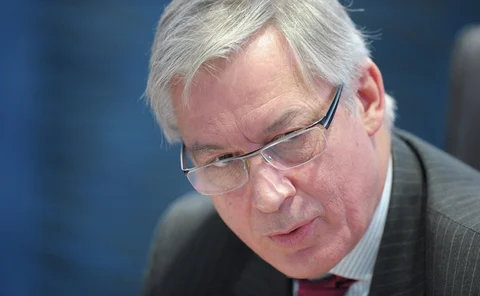
Noyer backs ECB minutes to shed light on ‘complex’ monetary policy
Banque de France governor Christian Noyer explains why the ECB should start publishing accounts of its monetary policy discussions, but stresses need to preserve ‘collegiality’ on the council