
Central Banks

Stanley Fischer praises BoE financial stability set-up as ‘leading model’
Fed vice-chair explores different arrangements for financial stability and concludes separate committee within central bank is a good model; does not rule out leaning against wind

Banks are de-risking due to lack of regulatory direction
Banks are struggling to balance growing compliance costs with the need for a risk-based approach to individual client accounts. Regulatory guidance isn’t helping, a London conference hears

Menon praises Asian strides in face of new bank regulation
Ravi Menon and San Francisco Fed's John Williams discussed banking reforms at one of three events hosted by Monetary Authority of Singapore last week

Boston Fed president preaches patience
Eric Rosengren says it is too soon to know whether weaker economic activity at start of year is down to temporary factors or ‘broader changes in the economy’

IMF pushes Belarus to adopt new policy framework
International Monetary Fund tells National Bank of Belarus to adopt monetary targeting framework ‘without further delay’; staff and national authorities disagree over exchange rate

St. Louis Fed’s Bullard makes case for NGDP target
Working paper questions appropriate monetary policy response at zero lower bound and explores the mechanics of a ‘special upward adjustment’ in the price level on credit market

Basel considers U-turn on fourth trading book QIS
Industry lobbying prompts regulator to revive plans for a further impact study
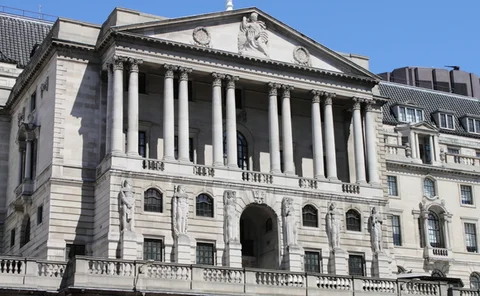
BoE research warns failure to capture money creation distorts DSGE models
Working paper offers ‘essential ingredients’ of a DSGE model that recognises bank lending as the source of money creation, with significant implications for economic modelling

FCA’s Wheatley highlights complexity of banking cultural reform
As banks are hit with yet more record-breaking fines, the head of the UK’s financial watchdog argues they are trying to change their ways, but the job is not a straightforward one

IMF paper argues technological slowdown not main driver of weak productivity
Working paper finds slower US productivity growth is more due to reduced efficiency in combining factors of production than a declining pace of technological progress

IMF sees limits to Norway ‘leaning against the wind’
Article IV conclusion says macro-prudential policy should be first line of defence, but governor Øystein Olsen still sees role for monetary policy

Austria to repatriate third of gold reserves
Central bank plans to move gold out of the UK and into Austria and Switzerland after court of audit raises concern over ‘high concentration risk’

Five problems with floating rate exchange regimes
Robert Aliber bemoans the dangers of sharp moves in major currencies that are the result of floating rate currency regimes, and answers five rhetorical questions related to monetary stability

Shadow banking risks ebbing in China
China has the world’s third-largest shadow-banking sector, but the risks it poses to the overall financial system are overstated, especially following moves by the State Council

Devising effective data strategies to help inform policy decisions
The publication of the Irving Fisher Committee’s report on good data practices offers the potential for powerful data sharing, but more work needs to be done at the tactical and practical levels

Kocherlakota sets out path back to maximum employment
Minneapolis Fed president says the FOMC should set policy in a way that allows for at least three more years ‘as good as 2014’ if the labour market is to achieve highs last seen in 2006

Central banks face weight of expectations in sub-Saharan Africa
The art of central banking has changed dramatically in frontier markets. Monetary policy, financial regulation, capital flows and exchange rate are now centre stage, writes Louis Kasekende

Central bank liquidity surge is not without historical precedent
Major central banks have injected $14 trillion of liquidity into the global economic system, but such surges are not without historical precedent

Assessing the value of financial stability reports
More than 90 central banks now produce financial stability reports. Emrah Uslu and Eyup Kahveci look at the various approaches they take as well as appraising their usefulness.
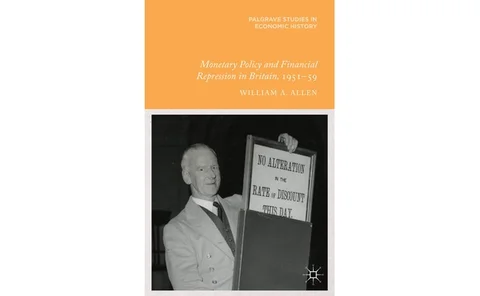
Book notes: Monetary policy and financial repression in Britain 1951–1959, by William A Allen
A fascinating and coherent account of British monetary policy in the 1950s

Book notes: Smart Money, by Andrew Palmer
An important attempt to show how financial innovation is “reshaping our world for the better” all the more important
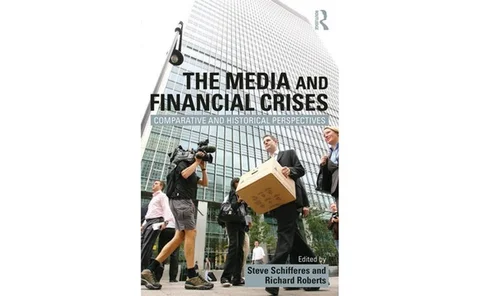
Book notes: The media and financial crises, by Steve Schifferes and Richard Roberts
A fascinating book, which gives a very different perspective on the financial crisis and its predecessors

Book notes: Hall of mirrors, by Barry Eichengreen
A scholarly, but readable narrative that interleaves an account of the build-up to and course of the Great Depression with the similar course of events in the Global Financial Crisis

Swiss National Bank open to buying foreign assets
IMF article IV report suggests buying foreign assets to address deflationary pressures; Swiss National Bank says it is an option but wants to see how outlook develops before easing further